In This Chapter
This chapter provides a complete first season of The Hollow: six connected cases that introduce the game's investigative and confrontational systems, escalate in stakes, and resolve in a season-closing encounter. The cases can be run in sequence or adapted by the GM; they are blueprints, not scripts.
Case 1: The Saint Adela Incident is the session demonstrated in Chapter Fourteen. Its synopsis is included here for continuity. Cases 2–6 follow, each building on what came before.
The season's overarching threat, The Congregation of the Opened Hand, is introduced in Case 1 (as background) and becomes progressively visible across the season. The finale, Case 6, addresses it directly.
The Season Arc
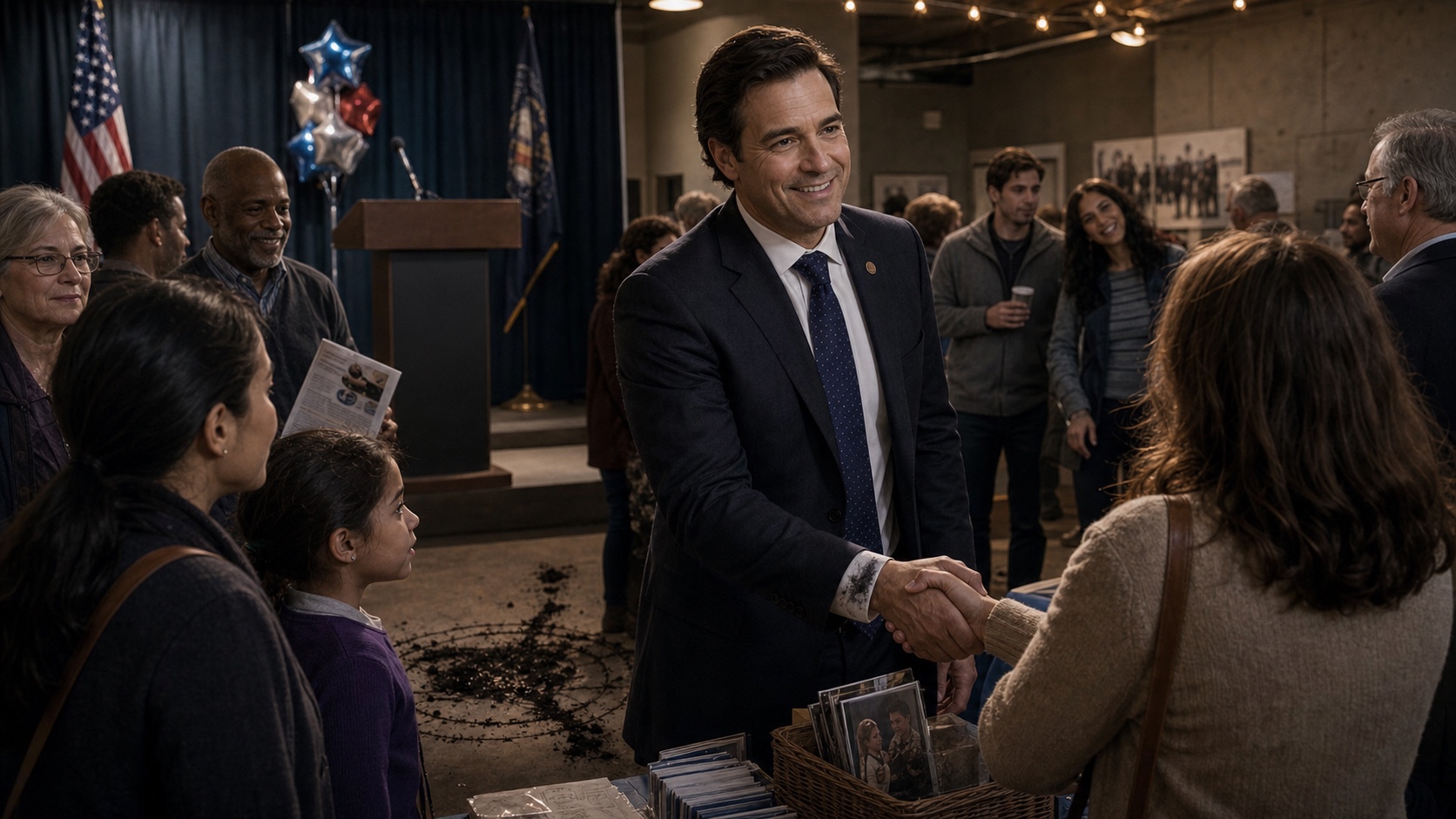
The Congregation of the Opened Hand
Fifteen years ago, a man named David Harlan made a devil deal. His daughter was dying. The deal didn't save her. He has been serving the contract ever since.
Harlan is now a city councilman overseeing healthcare and social services. In his public role he has done real good: funding for addiction recovery programs, expanded hospice care access, mental health crisis response infrastructure. He believes, or has trained himself to believe, that this good balances the costs of what he enables through his contract. It does not.
The entity behind the contract is The Hollow-Mouthed, a Named demon (Tier 3) whose domain is surrendered will, the spiritual space where people have stopped choosing. It feeds on environments of terminal despair, chronic learned helplessness, and hope that has been completely extinguished. Its operation produces quiet rather than violence: managed populations of people who have given up and are being maintained in that giving-up for harvest.
The Congregation of the Opened Hand is the Established Organization it has built through Harlan. A legitimately chartered charitable foundation, active in hospice care, addiction recovery, grief support, and social services. Its real function is maintaining and expanding feeding networks. Leech operations, Wound Site management, and periodic blood rituals at specific sites across the city to keep the Hollow-Mouthed's influence growing.
This work has brought the city to the edge of something. The Hollow-Mouthed requires one more significant Wound Site, not a Cold Shard or a Waking Shard, but a Weeping Wound at a location of specific spiritual significance, to complete its claim on the city. When that site reaches Weeping Wound status, the Hollow-Mouthed will have sufficient anchor to fully manifest in the physical world at that location. Not a possession. An arrival.
The Congregation's current status at season open: six active Leech operations across the city (St. Adela's Hospice is one), three functioning Wound Sites (one at Cold Shard, one at Waking Shard, one at Open Wound status), Harlan as operational leadership, and approximately forty cult members across all cells of varying investment level.
The season's question: Can the characters identify and dismantle the Congregation and stop the Weeping Wound from completing before the Hollow-Mouthed arrives, and what do they do about Harlan, who is a man as much as he is a monster?
Key Season NPCs
Councilman David Harlan: The Architect, Tier 2. Corruption 8. Publicly respected; privately servicing the accumulated debt of his contract. The person who decided the deal was worth making is still there underneath, and reachable. Whether he allows himself to be reached is the season's moral question.
Ramirez: The Corrupted cult lieutenant who escaped the Saint Adela confrontation. Corruption 4. He is more afraid of Harlan than he is of the characters. He is also one of the few people who knows the full organizational structure below Harlan's level. He is the season's most useful informant and the most dangerous loose end.
The Hollow-Mouthed: Named demon (Tier 3). Willpower 5, Legendary (immune to harm except a confirmed weakness), Concealment 4. Its domain weakness is witnessed, specific, founded hope, not generic optimism but hope that has survived something particular. It is weakened by the genuine spiritual authority it has worked to erode in this city. Its true name is four syllables. Each syllable is recoverable through dedicated research in a different location. No single case provides the whole name.
Father Brendan Okafor: An Order of Mercy priest, chaplain at St. Casimir's (the season finale location) for eleven years. He does not know about the Congregation, though he senses that something is wrong with his city. Ordained and at Corruption 0, he is the single most significant holy authority asset available to the characters for the finale, and they will need to decide whether to bring him into the full truth.
Running Merciful Dissonance in This Season
The Congregation operates in the open: a licensed charity with awards on the wall and a councilman on the podium. It survives because Merciful Dissonance does the concealing for it, and because Harlan built an operation the mundane world has a comfortable explanation for at every level. (Chapter Two owns the premise; Chapter Twelve owns the GM rules.)
Each case below lists a mundane explanation: what witnesses, police, doctors, and journalists actually believe, because their minds filed the event under the nearest available folder. Treat every witness as sincere (Chapter Twelve, Rule One).
Merciful Dissonance cracks under contradiction, not perception: there is no check to see through it, only evidence the official account cannot hold (Chapter Ten, Chapter Twelve).
The season's official record, case by case:
| Case | What the world believes | The contradiction that cracks it |
|---|---|---|
| 1. Saint Adela | Three elderly hospice deaths, unremarkable, natural causes on a ward that sees death weekly | All three fell on the same weeknight, on the same floor, and the basement chapel has fresh blood residue nobody logged |
| 2. The Weeping Wall | A grief support group meeting in a closed church's yard. Well-regarded. No criminal record. | Participants consistently feel worse after sessions, and the site's Wound classification moved two stages in three years |
| 3. Mercy House | A licensed, awarded charitable network with outcomes "within expected ranges for the populations served" | One staff member per facility, and the residents near that staff member decline on a curve nobody has plotted |
| 4. The Advocate | A lawyer made an offer. That is what lawyers do. | The contract's terms only make sense if the signatory already has an infernal debt |
| 5. The Opened Hand | A warehouse. Zoning violation at worst. | Twenty people in a room doing something that has no secular name |
| 6. St. Casimir's | Structural failure in a very old church | The building is failing from the inside out, on no schedule known to engineering |
Merciful Dissonance also protects the characters: it is the reason they can do this work without being arrested every week, and the reason the city does not panic.
The witness was lied to by their own mind, and it was a mercy.
The Containment Thread: The Opened Hand Almsboxes
The Congregation anchors its feeding sites with an object that runs underneath every case. It brings the Latchkey Archive into the season, and it is how the characters confirm the archival trail that yields the Hollow-Mouthed's name in time to use it.
Harlan's foundation gives its facilities an almsbox. A plain wooden collection box, mounted by the door, unremarkable in a hospice or a recovery house or a parish yard. Donors put money in it. Money comes out of it. The accounting is clean, because the money is not what it collects.
The Opened Hand Almsbox
Classification: Class III: Volatile (cursed object)
Provenance: Manufactured by the Congregation, not found. Nine are known to exist. One is installed at each active feeding site: St. Agnes on the Hill, the four Mercy House facilities, and the warehouse. The remainder are unaccounted for, which is a problem the Archive would like the characters to take seriously.
Appearance: A hinged oak box, roughly the size of a hymnal, with a brass slot and a small brass plaque reading THE OPENED HAND. Worn where hands have touched it. There is nothing visibly wrong with it. That is the design.
Active Effects: The almsbox does not collect money. It collects surrendered will, the Hollow-Mouthed's domain: the small daily act of a person giving up, occurring within roughly 30m of the box. Each surrender feeds the site. An almsbox in place accelerates a Wound Site's escalation, converting the ambient despair a Leech cultivates into anchor for the Hollow-Mouthed. Remove the box and the site stops climbing. This does not de-escalate it; it stops the clock.
The Inscription: Cut into the inside of the lid, under the coin tray, is a sigil: the Hollow-Mouthed's binding seal, identical on every box. The seal is not a piece of the name. It is the entity's claim on the site, and it is evidence: a recovered seal gives researchers a verified sample of the entity's signature. Each distinct box recovered grants +1 Boon die (maximum +2) on Research checks to recover the Hollow-Mouthed's true name syllables through the season's archival paths (the Latchkey Registry's 1890s record, the Athonite record, the 1947 St. Casimir's case; see Cases Four through Six). The name itself is in the records. The boxes are how the characters prove they are reading the right records.
Handling Requirements: Contact is safe for characters with Containment 1+ or Relic Lore 2+ using standard gear. Any other character who opens the lid barehanded makes a Willpower check (Hard ). On a failure, they gain 1 Corruption and the GM should ask them, quietly and out of character, what they have recently given up on. That answer is now true.
Containment Grade: Iron-lined case, sealed. A box in transit must not be opened. An unsealed box in a vehicle continues to feed on whoever is in the vehicle.
Trigger: Removing an almsbox from a site alerts the Congregation within one session. The site's operator will notice the box is gone before they notice the characters were there. Extraction without substitution is loud. A convincing substitute box (Craft, or Latchkey resources) buys the characters a case's worth of silence.
What this thread gives each case:
- Case Two (St. Agnes): the first box. This is where the characters learn the object exists, and where Latchkey classification enters the season.
- Case Three (Mercy House): four boxes across four facilities, and a real containment problem: the residents are still living beside them. The characters cannot simply seize all four without the Foundation noticing, so this becomes a case about sequencing and substitution, not force.
- Case Five (The Opened Hand): the ninth box, at the warehouse, is larger and older and is the network's parent. Its seal is the master sample: recovering it confirms the entity's signature against the historical records the syllables are drawn from.
- Case Six (St. Casimir's): no box is involved. The name is finished from the archives, and the Hollow-Mouthed is coming for St. Casimir's itself.
Why This Thread Matters
Without it, a GM can run this entire season and never open Chapter Nine, the Latchkey Archive has nothing to do for six cases, and Fiona Kessler, a core NPC, has no reason to be in the room.
With it, the characters must handle a thing that is dangerous to hold, in a building full of vulnerable people they cannot evacuate, without alerting the man who put it there. It also grounds the finale's research goal: the boxes are the physical proof-of-signature that turns four scattered archive fragments into one confirmed name, and the characters can count how many seals they have recovered.
Case One: The Saint Adela Incident
(Full session walkthrough in Chapter Fourteen. Synopsis only.)
Hook: Three deaths at St. Adela's Hospice in six weeks, same floor, same night of the week. A nurse who quit left a note at a parish: Something is wrong in the basement.
Mundane Surface: The death certificates are honest: two respiratory, one cardiac, all signed by a doctor who believes what he wrote. The nurse who quit is on record as having been under strain, and her note reads, to the parish secretary who filed it, like a woman who needed rest.
Maria Chen, the night nurse, reports the hours she cannot remember as exhaustion. She conceals nothing; the memory itself is gone.
The Contradiction: Merciful Dissonance can absorb three deaths in a hospice. It cannot absorb the calendar. When a character lays the three dates beside the Congregation cell's ritual schedule, the mundane account stops closing, and everything after that is investigation rather than persuasion.
The Truth: A Gripping Demon has partially possessed the night nurse Maria Chen, facilitated by a Congregation cell using the basement chapel for blood-letting rituals. A Leech has been operating independently on the third floor. The cell is managed by Ramirez, who reports to Harlan through an intermediary.
Resolution: The cell is disrupted, Ramirez escapes, the demon is expelled (exorcism in the session aftermath). The Leech is addressed separately. Maria Chen survives.
Threads Forward: Ramirez is loose. The patient advocate in custody knows the name "the Foundation", the Congregation's public face. The ritual materials in the basement include a document in an unidentified language that the Latchkey Archive will later identify as a partial ritual schema for Wound Site acceleration.
Case Two: The Weeping Wall
Hook: A Latchkey Archive contact flags an anomaly: a nineteenth-century parish church in the city's oldest neighborhood (St. Agnes on the Hill) has had its Wound Site classification re-evaluated. It was logged as Cold Shard three years ago during a routine survey. A routine check two weeks ago returned Waking Shard. Something is feeding it.
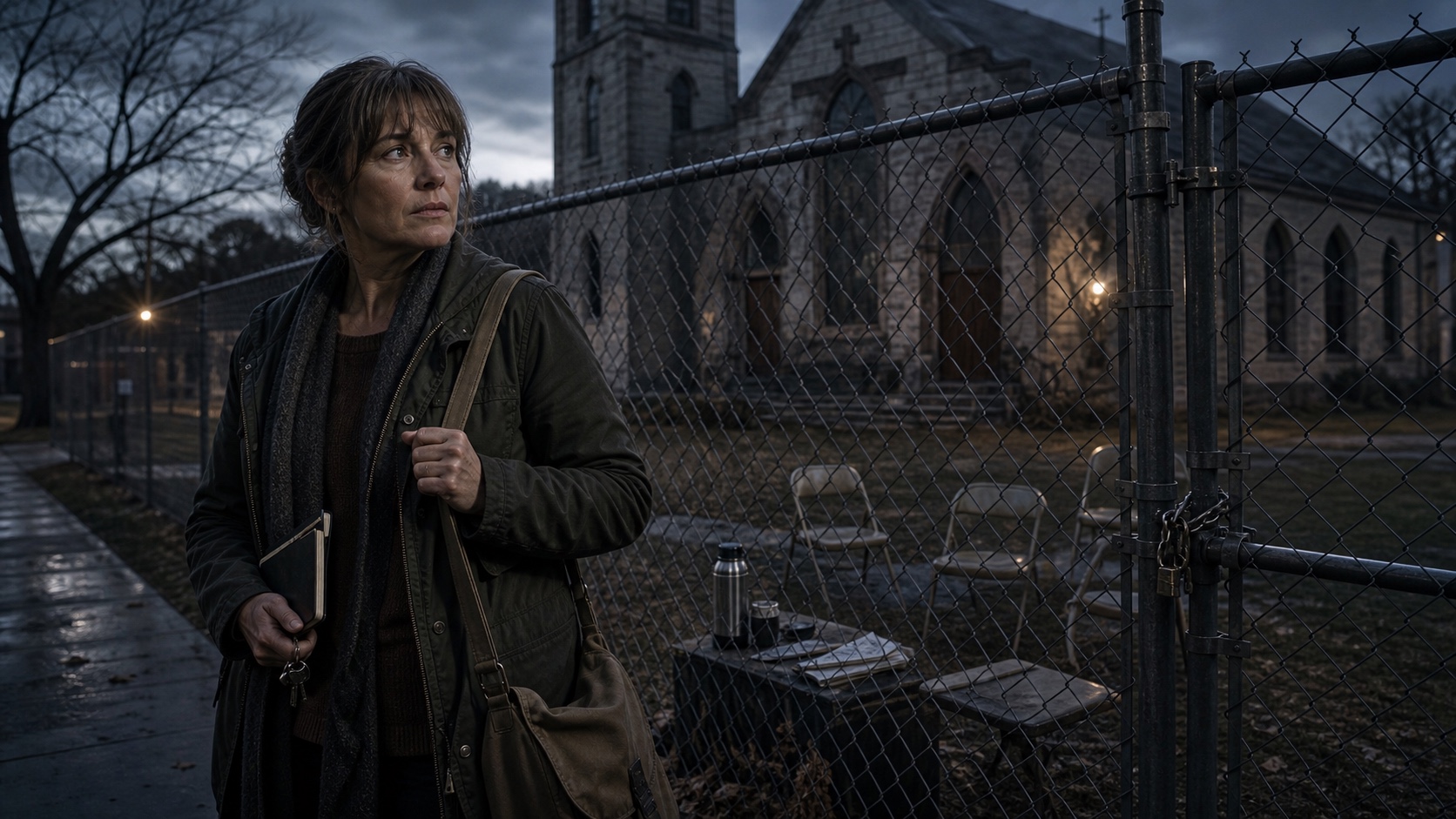
St. Agnes has been closed for eight years: a water damage repair that stalled for funding. The diocese has maintained minimal presence. A local community has been using the church grounds for a grief support group (outdoor, in the churchyard) for the past eighteen months.
The Truth: The grief support group is a Congregation Leech operation. The group itself is genuine, real people, real grief, but the facilitator, a woman named Claudette Marsh, is a Leech (Chapter Eleven, psychic/emotional predator) who has been maintaining and feeding on the participants' distress. Her eighteen months of sustained feeding at the site, combined with the church's existing Wound Site, has driven it from Cold Shard to Waking Shard. The Congregation knows about the site and is now managing it toward Open Wound status for inclusion in their Wound Site network.
The Congregation is not yet conducting blood rituals here: they are simply maintaining the Leech operation to continue escalation. As an early-season case it does not reveal the Congregation's full scope, but the document connecting the grief support group to the same Foundation name from Case One is discoverable.
Mundane Surface: The church's Wound Site condition is invisible to anyone without Awakened Blood.
Investigation Leads:
Discernment (Average , churchyard): Detects diffuse predatory presence consistent with a Leech. The presence is more concentrated near the grief support meeting area.
Inquiry (Hard , participant interviews): Group members report feeling worse after sessions, not better. One member, a retired firefighter named Gerald, has stopped coming and will say, if asked directly, that he started feeling like his grief was being used, though he cannot explain what he means.
Research (Hard , group registration): The grief support group is registered as a program of The Harlan Foundation for Community Wellness, the Congregation's public charitable face. First connection to the overarching threat.
Monster Lore (Average , Claudette Marsh behavioral assessment): She is a Leech. Weaknesses: genuine communal joy, founded hope expressed by Theology 2+, iron in sustained contact.
Escalation Trigger: If the case extends to a second session without intervention, a Congregation operative initiates a minor blood-letting at the churchyard at night, a small cut, a ritual phrase, feeding the site. Wound Site advances to Open Wound.
Resolution Paths:
- Address the Leech (banishment or remove from the feeding environment); the grief support participants need pastoral follow-up
- Consecration of the churchyard begins de-escalation (requires Theology 2+, Average )
- The Harlan Foundation connection can be researched further (opens Case Three)
Associated Organization Presence — The Kept: Gerald, the retired firefighter from the participant interviews, may be a member of the Kept, or known to them through survivor community connections. A Kept NPC accompanying the investigators has already read the situation before the first Inquiry check; Survivor's Read identifies the feeding pattern through direct experiential recognition, no roll required if the character carries residual marking. Gerald, if reachable, cooperates immediately with investigators who have clearly also been through something (Inquiry Easy for investigators with established supernatural experience; Hard otherwise). He knows Claudette Marsh is wrong in a specific and unnameable way, he got out before the damage was complete, and nobody he has told since has been equipped to understand him.
Threads Forward: The Harlan Foundation name. A partial map found in Claudette's possession showing marked locations across the city, six marked sites, St. Agnes among them.
Case Three: The Mercy House Files
Hook: The Harlan Foundation's public face leads the characters to its flagship program: the Mercy House network, four residential facilities across the city serving addiction recovery, transitional housing, and long-term psychiatric support. Genuinely licensed, genuinely staffed, genuinely providing services. And genuinely being used to maintain populations of spiritually vulnerable people as a feeding resource.
Primarily investigative, with no central combat confrontation, the case pits the characters against an institution: they must determine what the Mercy House network actually is without triggering the Foundation's considerable legal and political resources.
The Truth: Each Mercy House location has a Congregation-placed staff member: one per facility, who is a Leech (two) or a Corrupted operative (two). The program itself is run by people who have no knowledge of what the Foundation's real purpose is. The residents are real people in genuine need who are being slowly fed on through extended exposure to these operatives. The case is about identifying the operatives, protecting the residents, and building documentary evidence of what the Foundation is actually doing, without tipping Harlan off that the investigation has reached this level.
Mundane Surface: Harlan has publicly advocated for the network in the city council, and medical licensing is current. No one looking at this casually would see anything wrong.
Investigation Leads:
Research (Hard , extended): The Foundation's financials show unusual administrative overhead. One line item, "spiritual wellness consultation", is paid to an LLC that does not appear to have any registered practitioners.
Inquiry (Hard , former Mercy House staff): A social worker who left six months ago. Elena Vasquez, left because she felt something was wrong with one specific colleague at the facility where she worked. She could not name it. Her description of the colleague's behavioral patterns (knowing things he should not know, never seeming to need anything from the environment, subtly discouraging resident progress) matches Leech behavioral profile (Chapter Eleven).
Perception (Hard , Mercy House site visits): Characters with Awakened Blood detect spiritual predatory presence at two of the four locations.
Discernment (Severe , direct assessment of operative): Confirms Leech or Corrupted status of Congregation-placed staff. Concealment 4 makes this difficult; these operatives are experienced.
Escalation Trigger: If characters make a direct move against one of the operatives without sufficient evidence to support it institutionally, Harlan is alerted through his Foundation board contacts. He initiates legal harassment (a Lyncean Office handler calls with a complaint about the investigators from a city official) and relocates the operatives, which makes them harder to find and the case harder to close.
Resolution Paths:
- Build sufficient documentary evidence to involve legitimate authorities (long track; requires Research extended check and careful management of exposure)
- Address the operatives directly with confirmation of their nature (requires confrontation at four locations, coordinated)
- Reach one of the Corrupted operatives with a genuine appeal: two of the four have surviving human elements accessible (Inquiry Severe )
Associated Organization Presence — Sisters of Nursia: A Sister of Nursia may be embedded at one of the four Mercy House facilities, placed there by the Order of Mercy months earlier after a routine survey raised questions no formal inquiry could answer: a woman from a religious community, doing volunteer work, watching. She has a lay identity that creates no scrutiny. She has been inside the organization long enough to know which staff members are wrong in ways she cannot prove, and she has been unable to act alone. She will not identify herself as a Sister unless the investigators demonstrate they can be trusted with it (Inquiry Average with credible faction credentials; Hard without). What she provides: confirmed identity of the Congregation-placed operatives at her facility, the name of the Foundation board member who coordinates the placements, and the specific times the operatives are most exposed. She is not the investigators' handler; she is an insider who finally has partners equipped to act.
Threads Forward: One Corrupted operative, if reached, will provide the name of Harlan's intermediary, the person between Harlan and the cell structure. This is the thread into Case Four. The partial map from Case Two plus site survey data from this case allows characters to locate all six Wound Sites.
Case Four: The Advocate's Terms
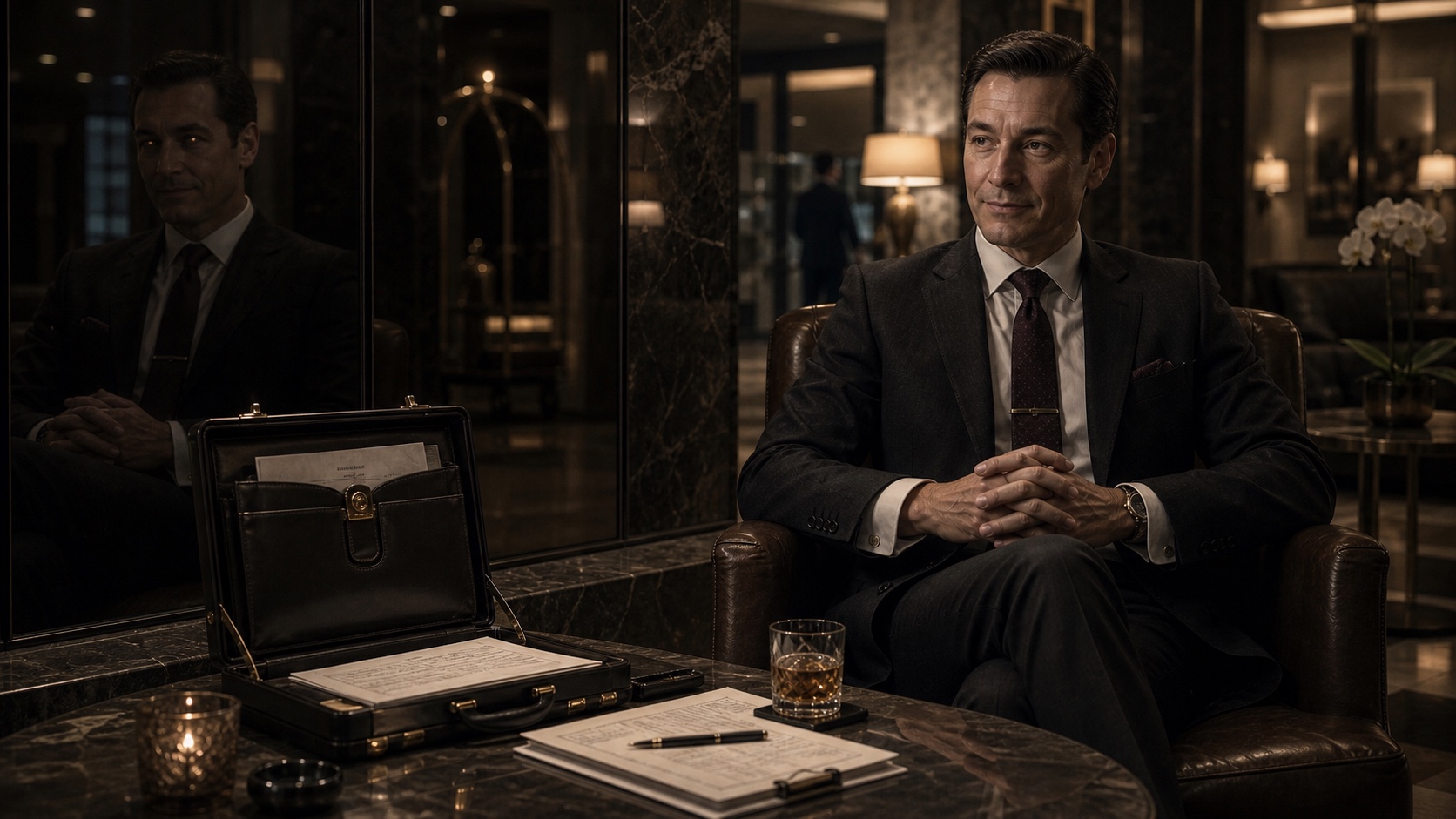
Hook: Three days after Case Three resolves, one of the characters receives a visit. The visitor is a professional-appearing man named Warren Silk who identifies himself as representing "a client who has relevant information about your current investigation." He is courteous, precise, and his reflection in the window behind him is slightly wrong. He is The Advocate (Chapter Eleven, Tier 2 devil).
He has an offer.
The Truth: The Advocate holds a contract with Harlan: a secondary contract, structured as an insurance arrangement. If Harlan's operation is disrupted before its completion, the Advocate is owed a recovery clause: specific information about the disrupting parties to be provided to the Hollow-Mouthed. The Advocate would rather the disruption not happen at all, but if it is going to happen anyway, he wants something for himself. He is offering the characters Harlan's meeting schedule, the location of the third active Wound Site (already at Open Wound), and the true name's first syllable in exchange for a specific compliance. When the season concludes, the characters will allow the Advocate to interview one survivor of the conflict. Just an interview. Nothing more. The terms are technically harmless. The loopholes are in "interview," "survivor," and "nothing more."
Run this as a devil negotiation (Chapter Eight): no combat, possibly no traditional investigation, only a conversation with a Tier 2 devil trying to close a business deal.
The Offer: Real information. Real first syllable of the true name. Real location of the Open Wound site. The compliance clause sounds minor. The Advocate will hold to the literal letter of his offer.
The Negotiation: Characters may attempt to counter (Willpower + Negotiation, Severe ). The Advocate's terms can be modified but not eliminated, he will not walk away without something. A successful counter may limit the scope of the "interview" clause, define "survivor" more narrowly, or add a specific exclusion. A failed counter leaves the original terms on the table.
Refusal: The Advocate accepts refusal professionally. He takes nothing from them, gives nothing, and departs. He will not approach again. The information he was offering becomes unavailable through this channel. The true name's first syllable must be found through field research in Case Five instead (see Case Five's Investigation Phase, which provides an independent path to it).
Acceptance: The deal is made. +2 Corruption to the accepting character. The information is real. The compliance clause will come due in Case Six's aftermath and will be one of the season's final moral moments.
Threads Forward: Whether the characters accept or refuse, they now know the Advocate exists, which means they know Harlan has infernal backing beyond the Hollow-Mouthed. The Open Wound location (provided on acceptance) is where Case Five takes place. The first true name syllable (on acceptance) is the first of four they will need for the finale.
Case Five: The Opened Hand
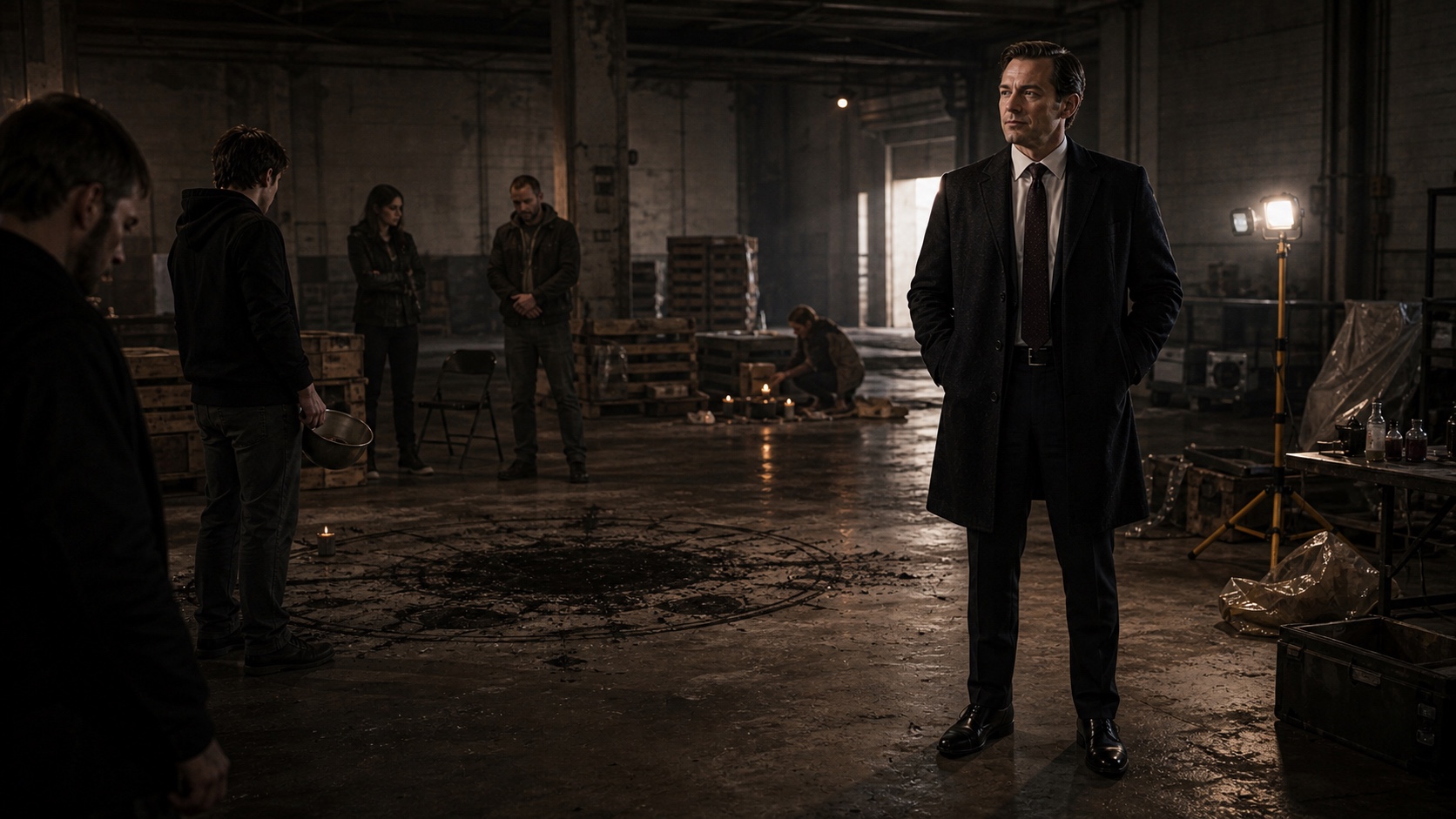
Hook: The Open Wound site: a converted warehouse space used by the Congregation for regular ritual activity, has been located, either through the Advocate's information (Case Four acceptance) or through field investigation following Case Three's documentary work. This is the Congregation's primary ritual facility. Harlan attends personally when the significant rituals are conducted.
The season's most complex investigation-and-confrontation case offers three possible entry points, and the characters' approach determines what they find.
The Truth: The warehouse hosts the Congregation's full ritual operation: approximately twenty active members, two Corrupted operatives serving as security, and a ritual program that has been feeding the three active Wound Sites. The site itself is at Waking Shard status from ritual activity. Harlan is here for the monthly senior rite, a significant blood ritual involving voluntary blood-letting from ten senior members.
If Harlan completes this ritual, the Open Wound site advances to Weeping Wound, and the Hollow-Mouthed's manifestation timeline accelerates from weeks to days.
Investigation Phase (pre-confrontation):
Characters have time before the rite to surveil and assess. This is where the season's research pays off.
The first syllable (if not already held from Case Four): Characters who refused or never received the Advocate's offer can recover the first syllable here through field research on the warehouse's ritual apparatus and the Congregation's own records (Research Hard , one day; each recovered almsbox seal grants its Boon die to this check). This is the independent path referenced in Case Four's refusal branch.
The second syllable: With the first syllable confirmed, characters can conduct additional Research (Severe , extended, 2 days) to surface the second syllable from historical records connected to the Hollow-Mouthed's prior activity in this region (1890s Wound Site incident, archived in the Latchkey Registry under a different name).
Monster Lore (Severe ): Full profile of the Hollow-Mouthed. Domain, behavioral profile, all weaknesses surfaceable: witnessed founded hope; the presence of all four true name syllables spoken in sequence; confrontation staged in the city's oldest active consecrated space (which is St. Casimir's, Father Okafor's church).
Research (Hard , Harlan): His full Corruption history is partially documentable: the devil contract (the original, not the Advocate's), the long pattern of decisions since. A character who succeeds may also find: Harlan's daughter. She did not die. She recovered. The deal never produced what he was told it would. He has known this for twelve years. He has continued serving anyway because the contract's compliance clause activated and he has been unable to stop.
The Confrontation: Characters must decide: stop the rite and expose themselves to the full Congregation response, or allow the rite to complete and deal with the accelerated timeline.
If they move on the rite: Twenty Congregation members (mostly Street Cell level: they believe in the cause but have no supernatural enhancement), two Corrupted operatives (standard profile), and Harlan. Harlan does not fight. If directly confronted, he will talk. He has been waiting for someone to confront him directly for longer than he can remember.
The Corrupted operatives will fight. The cult members will fight at first and begin surrendering when the operatives are down.
The Harlan Confrontation: This is not a combat scene. It is a Charisma + Inquiry check (Severe , his Corruption Armor, from Chapter Eleven) to reach the surviving human element. If the characters have found the research about his daughter, the difficulty drops to 3 (they can use the specific truth of what happened, not a generic appeal).
On success: Harlan stops the rite himself. He will not be free of the contract: that requires Case Six's formal intervention. But he can stop what is happening tonight.
On failure: Harlan completes the rite through the confrontation. The site escalates. The timeline accelerates.
Associated Organization Presence — The Neptic Brotherhood: A Brotherhood practitioner may appear here if the season has surfaced Eastern European connections: the ritual schema from Case 1's basement documents methods drawn from pre-Latin Christian practice, and the Congregation has been importing procedural elements from a source the Lantern Index has not identified. The Brotherhood has. By the time the characters arrive, it has had the warehouse under outside surveillance for two weeks, and it will not move before it is ready; hesychast patience is real and occasionally frustrating. A Brotherhood NPC who says we are not ready when the characters want to act may be correct: moving too early means the senior Congregation members escape, Harlan is not present, and the rite completes offsite. The Brotherhood knows the ritual schedule. The Brotherhood also holds an alternative path to the second syllable, useful for any group whose Latchkey Registry research has stalled: a twelfth-century Athonite exorcism record documenting a prior encounter with an entity whose signature matches the Hollow-Mouthed's. The second syllable is in that record. It takes a Research check (Hard ) to extract correctly from the archaic Greek, and the Brotherhood practitioner can assist (+1 Boon die ).
Resolution: The Congregation's operational capacity is broken. Harlan is in custody or has surrendered. The remaining Wound Sites are known and can be systematically addressed. The Hollow-Mouthed is now actively aware of the characters and is working toward its own resolution.
Threads Forward: The timeline. The Hollow-Mouthed will attempt to manifest at St. Casimir's, where Father Okafor is chaplain. The true name's third syllable is in the church's historical records (a 1947 exorcism case documented by a previous chaplain who never understood what he had encountered). The fourth syllable is in Harlan's original contract, which the Advocate holds, and which the Advocate will provide if the characters accepted his terms in Case Four (the compliance clause itself comes due after the season concludes; his cooperation now is an advance against it).
Case Six: The Oldest Church
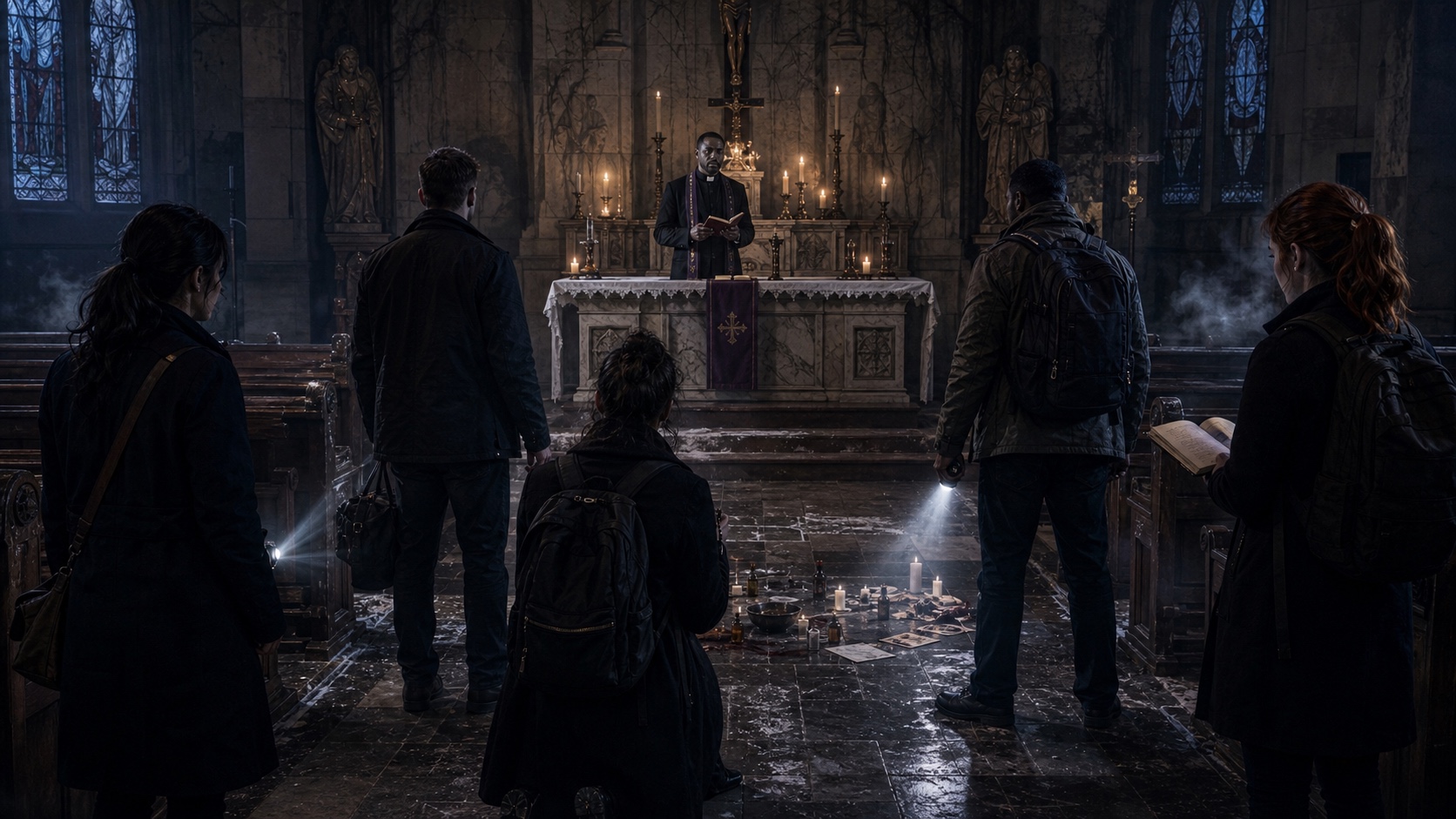
Hook: With its organizational infrastructure disrupted and its operation exposed, the Hollow-Mouthed moves to manifest directly before the window closes. Its target is St. Casimir's, Father Okafor's church, the oldest continuously active consecrated space in the city. It will force the arrival using the accumulated spiritual weight of years of Wound Site feeding, regardless of whether the sites are currently maintained. The attempt is tonight.
The characters have one evening to prepare, against a Tier 3 Named demon they have never directly confronted, now stripped of the organization it built specifically to avoid this situation.
Preparation Phase:
Characters spend the evening in preparation. This phase can cover multiple scenes:
The true name: By this point, they need all four syllables. The third is in St. Casimir's archive (Research Hard if they have access; Father Okafor can give them access). The fourth is either provided by the Advocate (if his terms were accepted in Case Four) or requires a Research check Extreme and an extended session of archival work, difficult but possible.
Associated Organization Presence — The Lamed Vav: The 1947 exorcism record at St. Casimir's is incomplete because the previous chaplain misidentified what he had encountered. A Named demon operating through human organizational infrastructure reads, to an untrained eye, like a possessing human spirit; the behavioral signature overlaps in ways that have confused practitioners since the distinction existed. A Lamed Vav practitioner examining the record corrects this immediately (Charter Trait: dybbuk identification is automatic on direct examination, and the misidentification is visible as soon as they see the chaplain's description of the entity's behavior). Having corrected the identification, they can cross-reference their pre-Christian archive against the fragment the chaplain recorded; the third syllable drops to Research Easy and takes a fraction of the time. If the fourth syllable has not been secured through the Advocate or the extended Research path, the Lamed Vav archive contains a fragmentary 16th-century record of a prior encounter with this entity. The fourth syllable is recoverable from it (Research Severe , reduced to Hard with the practitioner's assistance). The Lamed Vav does not have the full name, only pieces of a very old record of someone who came close; on tonight's timeline, that may be enough.
Father Okafor: The characters must decide whether to bring him in. He is ordained, at Corruption 0, and his spiritual authority at St. Casimir's makes him a significant asset for the finale. He will believe them if approached honestly and with evidence; the wrongness they describe is the one he has sensed in his city for years. His Rite of Office bonus and the physical location of his church combine to give the characters the strongest possible holy authority for the confrontation. His involvement is not automatic: it requires an Inquiry or Charisma check (Average ; he wants to help) and a willingness to explain everything.
Harlan's contract: If Harlan surrendered in Case Five and the characters accepted the Advocate's terms in Case Four, the Advocate provides the fourth syllable and something else: a clause in the Hollow-Mouthed's original operations that constitutes a legally-binding (by infernal standards) limitation on the demon's ability to act against the signatories of its contract without specific authorization. This does not stop the confrontation but it means the Hollow-Mouthed cannot directly attack Harlan, who may have a role to play.
The Arrival Attempt:
The Hollow-Mouthed does not arrive quietly. St. Casimir's begins to manifest symptoms before midnight, temperature drop, lights failing, the accumulated spiritual weight of the arriving entity pressing against the consecrated space like a physical force. Father Okafor, if present, recognizes the pressure for what it is and begins the church's formal consecration protocols, buying time.
The entity is not yet manifest; it is attempting to breach. The characters have a window.
The Confrontation:
The Hollow-Mouthed is not possessing anyone, so this plays as a True Name confrontation (Chapter Six, True Name magical talent tree) combined with a formal spiritual authority assertion at the most consecrated space available.
The structure:
- Characters with Theology 3+ or Deliverance 3+ lead the formal assertion of authority in the space, using the church's consecrated environment as a force multiplier
- The true name is spoken in full sequence by a character with sufficient spiritual authority (Theology 3+ and Corruption below 5), this directly confronts the entity at Stage 4-equivalent pressure, imposing a Bane die on all the Hollow-Mouthed's actions
- Father Okafor's ordained presence in his own church adds the Order of Mercy's Rite of Office bonus (Chapter Four) to all rite-related checks in the space
- The confrontation is an extended check requiring 4 successes (Willpower + Theology or Deliverance, Severe ) against the Hollow-Mouthed's active interference
The Hollow-Mouthed's Stage 4 Interference:
Its interference (domain: surrendered will, see The Season Arc) targets the characters' specific acts of choice and investment:
- It names what each character has given up or failed to protect during the season (specifically accurate)
- It offers the surrender that has been available all along, if the characters simply stop, the city will continue in a managed quiet, people will not die violently, things will simply be softer and sadder and the entity will have what it needs without drama
- It targets Harlan specifically if he is present: it knows him, it has owned him, and it will use its intimate knowledge of his choices to break him at the worst possible moment
Harlan's Role: If Harlan is present, the finale's moral center arrives when the Hollow-Mouthed turns its full attention on him. The entity cannot attack him directly (contract limitation) but it can speak to him. If the characters have reached him, if the Research about his daughter, the confrontation in Case Five, and whatever relationship has developed has made genuine human contact, he can be the one who speaks the domain weakness: something specific and true about hope that has survived what his particular hope has survived, not a prayer or a theological formula. No check governs this moment; only the season having been played in a way that makes it possible.
Resolution:
On 4 successes: The Hollow-Mouthed cannot complete its arrival. The accumulated spiritual weight collapses back. The Wound Sites across the city begin a genuine de-escalation. The entity is not destroyed, it returns to wherever it was before, but it is expelled from this city, from this claim, from the long operation it spent building. It will not be back for a long time.
On failure (3 accumulated failures before 4 successes): The arrival is not complete, but the confrontation has destabilized it enough that the entity cannot maintain pressure. It retreats. The threat is suspended, not resolved. A second attempt is possible, a future season's opening arc.
The Aftermath:
The Wound Sites de-escalate over weeks and months. The Congregation's remaining members scatter without organizational infrastructure. Some will be reachable; some will not.
Harlan. This is the season's final question. He has been serving an infernal contract for fifteen years. The contract was built on a lie. He has done real harm and real good in that time. The path back exists (Chapter Eight). It is long and not guaranteed. Whether the characters advocate for that path, make a different choice, or leave the question open is the final note of the season, and it should be the characters' choice, not the GM's.
Father Okafor says exactly one thing at the end: "Thank you for telling me the truth."
Season Pacing Notes
Case 1–2: The characters are meeting the game's core systems. The threats are Tier 1, the investigation is local, the stakes are individual. Let the characters be competent. Let them win.
Case 3: Scale becomes visible. The organization is larger than a cell. The mundane interface is complicated. This is where institutional opposition arrives.
Case 4: Moral complexity peaks. The devil deal offer is the season's most important single scene. Do not rush it. Do not telegraph the right answer. Let the table sit with it.
Case 5: Stakes are maximum. Harlan is the character who has been behind everything and he is also a person. Both things are true simultaneously and the confrontation should hold both.
Case 6: Let the preparation phase breathe. The finale is won in the preparation, not the confrontation. Characters who have built the true name, reached Father Okafor, and addressed Harlan will find the extended check achievable. Characters who have not will find it harder. The season's investment pays off here.
If the table plays faster or slower: Cases 3 and 4 can compress (run the Mercy House investigation briefly and transition directly to the Advocate's offer) or expand (spend full sessions on each). Cases 1 and 6 should not be compressed, the opening and closing need room.
Season at a Glance
| Case | Central Threat | Type | New System Introduced |
|---|---|---|---|
| 1. The Saint Adela Incident | Gripping Demon + Leech + Street Cell | Possession / Predator | Exorcism, investigation, Righteous Fire |
| 2. The Weeping Wall | Leech (Claudette Marsh) + Wound Site escalation | Predator / Wound Site | Banishment, Wound Site management |
| 3. The Mercy House Files | Established Organization (covert) | Institutional investigation | Faction-as-antagonist, documentary evidence track |
| 4. The Advocate's Terms | The Advocate (Tier 2 devil) | Devil negotiation | Devil deal mechanics, contract leverage |
| 5. The Opened Hand | The Architect (Harlan) + Corrupted operatives | Confrontation / Moral | Reaching surviving human element |
| 6. The Oldest Church | The Hollow-Mouthed (Named, Tier 3) | Season finale | True Name confrontation, domain weakness, full season payoff |