The world you know is the lid.
What is in the jar is older, colder, and paying attention.
Everything that follows in this chapter is true in The Hollow: true the way gravity is true, even when no one is looking. The supernatural events your characters investigate have structure, the things they fight have names and rules they follow, and the horror runs on an order that has been there the whole time. Read this chapter before you build a character; what your character knows, or failed to learn, will determine how long they survive.
The Hollow
Before there was history, there was a place where God walked with the people He had made. A garden. A crossing point between the world as it is and the world as it was meant to be. When that place was closed, when humanity was removed from it, when the door was sealed, something remained.
Not the Garden of Eden. The wound the Garden left.
The Hollow is that wound: an absence, the shape left in creation when something holy was severed from it, no dimension or plane or hell a traveler could reach. And like any wound, it bleeds. What bleeds from it is not blood but influence: thin places where the membrane between what is and what should not be has grown permeable, where old things that should stay sealed press against the world from the other side, where the architecture of the fallen reaches through the gap to touch what it can reach.
From the beginning it was a single great wound: vast, deep, catastrophic. For the whole of the ancient world it stayed that way, one enormous sick place at the center of things where the worst that could happen always could. The oldest traditions the factions keep, older than any written record, still remember it as one.
Then came Noah's Flood.
The theological debates about what the Flood was have never stopped. What can be observed, by those who know how to look, is what it did: the great Wound was shattered. The Hollow was broken by the weight of water and divine force into thousands of fragments and those fragments scattered across the face of the world. They went everywhere, under cities and under oceans, beneath old churches and beneath older ruins, into mountains and into crossroads and into the foundations of buildings that would not be built for another four thousand years. The shards of the Hollow have been with us ever since.
You are living on top of them right now.
Shards
A Shard is a fragment of the original wound: a place in the world where the membrane has been thin since Noah's Flood scattered the pieces. Most are dormant and completely invisible. You could buy a house built on a Cold Shard and live in it for thirty years and feel nothing worse than vague unease, bad dreams, a conviction that something is watching you from the closet. Millions of people do exactly that, every day, and never know.
No one has counted them all, but the oldest reckonings put the number a little past one hundred and twenty thousand, scattered across the whole earth. The Flood set that count. Nothing since has added to it: a Wound is never a new Shard, only an old one waking.
Shards are structural, not evil in themselves. They are like fault lines: the fault line does not cause the earthquake, but when there is enough pressure, the fault line is where the earthquake happens.
Shards are not perfectly fixed. Most lie where the Flood left them, but a Shard drifts toward concentrated wrongness the way water finds the low ground. Sustained evil in a place, over years, can draw a Shard slowly toward it. This is part of why the sites below gather them: sometimes the settlement grew up around the Shard, and sometimes the Shard was pulled toward what the settlement did.
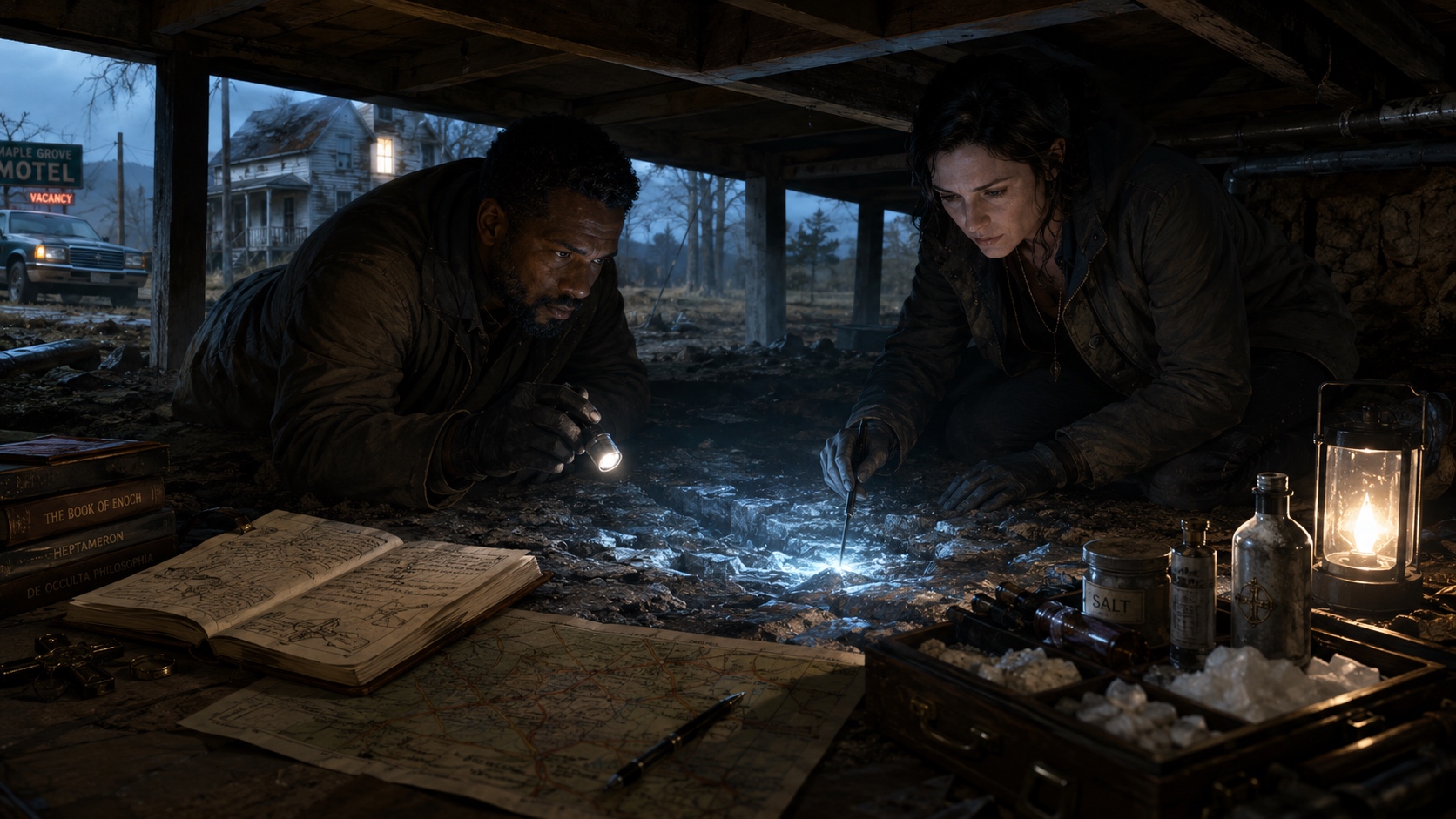
Shards tend to concentrate under specific kinds of places, often following some old instinct in human settlement patterns toward the sites of power and wrongness that even ordinary people can half-feel. Common Shard concentrations:
Old sacrificial sites, wherever cultures have poured blood into the ground for a deity, whether that deity deserved the blood or not. Battlefields where violence was massive enough and sustained enough to soak the landscape with the weight of it. Places where innocents were murdered, not in isolated incidents, but in patterns, over time: old prisons, hospitals whose cruelty outlasted their mercy, mines where management weighed the cost of lives against the cost of safety equipment. Crossroads in the old sense, where boundaries were marked, where travelers disappeared, where deals were struck that were never meant to go well for one party. Wells and caves, places where ancient people pressed down toward the underside of things and sometimes found it pressing back. Sealed rooms in old houses. Cemeteries where the work of burial was done wrong, where debts were left unpaid, where the dead were not properly released. Churches, not because sanctity creates Shards, but because sanctity has always drawn itself toward the thin places, trying to seal them.
A Shard sleeps under a farmhouse in rural Ohio where nothing terrible has ever happened. It sleeps under a cathedral in France that has been consecrated and reconsecrated for seven centuries. It sleeps under a parking garage in Phoenix, under a lake in Scotland, under a loading dock in Singapore.
It will keep sleeping, unless something wakes it.
Wounds
A Shard wakes when something feeds it.
The most reliable way to feed a Shard is occult practice: intentional ritual engagement with forces beyond the mundane, whether or not the practitioner knows exactly what they are doing. The Shard does not care about intent. A dabbler with a Ouija board and a book they found at an estate sale cannot do in one session what a dedicated cult can do in a decade. But a dabbler who hits a Cold Shard can warm it, and something warm can be warmed further by what follows.
Beyond deliberate practice is grave sin. Not all sin, and not minor failures, but acts of profound moral violence against God's order: murder, betrayal of the utterly innocent, abuse sustained long enough to carve into the bones of a place, and profound sacrilege, the deliberate desecration of what has been made holy.
The most efficient feed for a dormant Shard is sacrifice. Cultures that did not understand why human sacrifice worked discovered that it did, and kept doing it, following the escalating reinforcement of the results. The murder of innocents, children and the pure above all, is among the most catastrophically effective methods known, and certain infernal factions have relied on that fact across the whole of recorded history.
When a Shard wakes enough, it becomes a Wound.
A Wound is a place where the influence of what is behind the Hollow is actively bleeding into the world. It distorts the local spiritual environment. It attracts things that are drawn to thin places, not all of them supernatural, because ordinary people with spiritual sicknesses of their own gravitate toward sites that feel like they match what is inside them. It weakens the disciplines that protect what is consecrated. It amplifies what is wrong.
A Wound left to itself tends to grow. The opening widens with each supernatural event that takes place near it, each act of possession, each successful summoning, each deal concluded between a devil and a desperate person. Wounds attract the activities that deepen Wounds.
This is not inevitable. Wounds can be sealed, reduced, contained, consecrated: brought back down the scale toward dormancy. This is a significant part of why the organizations in this book exist.
The Wound Escalation Scale
Every active supernatural site can be assessed on the Wound escalation scale. This tells you, and the GM, what you are dealing with, what it will take to address it, and how much time you have before it gets worse.
Wound Escalation Scale
| Stage | Name | Assessment |
|---|---|---|
| 1 | Cold Shard | Dormant. Hidden. Needs a trigger to wake. |
| 2 | Waking Shard | Stirring. Influence is thin but present. Most people feel nothing; sensitives and Awakened notice. |
| 3 | Open Wound | Fully open. Supernatural influence is active. Strange things are happening. |
| 4 | Weeping Wound | Bleeding hard. Major supernatural events. Danger to everyone inside or adjacent. |
| 5 | Breach | Complete rupture. Continuous supernatural overflow. Catastrophic without immediate intervention. |
Cold Shard. The wound sleeps. Nothing is happening here that anyone would notice. An Awakened character who knew where to look might feel a faint resonance, a heaviness, a wrongness at the edge of perception, but even they might dismiss it as imagination. Cold Shards can remain dormant for centuries. They require active feeding to wake, and most of them will never receive it. The danger is that a Cold Shard is invisible until it is not.
Waking Shard. Something has touched the Shard. It is not yet fully awake, but it is no longer fully asleep. Ordinary people in the vicinity may report vague unease, persistent bad dreams, animals behaving strangely, a sense of being watched that they cannot explain and quickly forget. Awakened characters feel it clearly, an unmistakable low-frequency wrongness in the local environment. Equipment anomalies, cold spots, minor phenomena. Nothing makes the news or forces a confrontation, but something is coming if it is left alone.
Open Wound. The Shard is open. The membrane between the world and what is behind the Hollow is thin enough that influence flows freely in both directions. Supernatural entities can approach and sometimes enter. Objects in the area may acquire properties they should not have. People without Awakened Blood begin to notice that something is wrong with this place, though Merciful Dissonance will work hard to explain it away. Awakened characters perceive the site as clearly, viscerally sick. Investigations typically begin with a site at Open Wound or Waking Shard. This is still a stage where skilled intervention can reduce the Wound. It is also the stage where things escalate fastest if they are handled wrong.
Weeping Wound. The site is bleeding hard. Supernatural events are continuous or nearly so. People in the area are being affected: possessions, disappearances, psychic trauma, poltergeist events, physical danger. Ordinary people can no longer fully explain what is happening and some of them are no longer trying. Merciful Dissonance is straining under the weight of accumulated evidence. The wrong entities may have already established a presence. A Weeping Wound is dangerous the moment you enter it and more dangerous the longer you stay. Reducing a Weeping Wound requires significant resources, multiple specialists, the right rites and relics, and more time than you probably have.
Breach. The Wound has ruptured. Continuous supernatural overflow. Whatever was trying to get through is getting through. People in or adjacent to the site are in immediate mortal and spiritual danger. Merciful Dissonance is failing, witnesses are breaking under the cognitive weight of what they are seeing. A Breach is a crisis event. The goal is no longer investigation; it is containment. If a Breach is fully established and goes unaddressed, the damage to the surrounding area, physical, spiritual, community, may be permanent. Full Breach events in populated areas are among the worst scenarios that any faction in this book is organized to prevent.
Moving the Scale
The escalation scale runs in both directions. It can be slowed, stopped, and reversed.
What moves a site toward dormancy:
- The right consecration of a Waking Shard site, which can return it to Cold.
- A sustained sealing effort on an Open Wound.
- Skilled exorcism.
- The right relics, properly deployed.
- Removal of the occult activity feeding the site.
What moves a site toward Breach:
- Continued occult activity.
- Successful possessions.
- Devil deals concluded nearby.
- Murder on or adjacent to the site.
- Failed or partial rites that open the wound further without closing it.
- The presence of an established infernal entity resisting containment.
Time is not on that list, and the omission is deliberate. A Wound does not escalate on a schedule; it escalates when something feeds it. What time does is raise the odds: the longer a site stays open, the more likely it is to attract something willing to do the feeding.
Your job, most of the time, is to get to a site before it reaches Weeping Wound, figure out what is feeding it, and seal it before it gets worse. Most of the time, something has already started feeding it before you arrive.
Merciful Dissonance
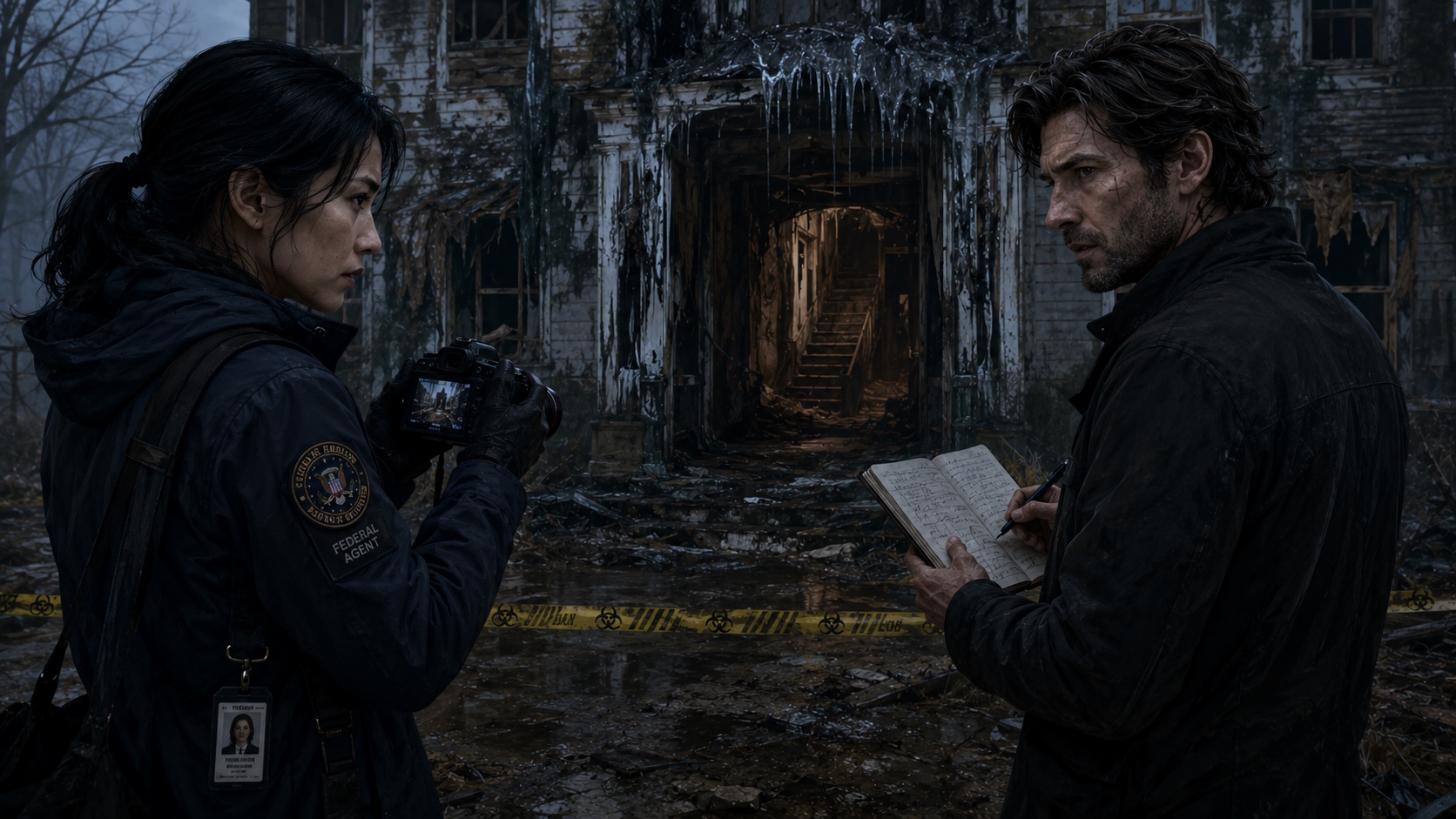
Every witness your characters interview has a mind that is working against them. When an ordinary person sees something impossible: a face rotating too far, a body leaving the ground, a voice in a language that should not exist saying something that makes perfect sense, the mind does not store the experience correctly. It cannot. The human brain has no file folder for what actually happened, so it finds the nearest available folder and puts it there.
The demon becomes a very angry man having some kind of episode. The levitation becomes a trick of the light, a misremembering, a dream. The relic that should not be glowing is a reflection from the window. The child's voice that came from the adult mouth was the television. The shape in the doorway was the neighbor, who is, in daylight, embarrassed to have alarmed you.
This is Merciful Dissonance. The word merciful is accurate, not ironic. The alternative is mass psychosis. The ordinary human brain would break under sustained exposure to the truth of what is in the world, and so, by design or by evolution, depending on who you ask, the brain protects itself. The impossible becomes the explicable. The supernatural becomes the traumatic. The evidence becomes the coincidence.
Merciful Dissonance is messier than a clean wipe. It is a rewrite, and like any rewrite, it leaves seams. A witness who experienced Merciful Dissonance may:
Remember the event differently every time they tell the story, the mundane explanation eroding slightly at each retelling. Wake at night with images that do not match the story they now believe. Become unusually hostile when pressed on the inconsistencies, which is itself a dissonance response, the mind defending the file it created. Report vague wrongness about the location afterward, without being able to say why they avoid it. Keep objects or details from the event that do not fit the mundane explanation and cannot account for why they kept them.
Institutions reinforce Merciful Dissonance. The police report must explain the death in terms of available causes; the newspaper runs the most available rational explanation; the hospital notes the symptoms and treats them with the nearest applicable diagnosis. This is not conspiracy but institutional cognitive architecture, and it works the same way individual dissonance works: organizations cannot file paperwork for what actually happened any more than individual brains can.
What breaks Merciful Dissonance:
- Prolonged exposure to a high-stage Wound site, where the events become too frequent and too severe for dissonance to cover them.
- Direct possession or infernal contact, which leaves traces that do not fit the mundane explanation no matter how hard the mind tries.
- Inherited or trained spiritual perception. Certain bloodlines, certain monastic disciplines, and certain kinds of deep and specific faith practice can weaken the dissonance mechanism.
- Awakened Blood, which bypasses it entirely.
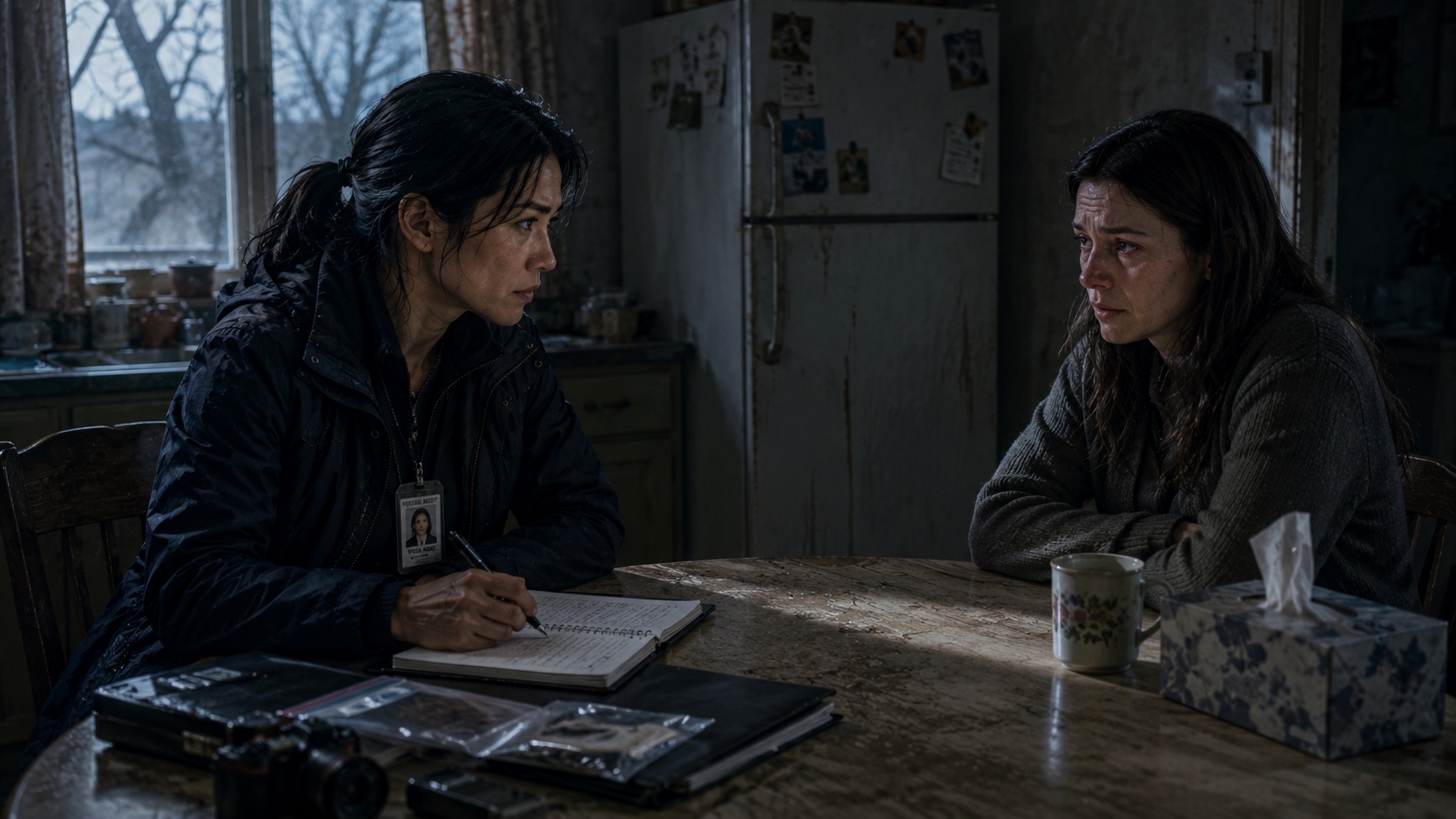
What partial dissonance looks like: a person who half-remembers. Who knows something happened but cannot say what. Who describes the night with strange gaps and stranger details around those gaps. Who has been trying to explain the scar for two years and the best they have is a dog. These witnesses are often the most important sources in an investigation, and they are also the most fragile: push too hard toward what they actually saw, and the dissonance mechanism may rewrite even that partial memory into something safer.
The mechanical rules for using, resisting, and exploiting Merciful Dissonance in play are in Chapter Twelve, Running The Hollow. Here it is enough to know it as the world's cognitive immune system: the reason the supernatural has been happening in plain sight for all of recorded history while most people never learn it.
Awakened Blood
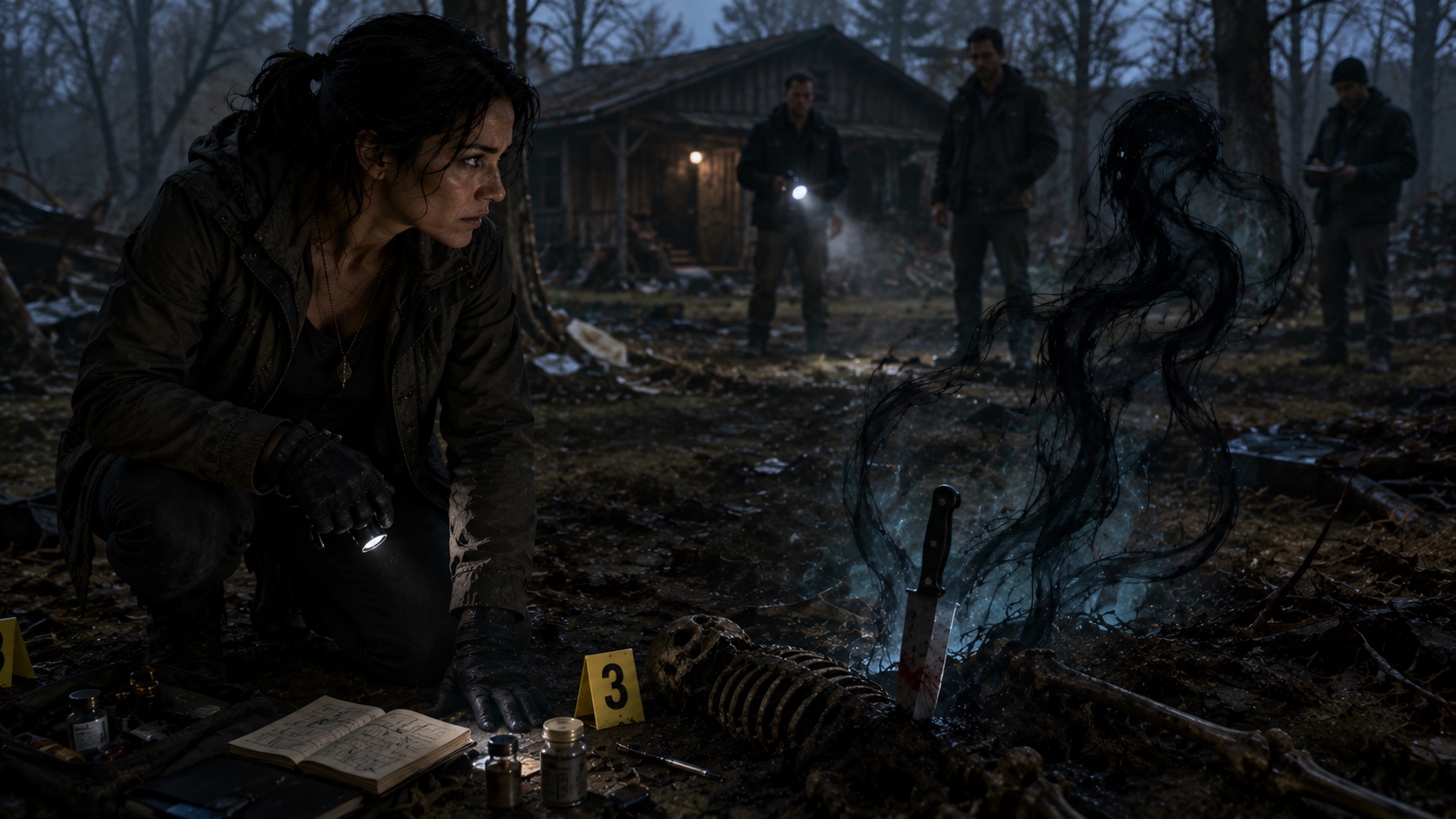
You can see it. That is the whole of it, and it is not a small thing.
Awakened Blood is the quality that all player characters in The Hollow share. It is the thing that makes your character the kind of person who goes toward what others run from or explain away. When a dead man's voice comes out of a living throat, you do not reach for a mundane explanation. You reach for whatever it is you carry: a weapon, a rite, a file, a relic, a phone to call someone who specializes in this.
What Awakened Blood is, precisely, is an open question that the factions answer differently. The Order of Mercy calls it grace, an individual bestowed with the ability to perceive spiritual reality, often by bloodline but sometimes by event, always ultimately by providence. The Lantern Index calls it a recessive genetic marker activated by proximity to Hollow-related events. The Candleless call it being touched wrong by something that left a door open. The Watchfires call it anointing, the specific and particular call of God on a person's life, which comes with the burden of being unable to pretend you do not know what you know.
All of them are partially right. None of them can fully explain why some people wake and most people do not.
What Awakened Blood does not do: protect you from fear, keep you from being possessed (if anything it makes possession more contested, which is more dangerous, not less), guarantee that the entities you face cannot deceive you, or make you special to God in a way that ensures His protection. It means you can see the knife before it cuts you. What you do with that sight is entirely up to you.
The full mechanical context for Awakened Blood: what it means for character creation, how it interacts with Magical Tier Access, what it costs in the long run, is in Chapter 3 (Character Creation) and Chapter 8 (Faith, Rites, and Magic).
The Cosmology
The Hollow is Christian horror. The cosmology is Christian: God is real in this world, and angels, demons, devils, and the fallen are real with Him, bound by rules and carrying consequences.
A character who practices a different faith, or no faith, is a completely valid character, and their relationship with the Christian cosmological truth of the world is part of their story. The truth operates whether or not they believe in it.
God. God is real, active, and not a game mechanic: He does not appear as a character, solve problems, or turn like a dial in the players' hands. His reality structures everything; it is why holy power works, why faith has leverage, why certain rites function, why angels are real and not mythological. The GM does not play God. The consequences of God's reality play out through everything else in this chapter.
Angels. Angels are good, and they are not safe. They are vast intelligences oriented entirely toward the will and purpose of God, operating in the world when the situation has escalated far enough to warrant intervention of that kind. They do not look like the paintings, and they do not arrive to comfort. They arrive because something has become unacceptable, and the scale of their arrival matches the scale of the problem.
An angel in the story means something has already gone very wrong and is about to go very right in a way that will be catastrophic for anything in the vicinity. Player characters who encounter an angel survive it; whether the encounter leaves them unchanged is another question entirely. Angels are rare. When they appear, it is the end of a chapter, not the beginning of an adventure.
Demons. Demons are fallen angels, neither small nor metaphorical. They grant no wishes, make no deals, and observe no boundaries unless forced to by something with the authority and preparation to enforce them. Their primary mode of engagement with the material world is possession: occupying a human body, using it as a weapon, using the suffering of the host as food, working through the host to accomplish whatever objective they have been assigned or are pursuing independently.
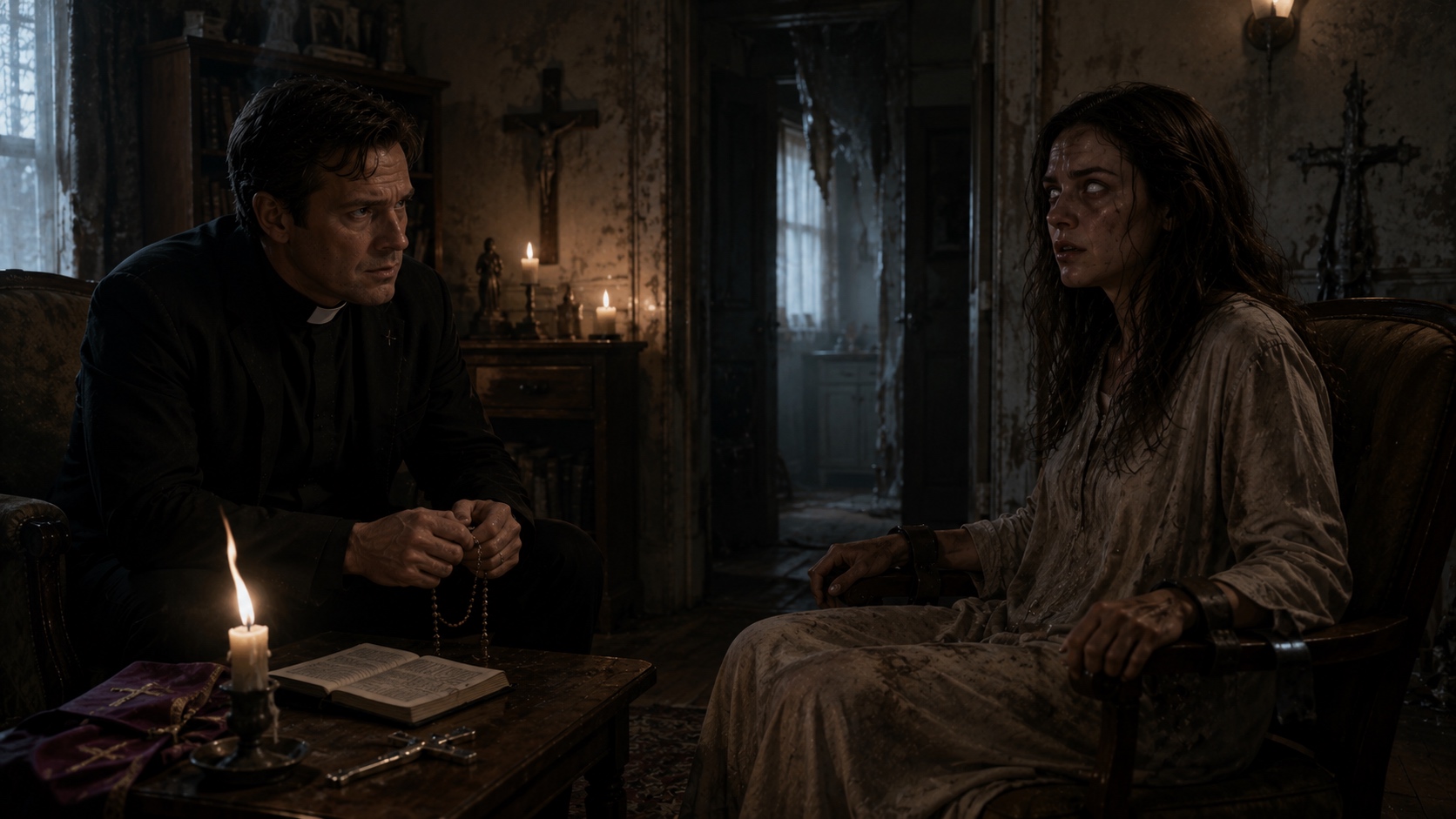
In a possessed body, the human is increasingly absent and the demon increasingly present; the longer a possession goes unaddressed, the less of the original person remains. This is the primary reason that speed matters in possession cases. You are not just fighting a demon. You are fighting the clock on how much of the person is left.
Devils. Devils are fallen angels who fell with authority: a specific category of the fallen that retained or twisted the structural powers of their original station. A demon possesses; a devil bargains.
Devils operate under Infernal Law: a system of binding agreements, debts, claims, and procedural rules that is ancient, consistent, and completely serious. A devil cannot simply take what it wants (a demon can, within the constraints of possession). A devil must be invited, must make an offer, must receive consent of some kind, and then the claim it makes is legally binding by the rules of the fallen order it represents. This is why the Order of Mercy maintains lawyers as well as exorcists. Devil claims are contested with the tools of Infernal Law, and those tools require expertise.
The Corruption track, a mechanical condition unique to The Hollow, reflects the degree to which a character's spiritual life has been compromised, leveraged, or claimed. Devils are the most reliable source of Corruption. Their business model depends on it.
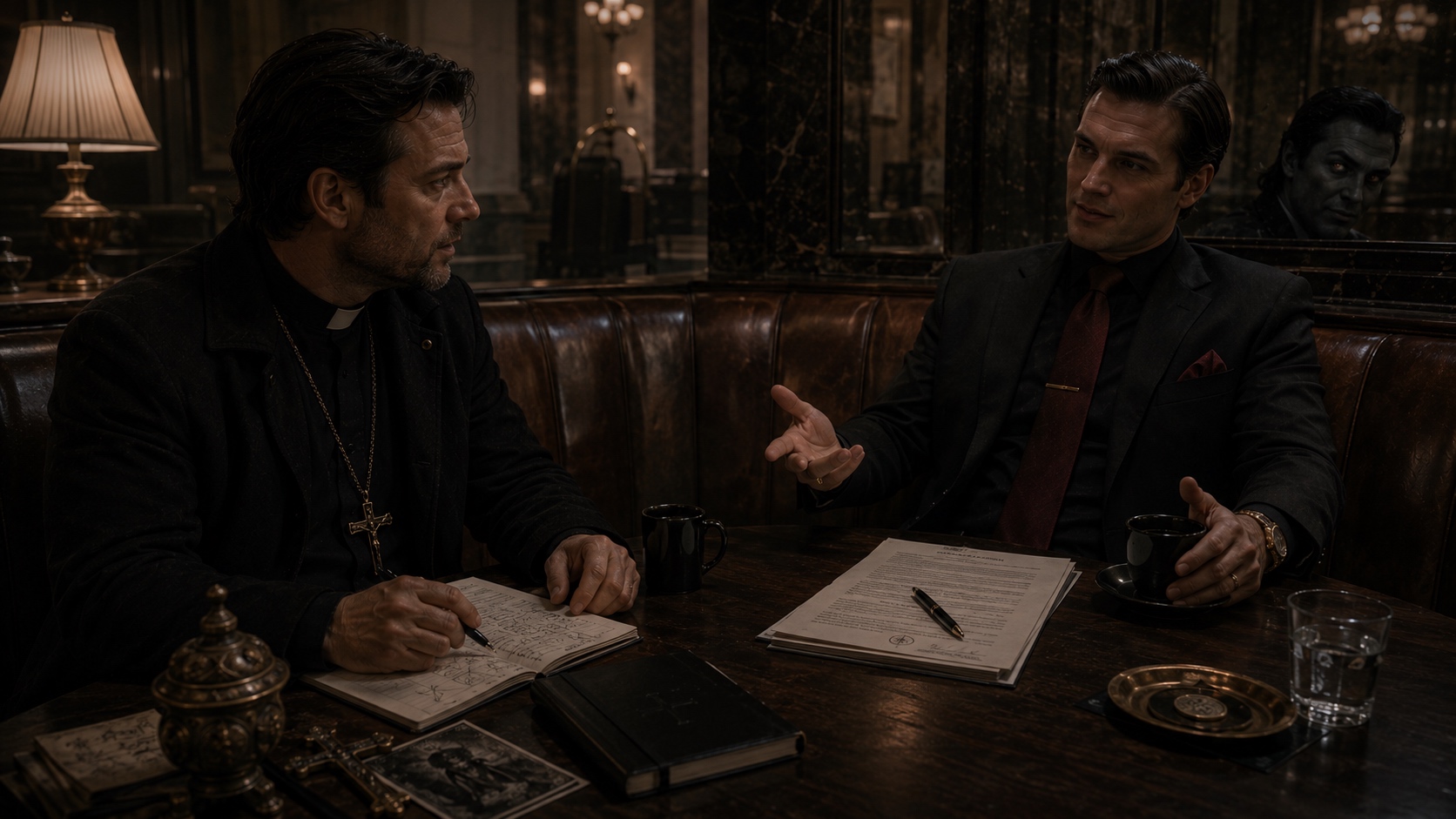
Ghosts. A ghost is a human spirit that has not passed on: not because human souls survive death in a loop, but because some souls become caught. Unfinished business. Unresolved violence. Profound injustice that the soul cannot release. A lie that has never been answered. A murder that was never named. Ghosts are human, which separates them from demons and makes them, in their own way, harder: you cannot simply drive one out. You have to understand it.
A ghost chooses none of this, and is dangerous anyway. One in sufficient distress can cause significant physical harm, manipulate the environment, escalate a Wound site, and drive ordinary people toward breakdown. A ghost that is helped, that is given what it needs to let go, releases. This is the goal of Spirit Banishment, which is distinct from Exorcism.
Spirits. Spirits are non-human entities native to the between-spaces: the margins, thresholds, and residual pressures of the Hollow that have produced their own inhabitants over the centuries since the rift. Threshold Watchers, Hollow Walkers, and older presences that do not fit neatly into any other category fall here. Spirits operate by their own rules, pursue their own purposes, and are addressed through Banishment rather than Exorcism.
They are not evil in the way a demon is evil; they are simply wrong for this world, pressing against a membrane they were never meant to cross. Full spirit taxonomy is in Chapter 11 (Monsters and Unnatural Threats).
Human souls that are displaced into living bodies (whether through tragic attachment or deliberate infernal action) are not spirits. They are dybbuks or ibburim, and they require a different procedure entirely. The Lamed Vav specializes in their identification and release.
Confusing a dybbuk with a demon, or attempting an Exorcism on a human soul, has cost lives and souls.
The Church. The Church, the Roman Catholic Church in particular, though other institutional Christian bodies operate in the same spiritual reality, is broadly a positive and competent force against supernatural evil in this world. It is not the secret villain of the story. The Church has been fighting this longer than most other institutions in the world, it knows things, and it is the best-resourced supernatural counterforce that operates openly in human civilization.
It is also human, which means it is slow, political, sometimes wrong, sometimes corrupt at the institutional margins, and sometimes more interested in preserving its own authority than in addressing the specific case in front of you right now. The Order of Mercy operates in the gap between what the Church officially acknowledges and what it covertly handles. The tension is deliberate.
The Public World
What ordinary people know:
Strange things happen sometimes. People snap and do terrible things for no apparent reason, and the psychiatrists do their best with the available diagnoses. Old buildings have atmospheres. Some places feel wrong in ways that real estate agents price into the listing without being able to explain why. Dreams feel like visitations. Grief feels like presence. The news covers the event and moves on before the deeper pattern can be assembled by anyone trying to read it.
Religion persists at scale despite two centuries of confident predictions about its decline, partly because a significant number of people have had experiences that the secular explanatory frame cannot actually account for, and they know it, even if they cannot say it in a way that survives peer review.
The Internet has made it worse and better simultaneously. It has created thousands of communities of people sharing encounter accounts and pattern-matching across them in real time. It has also created an enormous amount of noise, fake encounters, monetized panic, real mental illness mislabeled as supernatural experience, and supernatural experience mislabeled as mental illness. Sorting the signal from the noise requires skills that most online communities do not have and that your characters, depending on their faction, might.
Because law enforcement, medicine, academia, and government all run on Merciful Dissonance at the organizational level, the FBI's guidelines for investigating unusual phenomena are exactly what you would expect from an institution whose bureaucratic file folders cover fraud, mental illness, and rural superstition, and nothing else. The Lyncean Office exists in the gap. Directorate Vesper operates in the gap created by the gap.
The Catholic Church officially acknowledges demonic possession and maintains an active exorcism protocol. This is not a secret. The Church is surprisingly transparent about it. What it does not officially acknowledge is the scope, the volume of cases, the institutional resources devoted to them, the Order of Mercy's existence, or the full theological framework behind why the scale is what it is. The public statement and the operational reality are on different floors of the same building.
For your characters, the public world is a resource and a liability simultaneously. It is a resource because it provides cover, the Merciful Dissonance of institutional normal makes it easier to operate without public exposure, to move through a crime scene under a federal ID, to explain the equipment in the van without triggering questions that cannot be answered in terms the public world accepts. It is a liability because it has real authorities who can arrest you, real journalists who can expose you, real neighbors who call 911 when they see what you are doing at 3 AM in the basement of a building you do not own.
The world does not know. That is both the tragedy and the protection. Your job is to keep it that way, and to handle what it does not know about, and to survive the handling.
Case Observation: Field Notes
The following is a representative example of how the public world and the hidden world interact in the early stages of a case.
Three weeks ago, Norma Weiss, 67, reported a gas leak to building management at 4411 Caldecott. Management called a plumber. No gas leak found. The smell was attributed to a dead rat in the walls. Five days later, Weiss was transported by ambulance after neighbors reported she had been screaming for three hours. She told emergency responders she had seen something in the hallway she could not describe and did not want to try. She was evaluated and released with an anxiety diagnosis and a prescription. Her son called her story "stress from living alone." Weiss has not returned to the apartment.
Current occupant: unknown squatter, unit unsecured. Local PD responded to a noise complaint and found no one inside. One officer noted in the incident log: "something smells wrong in there, not like gas." He did not elaborate.
4411 Caldecott is a Cold Shard site that woke twelve years ago. It is currently assessed at Open Wound and trending toward Weeping.
We are not the first to notice. Someone has been feeding this site for a long time.
- Lyncean Office Field Note, Assessment Pending