Faction Expertise Matrix
| Faction | Primary Expertise | Not Best At |
|---|---|---|
| Order of Mercy | Exorcism, sacramental authority, Church archives, infernal law, relic authentication | Spirit banishment, folklore monsters, black-market contacts, off-book operations |
| The Watchfires | Direct confrontation, discernment under pressure, community defense, Passion-driven intervention | Institutional archives, sacramental rites, relic protocols, waiting for authorization |
| Directorate Vesper | Intelligence, tradecraft, cover operations, foreign occult threat networks, deniable access | Sacred rites, pastoral care, transparent legal process, open investigation |
| The Lyncean Office | Domestic investigation, impossible evidence, jurisdiction, making the legal system work | Infernal law, relic handling, monster killing, off-book methods |
| The Latchkey Archive | Object identification, containment, safe handling, provenance, vault access | Possession and exorcism, field hunting, pastoral work, cult infiltration |
| The Black Road | Monster weaknesses, tracking, fieldcraft, practical kill methods, road survival | Exorcism, legal investigation, relic cataloging, institutional authority |
| The Lantern Index | Research, dead languages, forbidden texts, names, the oldest version of every story | Combat, field containment, emergency intervention, practical killing |
| The Candleless | Forbidden rites, infernal loopholes, black-market relics, dirty solutions | Trust, legitimacy, clean spiritual authority, institutional cooperation |
| Independent | Flexible, varies by Background and Career | No faction passive, no hard-gated authority access |
Each faction in The Hollow is an expert at one part of the truth, and only that part. This chapter defines who the factions are, what they can do, what it costs to belong to them, and what it means at the table when your party includes more than one.
The Principle
A possessed woman requires a priest and a hunter and a scholar, and possibly someone willing to call in a favor from a contact no institution will officially acknowledge. The priest knows what is inside her. The hunter knows what it will do when it is forced out. The scholar knows its name, and the name has leverage. The contact keeps the family from going to the police before the priest is done. None of them can cover the others' lane.
None of the eight is secretly the right answer. Each has survived for centuries because it does what the others cannot, and each pays for it in a currency the others do not spend: a division of labor, and the work enforces it.
A party that covers multiple faction lanes is not just flavorful; it is mechanically optimal. Cases that require one faction's specialty will almost always require another's before they are finished.
Starting talents. Every faction entry lists one free Tier 1 talent. The talent costs no XP. If the chosen tree requires Tier 1 Magical Access the character has not yet unlocked, the 1 permanent Wound Point access cost still applies; Chapter Six covers talent access in full.
Bring the wrong specialist and the case does not simply stall. It gets worse while you are working it.
Order of Mercy
The Order of Mercy is the Roman Catholic Church's hidden supernatural intelligence and intervention arm. It has existed, in various forms and under various names, since the early centuries of the Church. Its current structure answers to a Cardinal Protector who answers to the Pope. Active archbishops and most bishops know it exists; most priests do not, and no record of it survives in any document accessible outside Vatican administrative channels.
The Order investigates impossible incidents within Church jurisdiction, conducts formal exorcism procedures on behalf of dioceses that cannot handle their own cases, authenticates relics and miracle claims, manages Church property affected by Hollow activity, and maintains the largest institutional archive of supernatural case files in the world. When the Church has a supernatural problem it cannot ignore and cannot acknowledge publicly, the Order handles it.
Members include ordained priests, lay investigators with advanced training, specialists in infernal law and Canon law, archivists, and a small number of theologians whose published work carefully never mentions what they have actually seen.
What They Know: Exorcism procedure in depth. Sacramental theology and its mechanical leverage against possession. Church history of supernatural events across twenty centuries. Infernal law and how Catholic authority intersects with it. Relic authentication and provenance. Miracle investigation and how to distinguish real supernatural events from counterfeits. The official story and the operational reality.
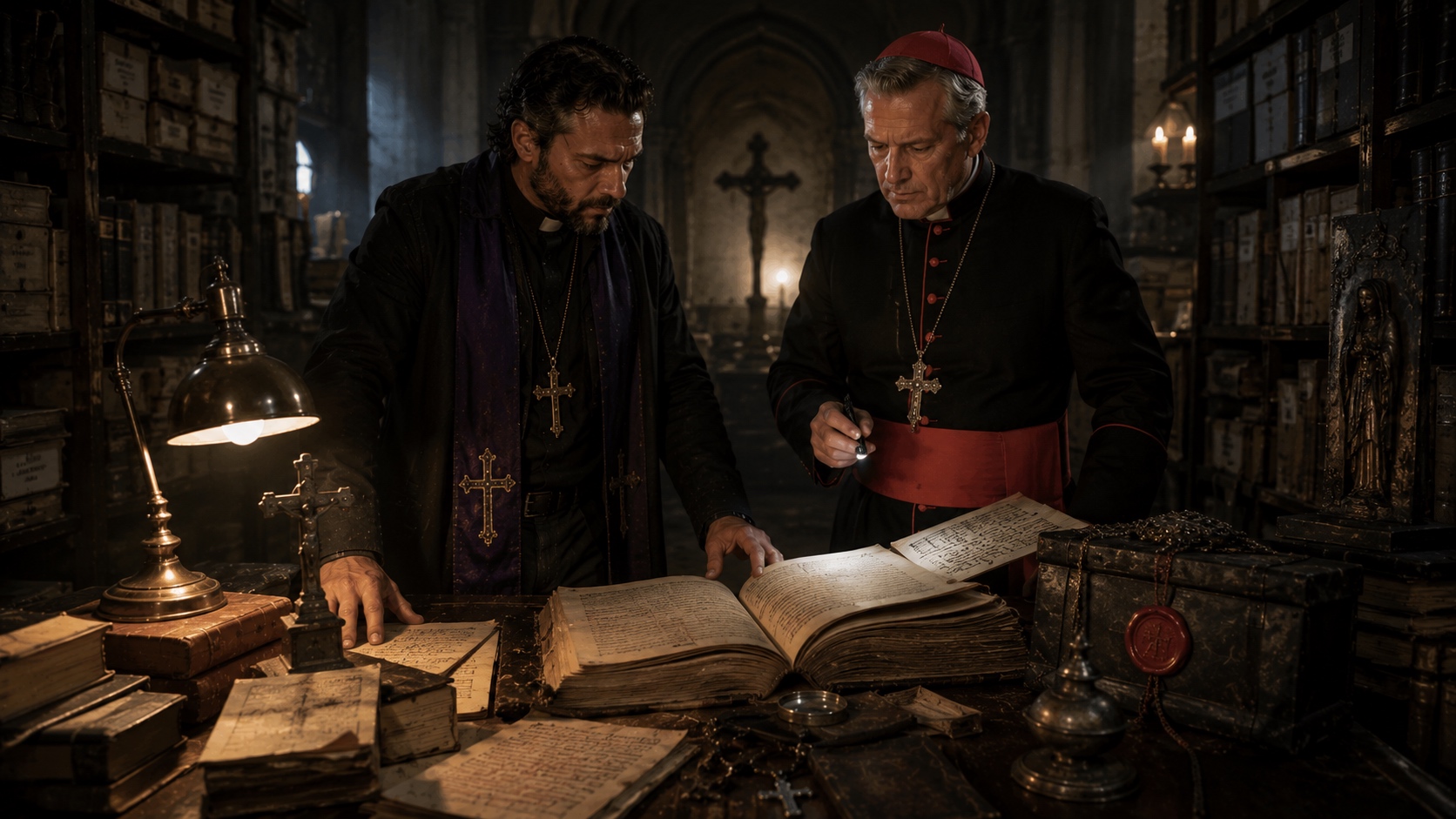
What They Do Not Know: Spirit banishment: their lane is possession and demonic activity, not unquiet human dead. Folklore monster hunting. Black-market occult contacts. Off-book operations without institutional backing. They are strongest inside the structures of the Church and require significant support to operate outside them.
Faction Profession Skills
Theology, Discernment, Deliverance (Restricted), Relic Lore
Passive: Rite of Office
When an Order of Mercy character performs or assists a sanctioned rite under proper Catholic authority (exorcism, deliverance, a formal blessing, or a formal demonic identification procedure), add 1 Boon die to the check.
If the character is ordained and the rite involves the Sacraments hard-gated skill, add 2 Boon dice instead.
The Boon dice carry centuries of refined procedure: the rite has a shape, and they know the shape.
The passive does not apply to improvised spiritual confrontation, unauthorized procedures, or rites performed outside Catholic ecclesial authority.
Lay Order members, meaning investigators, scholars, and non-ordained specialists operating under mission authorization, add 1 Boon die to their supporting checks while actively supporting an ongoing sanctioned rite.
Hard-Gated Authority Skills
Sacraments (ordained Catholic priests only): Performing valid Catholic sacraments: Mass, confession, anointing, last rites, formal blessings, and full sacramental acts that require ordination. Theology can explain these rites. Sacraments permits them.
Mercy Archives: Accessing, navigating, and interpreting the Order's operational case files: possession records, miracle investigations, relic incident notes, sealed parish reports, demonic identification files, and two thousand years of institutional supernatural knowledge.
Ecclesial Authority: Exerting Church authority through bishops, cardinals, diocesan offices, religious orders, parishes, holy sites, and sealed rooms. Making the institutional weight of the Church move in a situation that requires it.
Starting Talent Option
One free Tier 1 talent from the Exorcism or Discernment talent tree. The Exorcism tree requires Tier 1 Magical Access (see Starting Talents, above).
Obligation and Complication
Active Order members answer to a superior. Cases can be removed from their hands. They can be recalled, reassigned, restricted. Acting against an explicit directive without authorization is a serious violation with serious consequences, not just institutional but spiritual, within the Order's theological framework.
Diocesan politics intrude on field operations, and Church officials who know about the Order but do not work within it may interfere, obstruct, or compete for authority over a case. The archive cuts both ways as well: every report a member files is read at levels that can pull the case.
Starting Gear
Clerical field kit: breviary, stole, emergency holy water ampules, ritual oils, rosary. Small relic transport case, sealed, iron-lined. Civilian vehicle. Credentials that explain why a priest is at this address at this hour.
We are not hidden because we are ashamed. We are hidden because the moment the world knows we exist, so does everything we were built to answer. Order of Mercy, Cardinal Protector's standing brief, The Hollow
The Watchfires
The Watchfires are held together by recognition: the moment when two people who do this work meet and both know, without saying anything formal, that they are in the same fight. That recognition is the whole structure; office, membership, and chain of command all reduce to it.
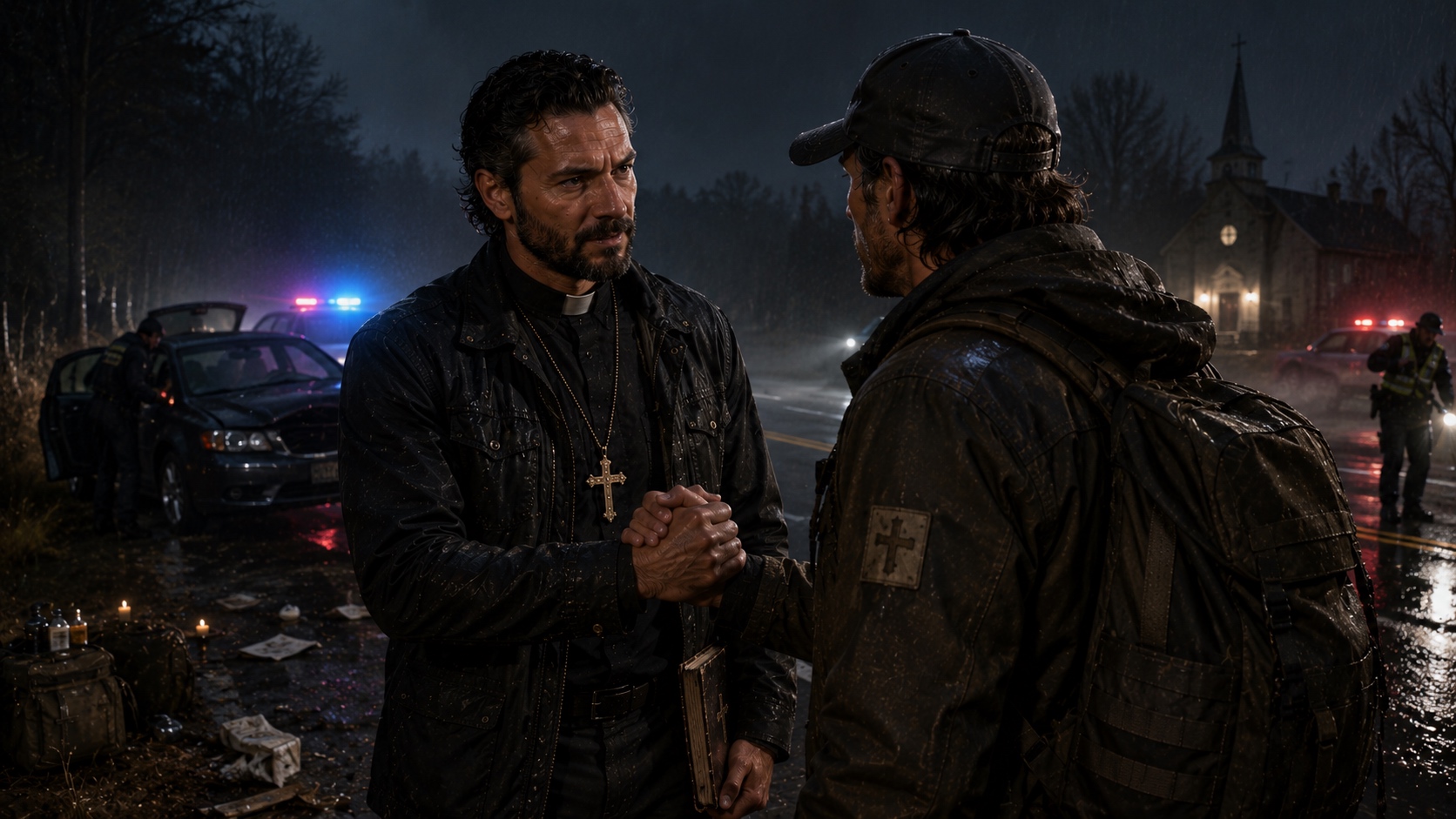
The term covers Protestant deliverance workers across denominations and none: independent pastors, lay ministers, prayer warriors, hospital chaplains, former missionaries, seminary graduates who went sideways into something stranger than their curriculum covered, and people whose calling arrived through a direct encounter no theological category they had been given could explain. Fragmented and fervent, they are often better in a direct confrontation than anyone trained by an institution, because they have nothing to fall back on except the thing they actually believe.
What They Know: Direct confrontation. Discernment under fire: recognizing possession, oppression, deception, and the difference between spiritual crisis and spiritual attack. Operating without structure or support. Knowing what a possessed person looks like from across a church before the family knows something is wrong. Spiritual resilience under sustained pressure.
What They Do Not Know: Church archives. Sacramental rites, which require ordination and valid ecclesial authority that the Watchfires deliberately do not possess. Institutional backup. Relic protocols. With no institution behind them, they have no safety net of any kind.
Faction Profession Skills
Theology, Discernment, Deliverance (Restricted), Composure
The Passion Mechanic
At character creation, every Watchfires character records a Passion: a specific, personal, unavoidable compulsion.
A Passion is narrower than a principle: "protect the innocent" is a principle, and too broad to qualify. A Passion is the one stake so personal the character cannot look away when it appears, and it must be specific enough to be testable: the GM can look at any situation and make a clear call about whether the Passion engages.
Declaring a Passion: Write it in the first person, in the character's voice. It should be possible to answer "This fires when..." with a concrete, nameable situation. If the Passion would engage in any case involving suffering anywhere, it is not specific enough.
Passion is singular. A character has one. It may deepen or refocus through major story events, but at any given moment there is one statement that is testable.
Adjudicating the Passion
The GM calls whether a situation engages a Passion. Players may make their case; the GM decides. The Example Passions table gives each example's trigger; the notes below mark what falls outside each one and where the edge cases live.
No child goes into the dark alone while I am breathing.
Falls outside: Ordinary non-supernatural danger; an adult characterized as childlike; metaphorical darkness with no supernatural content.
Edge: A teenager presenting as an adult; a spiritually mature child who is acting rather than endangered. GM may call a wiggle room check.
The thing that took my sister does not get another family.
Falls outside: A lone individual without family connections; a case where family relationships are incidental to the threat.
Edge: Chosen families and close communities that function as family. The character defines "family" at creation; the GM holds the definition.
Where the vulnerable are preyed upon, I am sent.
Falls outside: A capable person who faces danger regardless of vulnerability; a threat that would target anyone equally.
Edge: Someone who appears vulnerable but is complicit or capable. GM judges whether the exploitation of vulnerability is the actual mechanism.
Example Passions
These are examples. Players may write their own; these exist to show the register and the specificity the mechanic requires.
| Passion | Engages When... |
|---|---|
| No child goes into the dark alone while I am breathing. | A minor is endangered, targeted, possessed, lured, or abandoned to a supernatural threat. |
| The thing that took my sister does not get another family. | A family is being destroyed by possession, haunting, or supernatural predation. |
| Where the vulnerable are preyed upon, I am sent. | The target is helpless, isolated, disbelieved, or disposable, and being exploited specifically for it. |
| I stand between false shepherds and their flock. | A spiritual authority is exploiting or endangering those under their pastoral care. |
| No one gets left alone with the voice inside them. | Someone is experiencing entity oppression, temptation, partial possession, or spiritual isolation. |
| The dead will be named, and the living will be warned. | A victim has been forgotten, unnamed, or erased, and naming them is a condition of resolution. |
| The poor are not bait. | A predator targets people specifically because they are economically or socially disposable. |
| If a devil bought someone, I will contest the sale. | A devil contract, infernal bargain, or formal spiritual claim is actively in play. |
| When a parent calls, I answer. | A caretaker is begging for help no institution will provide for those in their care. |
| I was spared for this work. | The case echoes the specific circumstances of the character's own survival. |
I stand between false shepherds and their flock.
Falls outside: A secular authority without a pastoral relationship; a leader who is merely incompetent rather than predatory.
Edge: A leader who is partially victim and partially complicit; a leader who sincerely believes they serve good while being manipulated. The exploitation of the pastoral relationship is the test, not the leader's intent.
No one gets left alone with the voice inside them.
Falls outside: Spiritual struggle without supernatural involvement; mental illness without entity presence; chosen isolation.
Edge: A person who wants to be left with the voice because they have made a deal or have an existing relationship with the entity.
The dead will be named, and the living will be warned.
Falls outside: A ghost case without a cover-up dimension; a victim who is known and mourned but whose haunting persists regardless.
Edge: A victim who does not want to be named; a case where naming would endanger the living.
The poor are not bait.
Falls outside: A threat that targets the poor incidentally; a case where any population would serve the predator equally.
Edge: An organization that appears charitable while feeding on the poor. This is the clearest "in" case: institutional predation wearing a charitable face is this Passion's natural territory.
If a devil bought someone, I will contest the sale.
Falls outside: Demonic possession (different mechanism, different procedure); entity influence without formal exchange; spiritual compromise not involving a contract.
Edge: A contract the subject entered voluntarily and wants to keep; a deal that is nearly expired or self-terminating.
When a parent calls, I answer.
Falls outside: A parent who caused the supernatural situation; a contact framed as a parental plea that is actually manipulation; an institutional referral rather than a plea.
Edge: A foster parent or non-biological caretaker; a parent who is partially responsible for the danger. Real desperation and institutional abandonment are the test, not the legal relationship.
I was spared for this work.
Falls outside: Any supernatural case generically; cases involving suffering that do not connect to the character's specific wound.
Edge: Similar but not identical cases. The character defines their survival story at creation; the GM and player together assess how closely a case echoes it. Vague resemblance does not engage the Passion.
Mechanical Benefit
When acting in direct service of their Passion, after the dice are rolled and the result is visible, the character may suffer Strain to add successes to the result. The first added success costs 3 Strain; each further success on the same roll costs 1 more than the last (3, then 4, then 5, and so on). The character may keep buying successes as long as they can pay the next success's full cost without reaching their Strain Points. A character can never incapacitate themselves with Passion: when the next success would cost more Strain than they have left before incapacitation, they are done.
The GM adjudicates "in direct service"; the player may make their case, and the GM decides. The benefit applies to the specific check that directly serves the Passion, not to every check in a scene where the Passion is somewhere in the background.
Passion — Ignoring a Trigger
When a Passion trigger is present and the character chooses not to engage (not because the situation is impossible but because acting is inconvenient, politically complicated, or costly), the following applies.
Consequences:
- Bane die added to all holy authority checks (Sacraments, Exorcism, Consecration, Deliverance, Righteous Fire; see Chapter Eight for the full definition).
- Immediate Strain hit at GM judgment, scaled to how visible the opportunity was and how deliberate the choice not to act.
- Both persist until penance clears them (see Penance, below).
The Bane die does not apply to combat rolls, investigative research, or unrelated skill checks.
Ignoring a trigger is the smaller failure, and the consequences are proportionally smaller. They accumulate if the pattern continues.
Acting Against Your Passion
When a character does not look away but actively does the thing their Passion exists to prevent, the consequences are serious. The mechanic distinguishes three situations, because moral culpability is not uniform.
Tier 1 — For the Greater Good
The character argues that violating their Passion serves a larger purpose. The child is used as bait to capture the demon. The contract is allowed to stand so the investigation can proceed. The violation is real, the justification is argued, and the character believes it.
| Consequence | Amount |
|---|---|
| Immediate Strain hit | 2–3 Strain |
| Maximum Strain reduced by | 1 point, until penance |
| Bane die on | All holy authority checks, until penance |
| Corruption | None, if the outcome actually materializes |
On Corruption: If the action is taken for the greater good and the greater good is in fact served (the plan works, the Passion was not completely negated), the spiritual cost is the Strain alone. If not, apply 1 Corruption.
Tier 2 — Under Coercion
| Consequence | Amount |
|---|---|
| Immediate Strain hit | 4–5 Strain, or one quarter of maximum Strain at GM discretion |
| Maximum Strain reduced by | 2 points, until penance |
| Bane die on | All holy authority checks, until penance |
| Corruption | Minimum 1 point |
External pressure forces the violation. A threat is made. Blackmail is applied. The situation demands a choice now, from outside. The character acts not from calculation but from force applied by something else.
Tier 3 — Willful
The character acts against their Passion without a threat forcing them and without a case for the greater good. Whether the calculus was cold, the moment thoughtless, or the character decided the Passion did not apply here, the act is the same: a Watchfires character who willfully does the thing their entire life is built around not doing has broken something, and the consequences are proportional.
| Consequence | Amount |
|---|---|
| Immediate Strain hit | Half maximum Strain, rounded down |
| Maximum Strain reduced by | 3 points, until penance |
| Bane die on | All holy authority checks, until penance |
| Corruption | Minimum 1 point; GM may increase based on severity and who was harmed |
The Wiggle Room — Contested Passion Checks
If a situation isn't cleanly inside or outside a Passion, the GM can call for a check. If the proposed action might be a legitimate edge case, or technically justified but spiritually costly, follow this procedure.
Procedure:
1. Before the action: The GM flags that the action may constitute a Passion violation and names the challenge. The player knows this before committing. The challenge is never sprung after the fact.
2. The action happens. The character proceeds.
3. After the action: The check resolves. The result determines what the action cost.
The pool:
Choose the pool by where the decision lived, not by whether the pressure was real:
- External pressure (the situation demanded a choice, the demand came from outside, the crisis was immediate): Willpower + Theology
- Internal decision (the character chose this, planned for it, decided this was necessary): Willpower + Composure
Example: A seal is closing and demands a child's blood to stay open; the character must choose now, under immediate pressure. External. Willpower + Theology. The character planned ahead to have a child's blood ready because they anticipated needing it. Internal. Willpower + Composure. The outcome may be the same. The check is not.
The GM may substitute a different skill if the circumstances call for it.
Modifications:
The GM may adjust the pool to reflect the weight of the situation:
- Adding a die: +1 Trial die or +1 Ability die
- Upgrading a die: Ability → Mastery, or Trial → Crisis
Each modification is one move. The player may counter each modification with a case ("the child was never in actual danger, reduce that Trial die back to Ability"). Once both parties have stated their moves, the exchange ends. Roll.
Context can shift the pool based on what happened during the action. If things were worse than anticipated, the GM may adjust before the roll: "the child was possessed when you used them as bait, add two Trial dice and upgrade one."
Outcomes:
| Result | Consequence |
|---|---|
| Success | No violation. The action held within acceptable bounds. No consequence beyond the weight of the choice. |
| Failure | Passion broken. Tier consequences apply based on how the situation was framed at step 1. |
| Calamity | Elevated: apply the next tier's consequences, or add 1 additional Corruption to whatever the tier requires. |
Penance — Making It Right
The Bane die penalty on spiritual checks and the maximum Strain reduction both persist until two conditions are met: the situation is made right and genuine repentance is made. One act of penance clears both simultaneously; there is no compounding procedure.
If the situation can be made right: The character takes a concrete action directly addressing what the Passion violation caused: the child is found and protected, the contract is formally contested, the family is warned. This is the first condition.
If the situation cannot be made right (the subject of the Passion was harmed beyond recovery), the act of repentance must be proportionally greater. Something is owed that cannot be recovered, and the penance must reflect that weight.
Making penance:
Narrative resolution: Something concrete the character does that directly repairs the damage of the violation. If the act is specific and sincere, the GM may accept it as sufficient with no roll required.
Roll: Willpower + Theology. If the player makes a sincere narrative effort alongside the roll, reduce difficulty by 1 step.
| Tier of Offense | Roll Difficulty |
|---|---|
| Greater Good | Difficult (3) |
| Under Coercion | 4 |
| Willful | 5 |
If the subject of the Passion was harmed during the violation: upgrade one die in the pool.
Penance may be attempted once per day in the story. It is spiritual work, not a skill check to be ground through in a single afternoon.
Calamity on the penance roll: The character must skip a full day before attempting again.
Does Passion Change?
Passion does not change casually. It cannot be rewritten between sessions because the current version is inconvenient or the player has found a more useful framing.
Passion may deepen or sharpen through play: a character who begins with "no child goes into the dark alone" may, through a specific case, find the Passion has become something more particular and more ferocious. The wording sharpens without any mechanical change.
Passion may refocus through a major story event. A character who has finally done the thing their Passion was driving toward (the demon is gone, the contract is broken, the family is safe) may need to discover what the Passion underneath looks like. Refocusing happens through play, with real weight and GM acknowledgment that something has concluded, rather than as a character-sheet transaction.
Passive: Passion
The Passion mechanic (above) is the Watchfires' faction passive. No additional passive applies.
Hard-Gated Authority Skills
Watchfire Network: Finding and calling on Protestant deliverance workers, pastors, prayer groups, sympathetic congregations, safe homes, and local ministries across regions. The dispersed, loosely organized web of people who recognize each other by what they carry and how they look at a room.
Congregational Trust: Earning and invoking the specific cooperation of a local church community, a particular pastor, a particular congregation, a particular building and its people. This is face-to-face trust built over time or demonstrated in a moment of visible courage. It is personal, not transferable.
Righteous Fire: The direct, unmediated application of faith as spiritual force, rolled as Willpower + Righteous Fire. It disrupts supernatural influence in the immediate area, forces an entity to acknowledge the confrontation, or provides protection through proclaimed spiritual authority. Driving out an established possession remains Exorcism's work; Righteous Fire cannot do it alone. The full skill entry, including failure consequences, is in Chapter Five (Hard-Gated Authority Skills).
The Watchfires Passion passive (see The Passion Mechanic, above) applies to Righteous Fire as it does to any Passion-engaged check. Righteous Fire grants no separate success-buying of its own; the benefit is the Passion passive, not a property of the skill.
GM Notes — Passion as Pressure Point
The Watchfires character's Passion is their greatest strength and their most legible vulnerability. Antagonists who learn it will use it, and Named entities, experienced devils, and long-running organizations are observant enough to learn it.
A demon holding a child over a ledge is not incidental staging when a character's Passion is "no child goes into the dark alone while I am breathing." A devil structuring a contract around what a character cannot walk away from is doing exactly what devils do. The Congregation of the Opened Hand, targeting the disposable and the poor across fifteen years, is the natural season-long antagonist for a character whose Passion is "the poor are not bait."
When an antagonist knows what a character cannot ignore, every confrontation becomes personal in a way no faction training produces. Passion makes the Watchfires character powerful and predictable in the same motion, and wise antagonists know which direction to pull. Do not engineer these conflicts for cheap drama. Do it because the story earned it, and when it lands it lands because the character was already who they were before the antagonist showed up.
Starting Talent Option
One free Tier 1 talent from the Righteous Fire, Deliverance, or Discernment talent tree. The Righteous Fire tree requires no Magical Access.
Obligation and Complication
The Watchfires' obligations are internal rather than institutional, which makes them harder to negotiate with and impossible to discharge by filing a report. There is no superior to recall a Watchfires character or order a stand-down; there is the Network, which notices when someone stops showing up, and the Passion, which does not let a person pretend they did not see what they saw.
Starting Gear
Personal Bible, heavily annotated. A flask of water they have prayed over: not sacramentally blessed, just prayed over, which is not the same thing and they know it. A simple cross or other personal faith object. Civilian clothes in whatever condition they are currently in. Their own vehicle. Cash. No credentials. No backup.
Nobody sent me. Nobody can call me off. I was in the room, and it was in the room, and only one of us was walking out. The Watchfires, The Hollow
Directorate Vesper
It does not exist. That is the first thing to understand. Any documentation that suggests it exists was filed incorrectly. Any personnel records associated with it belong to programs that were discontinued years ago. Any operation it has conducted was conducted by assets whose affiliations cannot be verified through normal channels.
Directorate Vesper is an intelligence program (formally unnamed in this document) that tracks supernatural threats as they intersect with foreign intelligence priorities: cults that export operatives, infernal entities influencing geopolitical events, occult disinformation campaigns, foreign governments with classified supernatural programs, and the movement of individuals and objects that have no mundane explanation and no institutional home anywhere in the public record.
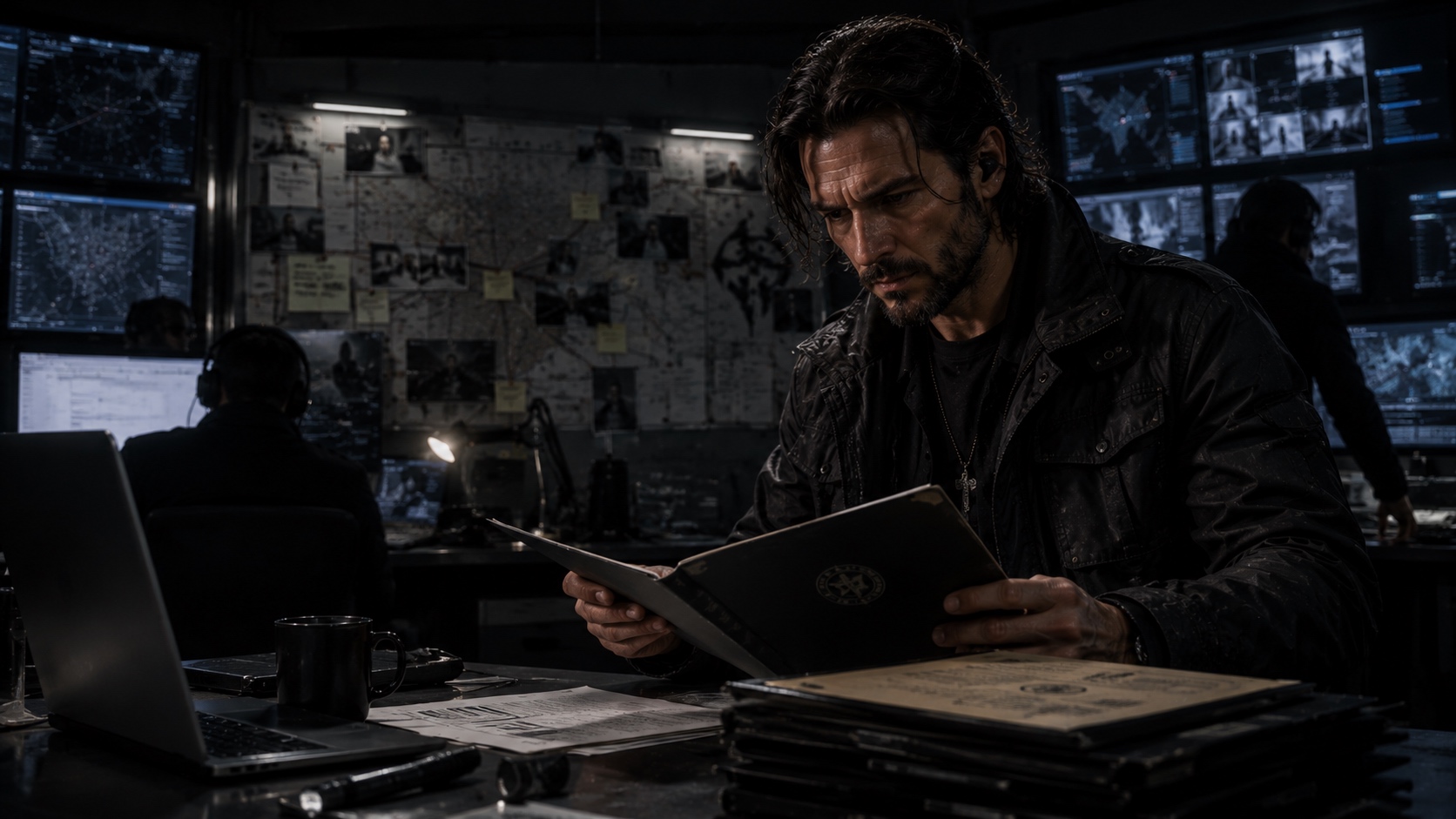
Its analysts are former case officers, signals intelligence professionals, foreign desk veterans, and a small number of individuals recruited directly from other hidden-world organizations who had useful specialized knowledge and were willing to work under compartmentalization strict enough that they do not know the full scope of what they are part of. The program is international, funded through channels that would not survive disclosure, and dangerous to its own people in ways accepted as occupational conditions.
What They Know: Intelligence procedure. Cover maintenance under pressure. Asset recruitment and handling. What a foreign cult's operational structure looks like from the outside. How disinformation about supernatural events is constructed and by whom. What black clearance actually means in practice. How to make a problem disappear quietly enough that no one can prove there was a problem.
What They Do Not Know: Sacred rites. Pastoral care. Exorcism. Transparent legal process. Everything in their training assumes concealment; open, accountable work is a capability they never built.
Faction Profession Skills
Tradecraft, Deception, Technology, Inquiry
Passive: Deniable Operation
Once per session, when a Vesper character enters a scene that they had preparation time for (surveillance beforehand, prior access, asset placement, false credentials arranged, black-channel support coordinated), they may declare one plausible operational advantage already in place: a burner phone, a forged appointment, a parked extraction vehicle, a friendly asset nearby, a hidden camera, a minor bribe already paid to the right person, a saferoom on the floor above.
The declared advantage cannot solve the scene by itself. No check is required: the story accommodates it.
Hard-Gated Authority Skills
Deniable Assets: Off-book cash, safehouses, cutouts, forged documents, unofficial transport, hidden equipment, and people who will not appear in a report.
Signals Access: Restricted communications intercepts, surveillance feeds, digital traces, metadata, and intelligence databases through channels that officially do not exist.
Black Clearance: Operating outside normal legal channels, suppressing records, seizing assets quietly, overriding civilian processes, and invoking deniable authority in situations that cannot be run through official procedure.
Starting Talent Option
One free Tier 1 talent from the Tradecraft or Surveillance talent tree.
Obligation and Complication
Active operatives are program assets. They are compartmentalized, which means they do not know the full scope of the program, and the program does not always tell them what they need to know to make good decisions. They may be recalled, burned, or reassigned. Their reports go into files they will never read. If they leave, if they try to leave, they carry what they know, and the program knows what they carry. Complications follow the program's methods: Black Clearance authority generates paper trails that have to be managed, assets have their own agendas, cover stories degrade under sustained pressure, and the program's priorities do not always align with the case in front of the character right now.
Starting Gear
Full cover identity (document package: name, credentials, backstory, supporting identification). Encrypted communication device on a rotating contact schedule. Basic surveillance kit. Sidearm (unregistered). Operating cash in small bills from at least two currencies. A contact number that is not their handler's name.
This conversation is not taking place. If it were, I would tell you the file you are asking about was closed before it was ever opened. Directorate Vesper, The Hollow
The Lyncean Office
The Lyncean Office is a domestic federal investigative unit. Its official name, filed on an obscure interagency charter two decades ago and never reviewed since, is used by no one; people inside call it the Lyncean Office, after the charter's initial coordination body, and the name stuck because no one bothered to establish a better one.
The Office exists inside a bureaucratic gap between Justice, Homeland Security, and two other agencies whose mandates overlap in ways no one has had political will to rationalize. Its agents carry federal credentials that are real but difficult to verify quickly. Its mandate is broad enough to cover any domestic case that cannot be filed under available categories and serious enough that local law enforcement usually cooperates when a Lyncean agent asks them to.
It handles impossible crimes, impossible meaning physically inconsistent with known causes: deaths with no mechanism, evidence that contradicts itself at a forensic level, witness statements that agree on results but cannot agree on anything that would produce them. The Office builds cases out of what the official framework cannot explain, makes impossible evidence survive paperwork, and keeps the supernatural inside a legal structure that was never designed for it, because someone has to.
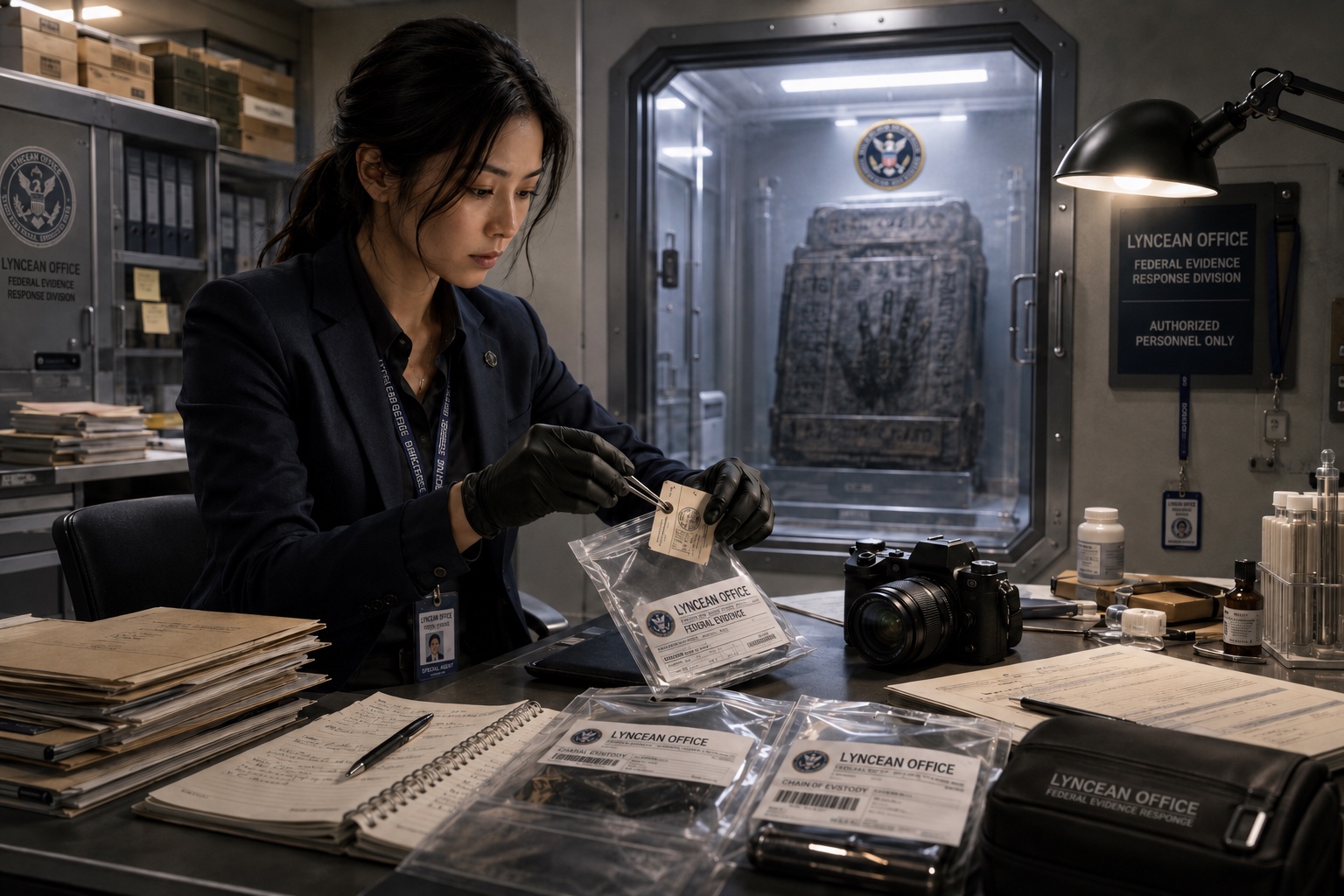
What They Know: Evidence. Pattern recognition across jurisdictions. Jurisdiction itself: how to get it, hold it, and use it to keep other entities from interfering with a case. Forensics. Making impossible facts survive chain of custody. Getting local law enforcement to cooperate without explaining why. Reading an official report for what it is actually saying underneath the language it was written in.
What They Do Not Know: Infernal law. Relic handling. Monster killing. Forbidden rites. Their methods stop at the edge of the legal system, because outside it the evidence cannot be protected.
Faction Profession Skills
Forensics, Perception, Research, Leadership
Passive: Impossible Evidence
Once per scene, after a successful investigative check on a supernatural case, Forensics on a body or scene, Inquiry with a witness, Perception on a physical location, Research on a case file, the character may ask the GM: "What does the mundane explanation fail to explain?"
The GM answers honestly, though not completely. One gap. One inconsistency. One thing the official story cannot account for if you push on it hard enough.
Hard-Gated Authority Skills
Federal Jurisdiction: Warrants, subpoenas, crime-scene control, federal access, interagency cooperation, and the authority to make local officials treat the case as an official federal matter.
Evidence Chain: Labs, evidence lockup, official records, protected files, chain of custody procedures, forensic reporting, and making impossible evidence survive the paperwork it has to survive to remain usable.
Local Liaison: Getting police, coroners, hospitals, emergency services, local agencies, and municipal officials to cooperate without knowing the full truth. The art of making institutions move without telling them why they should.
Starting Talent Option
One free Tier 1 talent from the Investigation or Forensics talent tree.
Obligation and Complication
Active agents are federal employees. They file reports. They have supervisors who have supervisors. They operate within legal constraints, warrants, chain of custody, probable cause, due process, not because the constraints are comfortable but because the Lyncean Office's authority depends on its legal legitimacy and everyone inside it knows it.
Going off-book has consequences. The Office notices when agents stop submitting paperwork. Local law enforcement that cooperated once based on federal credentials will remember if those credentials were used to do something that looks, in the daylight, like evidence tampering or unauthorized use of federal authority. The legal structure that makes the Office powerful is the same structure that limits what it can do.
Starting Gear
Federal credentials (real, issued by an obscure bureau, slow to verify). Standard duty sidearm. Evidence kit. Laptop with secure federal network access (offline-capable). Badge. Case file system access on encrypted device.
I do not need you to believe me. I need the evidence to survive chain of custody, and I need this to still be my case on Monday. Lyncean Office, The Hollow
The Latchkey Archive
Other factions investigate. Other factions confront. Other factions kill, bargain, pray, and research. The Latchkey Archive contains.
Containment is its own discipline, with its own training, equipment, and protocols. It means knowing what an object is, what it does, what activates it, what the previous three handlers did wrong, how to move it without repeating their mistake, where to store it afterward, and what to do if it happens anyway.
The Latchkey Archive is the organization that does this. It retrieves, catalogs, studies, stores, transports, and contains dangerous objects. It maintains vaults in locations whose addresses are not in any document accessible to non-members. It has containment specialists who have handled things that would have killed anyone else in the room, because they read the file before they touched it and the file told them not to stand to the left.
The Archive's affiliation (government program, private endowment, Church subsidiary, or something else entirely) is deliberately unclear, even within the organization. Different Archive facilities operate under different cover structures. The common thread is the protocol and the database.
What They Know: What things are. What they do. What triggers them. How to move them without activating them. The provenance of an object from first recorded incident through every subsequent handler. Why the thing in the box that looks dormant may not be dormant. The difference between a relic that cannot be destroyed and a relic that has simply not been destroyed yet.
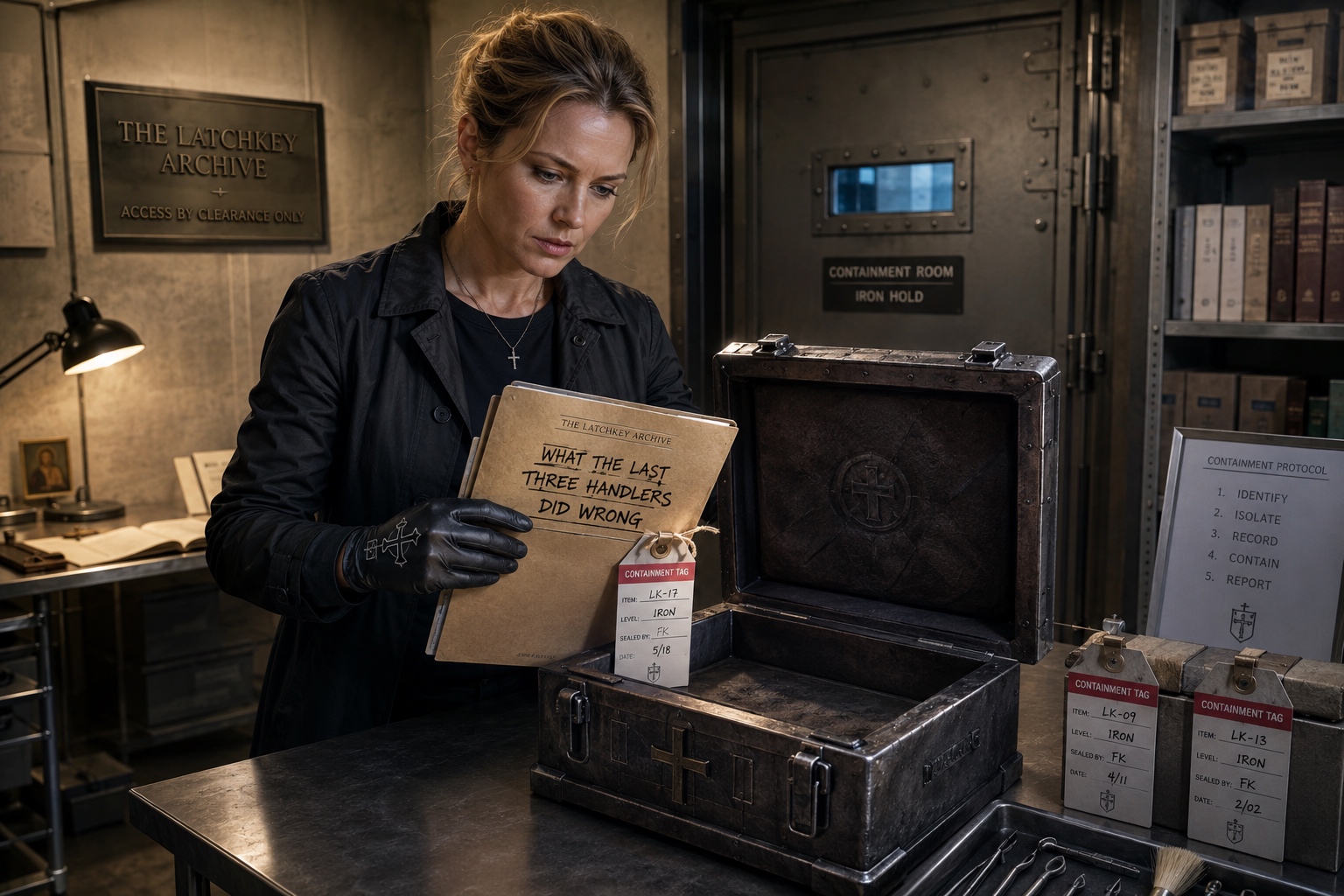
What They Do Not Know: Possession and exorcism: their expertise is objects, and entities are a different problem. Field hunting. Pastoral work. Living cult infiltration. A problem that has migrated out of the object and into a person requires another faction's help.
Faction Profession Skills
Relic Lore, Containment (Restricted), Technology, Perception
Passive: Do Not Touch That
When a Latchkey character first examines an active, unstable, unidentified, or potentially dangerous object, site, or sealed container, they may make a Relic Lore or Containment check. On success, the GM reveals one handling rule, trigger, or immediate danger before anyone interacts with it.
The passive requires the examination; it never fires automatically.
The revealed fact must be immediately actionable protocol rather than vague warning: do not open the left side first, the latch trips something when the left side opens first, or the object registers temperature, it has been in a warm room and it is cold, which means something has been drawing from it recently.
Hard-Gated Authority Skills
Vault Access: Accessing restricted Archive vaults, object records, sealed storage, item histories, containment lockers, and requisition channels for specialized equipment.
Containment Authority: Invoking official containment protocols, quarantining locations, sealing objects, ordering evacuations, transporting hazards, and classifying sites or artifacts under Archive jurisdiction.
Archive Clearance: Reading restricted breach reports, failed containment records, dangerous object files, redacted provenance histories, and prior handler notes, including the reports on what went wrong and why.
Starting Talent Option
One free Tier 1 talent from the Containment or Relic Operations talent tree.
Obligation and Complication
Objects retrieved go into the Archive. Characters are responsible for proper protocols in the field, every deviation is logged, and the Archive's incident review process is thorough. Unauthorized release, sale, or personal use of Archive holdings is a serious violation. Objects in the field are still Archive property, and the Archive has tracking systems for them.
What the Archive knows about an object, its leadership also knows, so Archive characters may be assigned to cases based on what the organization needs rather than what the character is prepared for. And when a containment fails, the breach review committee is not a comfortable process.
Starting Gear
Field containment kit: gloves (various grades), sealing tape, iron-lined transport case (one object, standard), provenance kit (labels, markers, reference cards). Archive credentials. Reference tablet (offline, encrypted, contains relevant object files for current assignment). Handling protocols for the current object, printed and annotated. Emergency contact line to Archive senior on call.
Read the file before you touch it. Three people did not, and the file is how we know what happened to them. Latchkey Archive, handling protocol, The Hollow
The Black Road
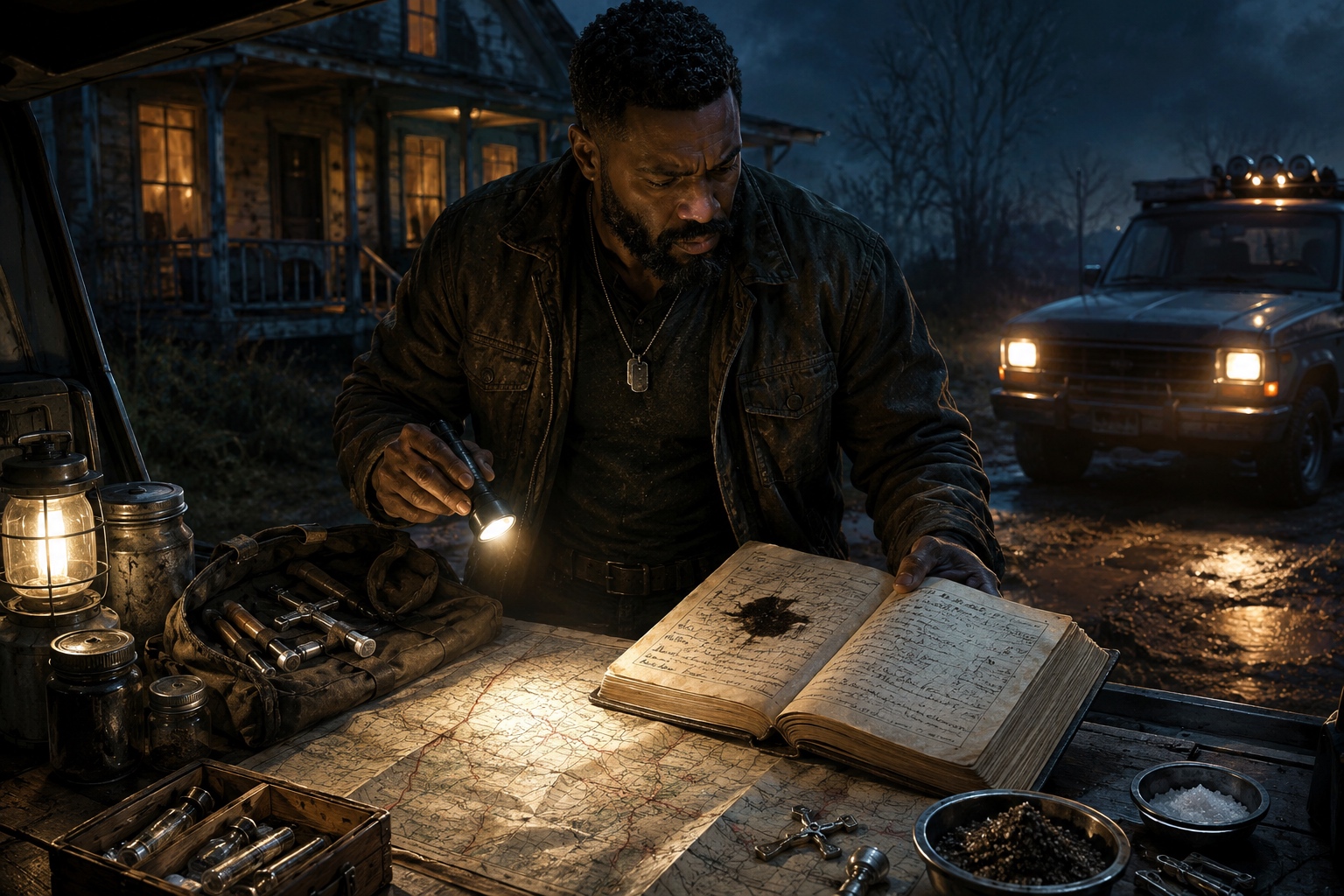
The Black Road is a network: distributed, informal, dangerous. Families, survivors, killers, trackers, guides, and people who learned too much too young and never found a way back to a life where they did not know what they know. Headquarters, membership records, and charters belong to organizations, and the Road keeps none of them.
The Road is what they call the life, the network, and the inherited knowledge that passes between people who do this work. Some are second- or third-generation hunters for whom the work is the family business. Some survived a direct encounter and found others trying to make sure it did not happen again. Some arrived from other directions and were eventually recognized and folded in.
They are not nice, as a general rule. The work does not select for nice.
What They Know: What kills things. Which folklore about which creatures is accurate and which was invented, intentionally or not, to get hunters killed. How to track something that does not want to be found across terrain it knows better than you do. How to bait, how to trap, how to set up a kill zone in a building you have never seen before. When something is playing dead. How to survive the night when the plan fell apart before step two.
What They Do Not Know: Exorcism. Legal investigation. Relic cataloging. Church authority or institutional sanction of any kind. Their expertise ends at field craft and kill methods; for everything institutional, they rely on allies they treat as useful and unreliable in equal measure.
Faction Profession Skills
Monster Lore, Tracking, Fieldcraft, Survival
Passive: Kill It Right
Anyone who has confirmed a monster's weakness through research gets the full weakness benefit (see Weakness Mechanics, Chapter Eleven). What the Black Road passive changes is when a hunter may act on a weakness.
When a Black Road character acts on a suspected but unconfirmed weakness, drawn from field pattern, inherited folklore, or a hunter's instinct rather than a completed research check, they may treat it as confirmed for the Weakness Mechanics rule. If the instinct is right, the exploiting action gains the full weakness benefit: 1 Boon die added before rolling, the target's Resistance reduced to 0, and one relevant Supernatural Defense, Legendary protection, or regeneration feature bypassed for that action. If the instinct is wrong (the GM decides, based on the entity), the tool simply does nothing and the action resolves as an ordinary attack.
Some supernatural targets cannot be harmed by normal means at all until their weakness is properly exploited; the bypass applies to these targets as well.
Hard-Gated Authority Skills
Hunter Marks: Reading and using hunter signs, road codes, warning marks, cache symbols, safe-route indicators, and the accumulated shorthand of field communication that is not written anywhere civilians would find it.
Road Debt: Calling in favors: shelter, weapons, transport, local hunter aid, emergency extraction, and grudging assistance from people who do not trust institutions and may not trust the character either. Road Debt flows in both directions.
Kill Ledger: Accessing accumulated monster-kill records, weakness notes, family journals, field reports, and the ugly lore hunters leave behind for the people who come after them. This is the Black Road's archive, oral, distributed, and held together by relationship rather than institution.
Starting Talent Option
One free Tier 1 talent from the Hunter or Fieldcraft talent tree.
Obligation and Complication
The Road has no formal authority. What it has is memory, and memory has weight. Someone who takes Road hospitality, shelter, weapons, local contacts, emergency extraction, and then burns the network will find that the Road has a longer memory and shorter patience than any institution. Road Debt is called in. Debts that go unpaid become something else.
The culture brings its own complications: hunters disagree on methods and targets, old grievances between families predate the current case by years, and the information network is good but uneven, so what one node knows, another may not. Every institutional faction with an interest in managing what gets killed and what gets contained keeps an eye on the Road.
Starting Gear
Practical weapons: a firearm, a blade, ammunition for both. Field preparation supplies appropriate to the current threat: salt, iron, silver, blessed rounds as available and affordable. A veteran's go-bag: flashlight, basic first aid, rations, one change of clothes, paracord. A vehicle that runs reliably under bad conditions, and neither credentials nor a cover story.
Half the folklore was written down wrong on purpose, to get people like you killed. Learn which half before you go into the trees. The Black Road, The Hollow
The Lantern Index
The Lantern Index's official face is a private academic research society focused on folklore, religious history, and manuscript preservation. It holds symposia. It has a modest endowment. It maintains affiliations with universities in fourteen countries. It publishes a quarterly journal that three hundred scholars subscribe to and that is technically peer-reviewed by members who know each other well.

Its actual function is the collection, translation, and careful study of everything the hidden world has produced in written form: forbidden texts, suppressed Church records, cult documentation, demonic name registers, folkloric archives from cultures whose knowledge has otherwise been lost, and the older versions of things the modern hidden world thinks it knows.
The Lantern Index is why someone can read what is on the door, and why the team knows before the confrontation that the entity has a historical record of responding to the older version of the story rather than the popular one that replaced it.
What They Know: Names. Old maps. Forbidden books. Cult histories from primary sources. Dead languages. The oldest version of every story and what the oldest version got right that every subsequent retelling got wrong. Why the entity everyone calls one thing is actually another thing, and why that distinction matters when you are the one in the room with it.
What They Do Not Know: Combat. Field containment. Emergency physical intervention. They rarely survive the physical part of a confrontation unaided.
Faction Profession Skills
Research, Dead Languages, Theology, Relic Lore
Passive: The Older Version
Once per scene, on a successful check involving Research, Dead Languages, Occult Lore, Theology, Relic Lore, or Monster Lore to understand a supernatural subject, the character may ask: "What did the oldest source get right that later sources got wrong?" The question must relate directly to the supernatural subject currently under investigation.
The GM gives one correction, contradiction, or lost detail: a fact that was known by earlier sources and was subsequently miscopied, suppressed, deliberately altered, or simply lost in the process of transmission that turns direct knowledge into legend. The answer is reliable.
Hard-Gated Authority Skills
Index Access: Accessing the Index's private databases, restricted catalogs, hidden scholarly exchanges, rare case abstracts, and controlled research networks unavailable through any normal academic or public channel.
Rare Texts: Locating, borrowing, copying, translating, or authenticating forbidden, hidden, suppressed, or nearly lost manuscripts. The physical and digital infrastructure for getting the document no one else can get.
Peer Review: Getting experts, translators, historians, theologians, archivists, or specialists to validate claims quickly and discreetly when the clock is running and the character needs a second opinion from someone who actually knows the field.
Starting Talent Option
One free Tier 1 talent from the Scholar or Dead Languages talent tree.
Obligation and Complication
Index members do not publish findings outside approved channels. Texts retrieved belong to the Index. Members may be called upon to consult, translate, or research on behalf of faction leadership on timelines the character does not control. Taking findings commercial or public without authorization is a violation. Taking certain texts out of approved storage without authorization is a more serious one, because some of what the Index holds cannot safely exist outside the conditions under which it is currently held.
Breadth of knowledge is its own complication: knowing which forbidden text contains a true name makes a scholar the person who can hand that name to whoever wants it badly enough. Index researchers are sometimes recruited, coerced, or simply robbed by factions and entities that want what the Index holds.
Starting Gear
Reference library: one offline, Index-encrypted device with current relevant archives; two or three physical texts relevant to current work. Translation tools (reference works, cipher keys, language aids). Index credentials (academic cover). Field notebook, pen. The habit of writing things down.
The story everyone knows is the one that replaced the story that worked. We kept the one that worked. The Lantern Index, The Hollow
The Candleless
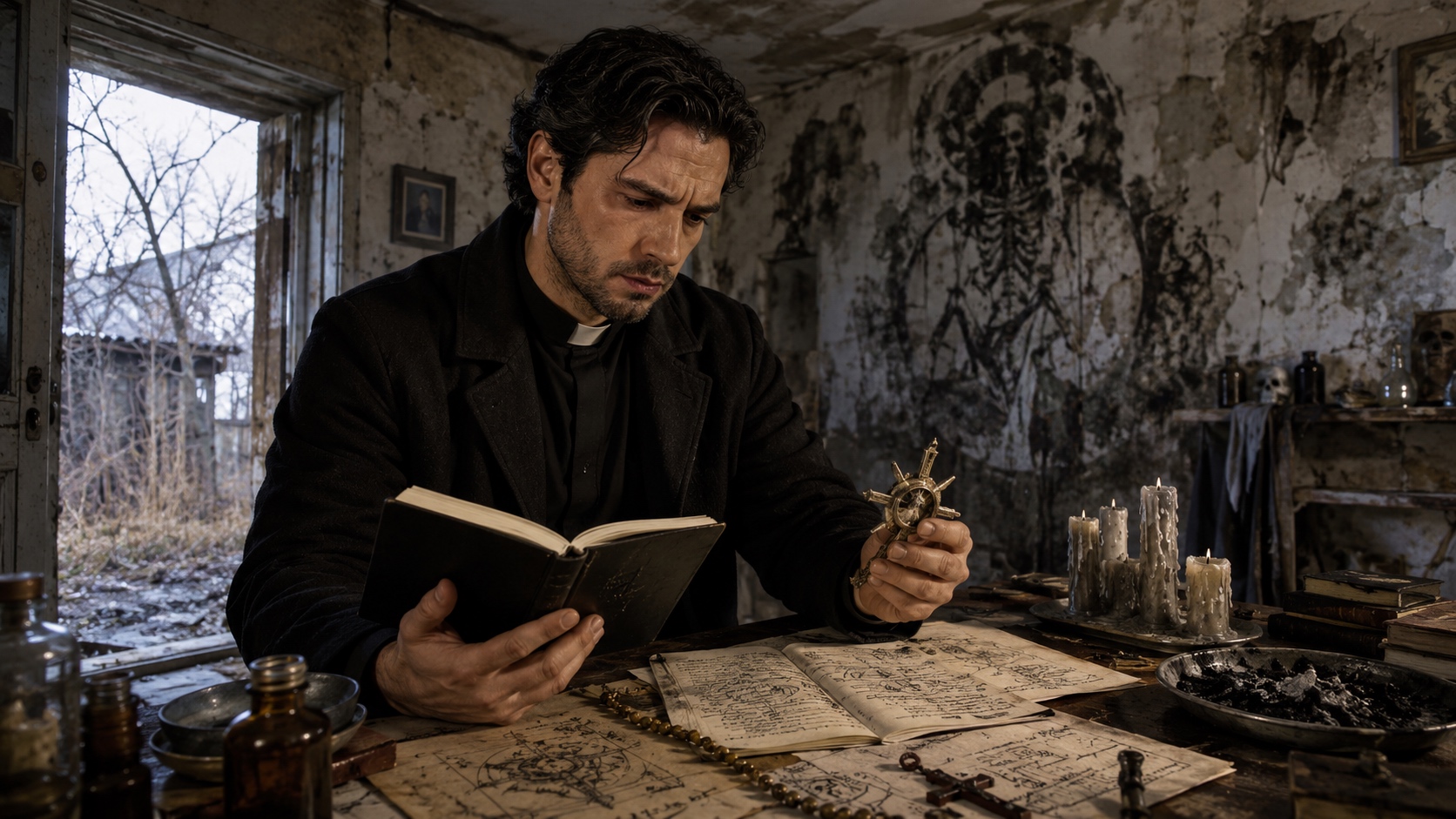
Every institution has lines it cannot cross: the Order's doctrine, the Lyncean Office's law, the Archive's containment protocols, the Black Road's taboos.
The Candleless are what exists on the other side of those lines.
Excommunicated priests who still know the rites. Disgraced theologians who continued the research after they lost their credentials. Hedge occultists who found something that works and never stopped using it because it worked. Black-market relic brokers who know where the things that should not exist are located and how much they cost.
Failed exorcists who discovered that the unauthorized methods sometimes succeed where the authorized ones do not. People who were on the road toward institutional hidden-world careers and were pushed off it by something that was not their fault, or that was entirely their fault, and kept going anyway.
They are a category rather than a faction: no charter, no leadership, no membership roll, just people who work outside institutional sanction because they were removed from it, rejected it, or never had access to it, and who have therefore developed capabilities no institutional actor can officially develop.
Some of the most effective supernatural response work in the hidden world's history was done by people who had no license to do it. What the Candleless do is morally complicated; so is the world they operate in.
What They Know: Dirty doors. Which forbidden rite actually works and which was invented to harm the person performing it. Infernal loopholes (the procedural vulnerabilities in the rules that govern devil bargains, infernal claims, and spiritual law). The black market: what is available, who has it, what it will cost, and what else it will cost that the seller is not telling them. How to get to places and people that clean institutions cannot approach.
What They Do Not Know: Trust. Legitimacy. Clean spiritual authority. Institutional support of any kind. Every other faction keeps a file on them, and some of those files are warrants.
Faction Profession Skills
Forbidden Rites (Restricted), Occult Lore, Streetwise, Deception
Passive: Ugly Solution
Once per session, when a Candleless character uses Forbidden Rites, infernal loopholes, black-market occult knowledge, or unsanctioned methods to solve a problem that no sanctioned institution can solve in the available time, the check's difficulty drops by 1 step.
After the roll, the GM introduces one narrative complication tied to the method: someone finds out; the wrong contact calls in the debt; the rite leaves evidence; the Order of Mercy gets suspicious; a third party that was watching takes note; something that answered the working is not done with the situation.
The complication is not automatic Corruption: that comes from the Forbidden Rites rules, which have their own trigger table. This cost is social, relational, and situational, and it lands outside the immediate mechanical resolution.
Hard-Gated Authority Skills
Black Market: Finding illegal relics, forged papers, unsanctioned ritual supplies, occult contraband, curse-work materials, and sellers who should not be trusted but are the only ones who have what is needed.
Infernal Contacts: Reaching brokers, intermediaries, cursed informants, devil-touched negotiators, and dangerous figures who know the rules of filthy doors. This grants access, not safety. Entities and people reached through Infernal Contacts have their own agendas, and those agendas are not the character's.
Unclean Sanctuary: Finding hidden chapels, cursed rooms, occult safehouses, profaned shelters, and places respectable factions refuse to enter but that may be exactly where the problem is being run from.
Starting Talent Option
One free Tier 1 talent from the Forbidden Rites or Infernal Law talent tree.
Obligation and Complication
The Candleless have no central authority to answer to and none to hide behind. What binds them instead: infernal contacts who remember what the character owes, black-market brokers who know the character's name and what they have moved, practitioners who would rather the character not repeat certain things, and a track record that precedes the character into every room.
No faction can recall a Candleless character, and none will protect one if any of that becomes a problem.
Starting Gear
A forbidden text or ritual kit they should not have: specific to their history and the source that gave it to them. Street clothes. Enough cash to avoid leaving a credit trail for at least a week. One or two contact numbers for people who are not safe but who are currently available. A back way in or out of wherever they are operating. Something they did once that they are not entirely certain they can do again.
They drew the line and told me not to cross it. They never did say what to do about the thing standing on the other side. The Candleless, The Hollow
Independent
Not every person who can see The Hollow belongs to an organization. Some were never recruited. Some left. Some were pushed out. Some looked at every available option and decided that the obligations were not worth the access, and that they could build what they needed themselves through other means.
Independent characters receive no faction profession skills beyond what their Background and Career provide. They have no faction passive benefit. They have no Hard-Gated Authority Skill access unless a specific story event unlocks one, building a relationship deep enough with a faction to earn a single access, or finding something that functions as equivalent authority through other means.
What they have instead is freedom of a specific kind.
Passive: Free Association
Once per session, when the character's lack of formal allegiance provides a meaningful advantage, add 2 Boon dice to the relevant social, access, or negotiation check. Qualifying advantages include moving between faction lines without triggering institutional barriers, earning trust from someone who distrusts all organizations, and accessing a space or resource that would require faction authorization for any affiliated character.
The 2 Boon dice apply when the lack of allegiance is what opens the door: a faction member in the same position would face institutional refusal, loyalty conflicts, or faction politics that the Independent does not carry. A situation where affiliation would be irrelevant does not trigger this.
Point of Contact. At the start of each session, the Independent may designate one faction-affiliated NPC or ally as a Point of Contact. Once during the session, the Independent may call on this contact for one piece of information, an introduction, or a resource from within their faction: offered as a personal favor, not an institutional mandate. The Independent owes a reciprocal favor of equivalent weight. A Point of Contact who has been burned, ignored, or repeatedly taxed without repayment will decline. This relationship is maintained through the story, not guaranteed by the mechanic.
What Independence Costs
The cost is everything a faction would otherwise provide: authority skills, archives, institutional backup, and every passive benefit beyond Free Association.
Independent characters trade institutional power for flexibility. They require more investment in their Background and Career skill lanes to compensate, and they benefit more from relationships built during play (contacts, allies, and favors across faction lines) because those relationships substitute for institutional backing.
Secondary Profession Skill Option
An Independent character may designate one additional skill as a profession skill beyond what their Background and Career provide, chosen from the Universal or Discipline skill lists. This skill may not be a Restricted Discipline Skill unless the GM approves the story that justifies the access.
The Awakened
Awakened Blood, the ability to perceive the supernatural without Merciful Dissonance rewriting it, is the baseline every player character in The Hollow shares, whatever their faction (see Chapter Two: The Hidden World and Chapter Three: Character Creation).
NPCs with Awakened Blood are significant. A witness who is Awakened is a different kind of witness, and an Awakened NPC with no affiliation is a potential recruit, threat, or complication depending on what they have done with what they can see.
Associated Organizations
Associated Organizations are smaller bodies that exist in a defined relationship to one of the eight factions without belonging to it. They are not player factions by default, and they carry no hard-gated authority skills, starting gear package, or profession skills of their own.
What an Associated Organization provides is a Charter Trait: a single benefit, narrower than a faction passive, specific to the institution and the role it fills, and never transferable to the parent faction.
The linked faction defines what resources are accessible in a crisis, what obligations exist even if unspoken, what the political relationship looks like when both parties are in the same room, and who gets the phone call when something goes badly. An Associated Organization without a linked faction is a local construct with no institutional anchor and no mechanical template.
For GMs: Associated Organizations are encounter material first: who shows up, what they want, what they can do, and what they will not do. Their history, obligations, and relationship to the linked faction give an NPC a weight that a faction label alone cannot provide.
As a player option: A GM may allow a player character to claim membership in an Associated Organization. The character uses the linked faction's profession skills and starting gear; the Charter Trait replaces the linked faction's passive; the linked faction's hard-gated authority skills require story justification to access. A character whose fit with the linked faction is loose operates as Independent instead.
Sisters of Nursia
Associated Organization — Linked to the Order of Mercy
Foundation
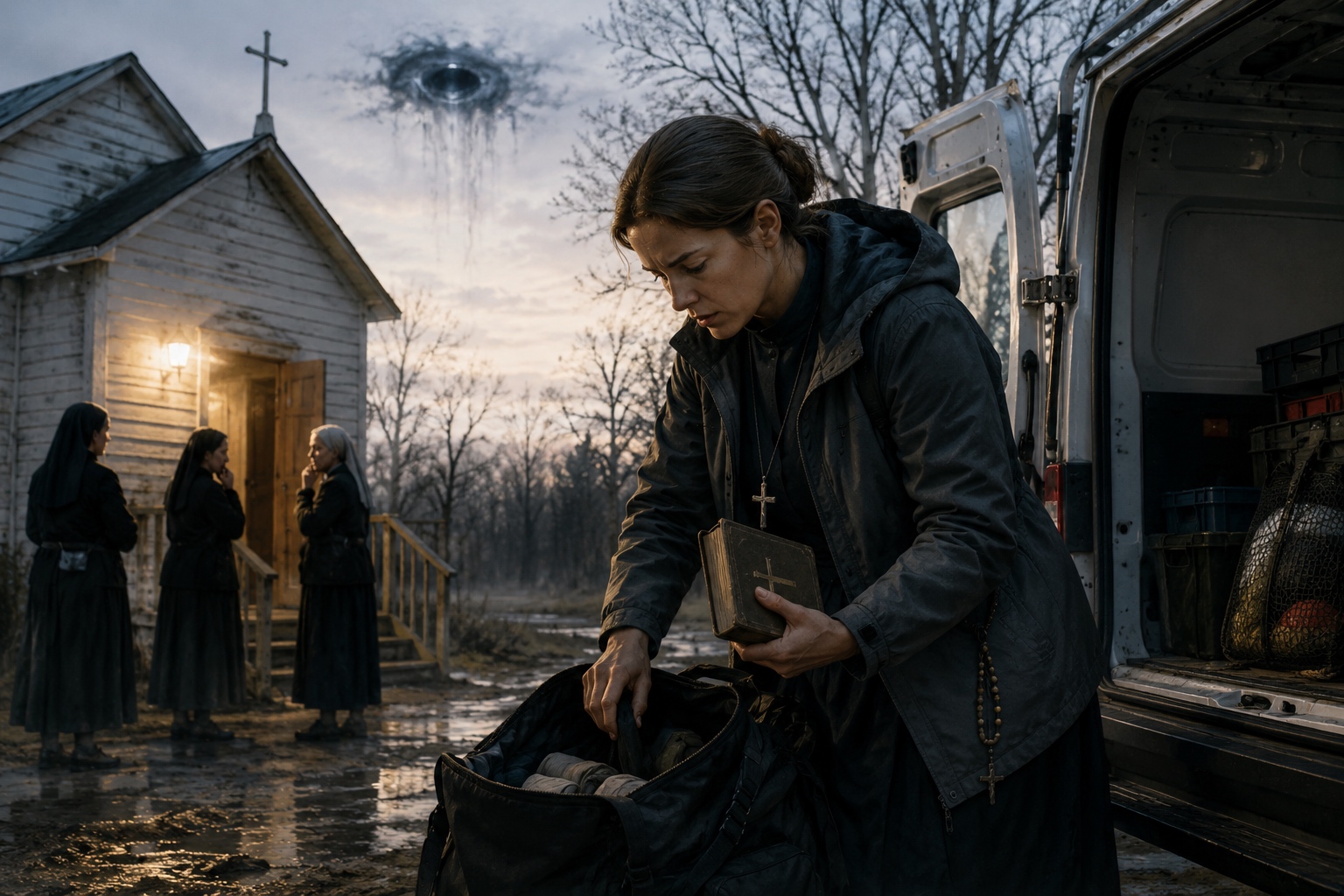
She was not given a name in the record. The woman who founded the Sisters of Nursia in the fourteenth century left no autobiography, no formal canonization process, no entry in the Church's official histories. What she left was the Order, a founding mandate, and a set of operational procedures that seven centuries have not required significant revision.
The mandate is this: go where the Church cannot send its priests, do what the Church cannot officially authorize, and do not stop until the work is finished.
The Sisters of Nursia are a religious sect of women who exist entirely outside the Church's formal authority structure: no bishop controls their deployment, no cardinal reviews their case files, and no Vatican office holds their personnel records. They are thoroughly, devoutly Catholic, in a way that carries full spiritual authority while leaving no institutional fingerprint anywhere an official inquiry would find.
The Order of Mercy knows they exist. This is the relationship: the Order calls the Sisters when a case requires someone fully Catholic who cannot be a priest. The Sisters answer because the work requires it. When the work is finished and the press arrives, or the canonical inquiry begins, or the bishop wants to know why something happened in his diocese, the Sisters are no longer there. The problem belongs to the Order now, and the Order has the authority to manage it.
This arrangement has functioned for seven centuries because it serves both parties, and both parties know it.
Neither party would call this a partnership. Both would acknowledge, if pressed, that neither can do the whole job without the other, and that the arrangement costs each of them something they have decided not to put into words.
What the Sisters Do
The Sisters decide by need. There is a person, the person requires something, and no one else is coming. That is the entire assessment.
They work the same field the Order works: possession, infestation, and the infernal edge of ordinary human misery. What differs is which cases reach them.
- The interval — the hours or days before an authorized priest can arrive, when the need is immediate. She holds it.
- Compromised ground — cases where the parish, the hospital, the diocese, or the Order's own personnel are part of the problem.
- The unreachable — people who will not approach a priest. The ashamed, the excommunicated, the woman who was told once already that this was her fault, the addict, the foreigner, anyone for whom institutional attention is its own danger. They will not call the Church. They will let a Sister through the door.
- Extraction — physically removing a person from a cult, a household, an institution, or a site that is killing them.
- Aftermath — survivors, relocation, contaminated material, and the long unglamorous work of making certain the thing does not return. The Order closes the case. The Sisters close the loop.
The Sisters solve the immediate problem in front of one specific person, and then they go. Relic authentication, provenance, the archive, diocesan negotiation, and sacramental care all remain the Order's work.
Sharper Lines, Less Procedure
The Sisters know what they are needed for: people. Saved or unsaved, friend or foe, the Sisters are there for those in the cracks, often the ones holding on by their fingertips.
They stay out of ceremonial and sacramental services. That is the line they will not pass, the sharp line between the Order and the Sisters, and both know it and respect it.
Because they rush in, they go without the processes and procedures the Order arrives with. It is not the safest path for them, but the urgency of the need surpasses their own safety.
They operate as loosely connected groups. They recognize the authority of the Order and the Church and will obey it, and they answer to Mother Superior, a position and a title. The Mother is selected by the Sisters when one dies, steps down, or reaches sixty, and the new Mother reports to the Order's leader that she is the new Mother.
Membership
The Sisters are a small order. Active field members number in the dozens. Candidates are identified, evaluated over years, and placed for field work after an assessment that one Order supervisor once described in writing as alarming in the most reassuring way possible. That description circulates internally among the Sisters with some satisfaction.
They are exclusively women, as are all nuns. The Church's formal hierarchy is male. Ordination is restricted to men. Women serve in the Church in non-ordained roles: lay ministers, hospital chaplains, teachers, administrators, religious sisters. They are valued within those roles. They are considered secondary in authority to ordained priests, and they know they are considered secondary.
The Sisters of Nursia are represented in the character dossiers by Sister Kevin (Brigid Áine Fearghal), a complete Sisters of Nursia character build. See the dossier section.
Charter Trait — Individual Authority
The Catholic Church operates under a hierarchy of authority. The Sisters operate under individual authority. Outside of answering to the Mother, they direct and perform actions on their own initiative.
Holy acts performed by a Sister of Nursia are performed with full holy authority. She draws on the same faith, the same God, the same belief as any other believer. Her power is not in rank, but in her trust on whom she believes.
Because the outside world sees the Catholic Church through the lens of priests, bishops, cardinals, and the Pope, the Sisters avoid the consequences of institutional recognition in carrying out their duties.
Where she can go. A Sister may enter and act where an Order character would create a record the Church has to manage: the prison, the psychiatric ward, the household that has already retained a lawyer, the scene before jurisdiction exists, the room where a broker or a hunter will talk to her and would not talk to a priest.
The House at Valcorta
The plague reached Valcorta in the spring of that year, and by high summer the village in the Lombard hills had stopped burying its dead properly. The carts came at dawn and again at dusk. Lime went into the pits faster than earth. The smell had settled into the walls of every house on the lower road, sweet and thick and close, and the people still living had stopped noticing it, which was its own kind of grief.
Father Keran had been in the village eleven days. He had not slept three hours together in any of them.
The house at the end of the lower road had belonged to a weaver whose wife died on the floor of the front room nine days before. Her three children were still in it, huddled against the far wall. The center of the room was cold.
The sister felt it before she saw it. The cold moved outward across the floorboards, frost climbing the legs of the rickety furniture, and the fire in the hearth drew back from its own coals.
"Father Keran, we cannot leave the children," the sister said.
"This is not the only ghost in this village, Sister. I have work still to do." He was already turning toward the door.
"But there is more here than the mother. Something worse. The little ones, I can feel it on them. Please."
Father Keran waved a hand over his shoulder without stopping.
"You may stay and deal with it if you wish. You will miss the exorcism I have left to perform."
He stepped out into the road. At the threshold he turned back, and a curt smile crossed his face, and he gave her a short nod. Then he was gone.
The only sound left in the house was the children whimpering against the wall.
The sister lit the lantern and set it in the center of the room. The cold had reached the hearth. The fire struggled and did not catch.
"Sister." A voice behind her. It was not Father Keran's, and it was not one of the children's.
"You are uncovered." From her left.
"No bishop sent you. You carry no rite." From her right.
"You are alone, and you are surrounded, and you have nothing."
The sister's hand went to the rosary at her throat. It had been her grandmother's: ivory and iron, the beads worn smooth and slightly out of round, prayed over every morning and every night for more than forty years by a woman nobody had ever asked to do anything important. It had never been blessed by anyone whose name was written down.
She bowed her head and began to pray.
Pater noster, qui es in caelis. Our Father, who art in heaven. Something moved through her from the crown of her head down into the floor, and it did not feel like courage. It felt like being stood upon.
Hallowed be thy name. She opened her eyes and could see them. Four, thin and wrong, set around her at the corners of the room.
Thy kingdom come. The fear went out of her the way water goes out of a tipped cup, all at once, and did not come back.
Thy will be done. Her voice steadied and stopped shaking.
On earth as it is in heaven. She planted her feet, squared her shoulders, and faced the one that had spoken first. She raised her hand and pointed and willed it down, and it went down.
Give us this day our daily bread. She turned and pointed at the second and bent its will under hers.
The two still free shrieked, and the children screamed, and both of them went for the wall where the children were.
And forgive us our trespasses. She caught the one passing behind her without turning her head and bound it where it stood.
As we forgive those who trespass against us. She stepped forward into the cold and put the last one under.
And lead us not into temptation. She drew all four together into the space before the hearth, and they came, because nothing was left to them.
Sed libera nos a malo.
But deliver us from evil.
She sent them back. There was no door and no opening and nothing anyone in that room could see. There was only the command, and the fact that it was obeyed.
"Amen," the sister said.
The cold did not leave with them.
She turned and found the woman standing near the children, where she had been the whole time. Worn thin, patient, unwilling to go while they were unguarded. Not a threat. She had never been the threat. The four things had built a nest in her grief and fed on what it drew.
The sister knelt so their eyes were level.
"They will not be alone," she said. "I am not leaving them. Go on now. You are finished here, and you did it well."
Whatever remained of the weaver's wife looked at her children for a long moment. Then the room let her go.
Warmth came back into the house all at once, the way it does when a shutter is thrown open. The fire took hold of its coals and rose.
The sister stayed.
She washed the children and fed them what was in the house, which was little, and then what she could beg from the neighbors, which was less. She sat up with them three nights. She scrubbed the front room floor on her hands and knees. She burned the straw bedding and the mother's shift, because she did not trust what had been feeding in that house to have left the cloth clean. She learned the name of each child and wrote it down. She found families in two villages who would take them, and she walked them there herself, and she went back twice in the following year to see that the arrangements had held.
Father Keran completed his exorcism on the second night. It was successful. It is recorded in the diocesan register, with his name on it, and the date.
Nothing that happened in the house at the end of the lower road is recorded anywhere.
Set down by Ottone di Valcorta, who was nine years old in that house, and who never learned her name.
When waiting would cost someone. When a Sister performs a holy act without preparation because delay would leave a person in immediate danger, she adds 1 Boon die to the check. This is the deliberate inverse of the Order's Rite of Office: the Order draws its advantage from sanction and preparation, and the Sisters draw theirs from the absence of both.
Deliverance
A Sister may train for the work of casting out. Opening Rite (Exorcism tree, Chapter Six) requires Deliverance 1+ and Magical Tier Access, not ordination, and a Sister who holds it leads the full procedure in Chapter Eight wearing a scapular or veil in place of a stole. Many Sisters never take it. This is the structural difference between the two bodies: an Order priest arrives with a defined set of capabilities, and a Sister arrives with whatever she chose to become.
What she performs is not the Church's solemn Rite of Exorcism. That requires an authorized priest, and the diocesan record will show that no exorcism took place. What she performs is deliverance: prayers of command, litanies, relics, the invocation of baptismal promises, and a refusal to leave the person behind. The distinction matters a great deal to canon lawyers. It rarely matters to the demon.
In The Field
Sisters of Nursia characters treat investigators from other factions with courtesy and very little disclosure. They have a job and they are doing it; if others help, they will work alongside them. "Many hands make the work light," is how they treat it.
When they operate with the Order, they honor and respect their authority. If they disagree on a task or direction, if there is a chance to privately discuss the matter, they will. If not, they will take the task and direction and fulfill it to the best of their ability.
Obligation and Complication
A Sister answers to Mother Superior and to no one else. The Order of Mercy requests. It does not command. She may refuse a request, and a refusal is recorded nowhere and remembered by everyone.
Three obligations bind her. She does not explain who sent her, to investigators, to police, to a family, or to a bishop; the silence is the arrangement, and breaking it is the one failure the order treats as serious. She does not claim ordination or sacramental authority she does not have, and she corrects the assumption when the assumption matters. She finishes what she started, which is the mandate and is not negotiable.
The characteristic Nursian failure is staying. Told to withdraw, having found someone she is not willing to leave, a Sister remains, and the consequences arrive from her own order rather than from the Church. The Mother has heard the reasoning before. She has usually made the same choice herself.
The standing cost is the arrangement itself. The Sister does the work and the accounting goes to the Order, because the Order is the body with the name and the public presence. She is already on the next case when the credit or the fallout lands. She does not forget it. She goes anyway.
Field Kit
Veil or scapular in place of a stole, worn for rites and put away for travel. Profession cross. Nursian prayer cord. Holy water in whatever container does not attract attention. A relic, if she has been trusted with one. Practical clothing or a field-modified habit, depending on what the situation requires her to look like. Rotating cover documents: hospice worker, hospital chaplain, social worker, parish volunteer, visiting academic, member of an obscure religious community no one will trouble to verify. No credentials connecting her to the Order of Mercy, and nothing on her person a diocesan inquiry could follow back.
We go where they cannot go, we do what they cannot do, and then we leave before they arrive to explain it. Sisters of Nursia field tradition, The Hollow
GM Notes — Sisters of Nursia
The Sisters are most useful as the thing that was already there. They arrive before the party and leave before anyone can confirm they were present. They give investigators a contact who knows more than she should, operates with authority no one has explained, and maintains loyalty to an institution the party cannot directly access.
A Sister's presence is information. If she is on the scene, someone senior has already assessed this case and concluded it could not be official. Place her when you want the party to understand, without being told, that the Church knows and has chosen not to be here in its own name. That single fact is often the most useful clue in an early scene.
Placing her against the Order. Ask which filter sent her. The Order refuses cases for four reasons: no jurisdiction, no authorization, no resources, and no acceptable outcome. A Sister on the ground means one of those four applied, and which one it was tells you what the party is walking into. The fourth is the interesting one.
The Order-Sisters relationship is a productive complication when an Order character is in the party. A Sister will work alongside an Order priest without friction and without warmth. The priest knows what the Sisters are for. The Sisters know what the priest is for. They both know why the other exists. Scenes that make this dynamic visible (a Sister deferring publicly, managing the situation privately, handling the aftermath the priest cannot handle) are scenes worth designing.
The gendered institutional politics are the engine of the organization, not background texture. A Sister who has spent seventeen years doing the work the Church will not officially authorize, and then watched the Order take the credit or manage the press while she was already on the next case, has a particular relationship to institutional authority that is distinct from resentment and distinct from acceptance. The Sisters remain Catholic. The Church remains what it is. The work remains what it requires.
Resist making the Sisters sinister. They are the Order's necessary blind spot: an institution the Order depends on and cannot claim.
The Lamed Vav
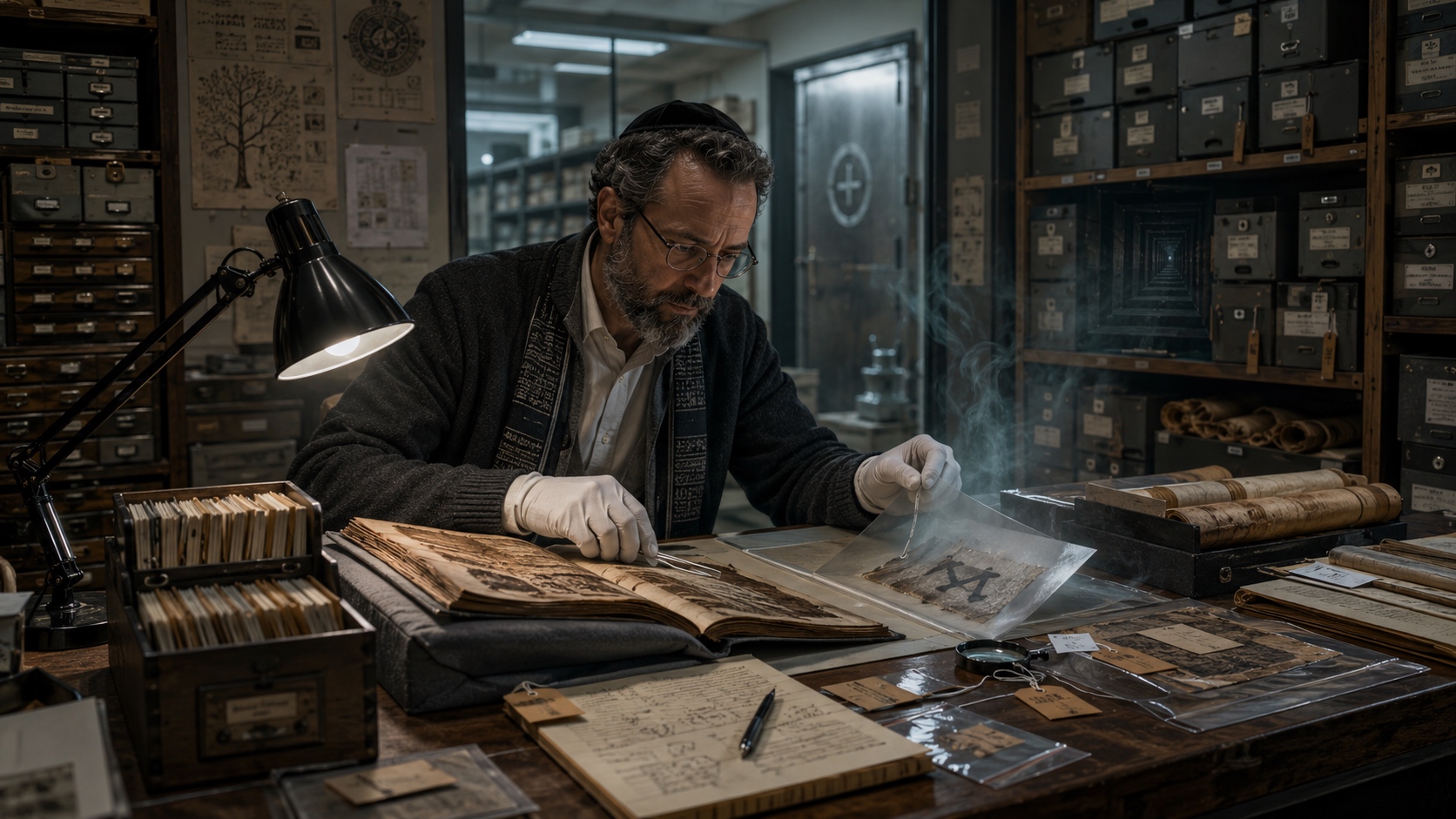
Associated Organization — Linked to the Lantern Index
There is a tradition in Jewish mystical thought that the world is sustained, at any given moment, by thirty-six hidden righteous people. They do not know each other. They do not know themselves. The moment one is recognized, that person ceases to be one of the thirty-six and another takes their place. The world does not know their names. The world does not know it is being held up.
The organization that the other factions call the Lamed Vav (the Hebrew letters whose numerical value is thirty-six) did not choose that name for themselves. It was given to them by a Lantern Index archivist with a dry sense of humor and a habit of naming things accurately. The Lamed Vav kept it. It was not wrong.
What the Lamed Vav actually is: a fellowship of Jewish scholars, rabbis, Kabbalistic practitioners, and people trained in the older disciplines of naming, binding, and the management of the dead who do not remain dead. They have been doing this work longer than any other organization in The Hollow's operational landscape. Their archive predates Christianity. Their methodologies were developed before the Catholic Church's exorcism procedures existed, and they were not consulted when those procedures were written. They are aware of this.
Their primary concern is dybbuks: spirits of the dead that cling to the living world, enter living bodies, and resist release. The Christian tradition calls this possession and addresses it as a demonic problem. The Lamed Vav has known for centuries that not everything in a living body arrived from below. The distinction matters. The procedures are different. Applying the wrong procedure is not just ineffective; it is harmful to the spirit being addressed and to the person carrying it.
Beyond dybbuks: the Lamed Vav holds the oldest operational knowledge in The Hollow's world about the power of Names. True Names as binding instruments, as leverage, as keys to things that do not open any other way. Their archive contains Names that do not appear in any other institutional collection. The Lantern Index is aware of this. The relationship this creates is productive and complicated in the specific way that relationships between two parties who each possess something the other needs tend to be.
Membership
Small, selective, geographically distributed, and deliberately difficult to find. Members are scholars and practitioners who have demonstrated both the intellectual formation to understand what they are working with and the spiritual formation to work with it without it working on them. Rabbinical training is common but not universal. Kabbalistic training is nearly universal. The fellowship is multigenerational in some families and single-generation in others, depending on whether the gift and the calling coincide in the same person.
The Order of Mercy keeps no public record because it chooses not to; the Lamed Vav keeps none because what they do has never fit neatly into any public category. They are known within certain Jewish communities and known, cautiously, among the other factions, and they neither seek broader recognition nor receive it.
Charter Trait — The Weight of Names
The Lamed Vav's archive is older than any competing collection and contains material that no institutional translation process has ever fully captured. When a Lamed Vav character performs a successful Research or Dead Languages check involving a Named entity, True Name fragments, binding mechanics, or the management of human spirits, they may ask one question beyond the standard result: "What does the tradition before this tradition know about this?"
This question reaches into the Lamed Vav's archive and methodology: the pre-Christian record, the Kabbalistic framework, the oral transmission that never made it into any text the other factions hold. The answer is accurate. It may not be in a framework the asking character can immediately apply, and a second check may be required to translate it into operational use.
The Lamed Vav can also identify a dybbuk (a human spirit occupying a living body) when other practitioners would misidentify the case as demonic possession. This identification does not require a check if the character has time for a direct examination. The correct identification is the beginning of a different procedure, and the Lamed Vav knows that procedure.
The Link — Lantern Index
The Lantern Index has the largest institutional archive of supernatural texts in The Hollow's world. The Lamed Vav has the oldest.
What the Index has that the Lamed Vav does not: institutional resources, field support, a global network of researchers who can be mobilized, and relationships with the other seven factions that allow material to move through proper channels. What the Lamed Vav has that the Index does not: sources the Index cannot read correctly, methodologies the Index cataloged without understanding, and a continuous living tradition of practice that institutional scholarship consistently mistakes for historical artifact.
The working relationship functions like most relationships between institutions that need each other and trust each other imperfectly: exchanges happen; information moves; both parties are aware that the other is not sharing everything; neither party considers this dishonest. An Index scholar and a Lamed Vav practitioner on the same case produce better results than either produces alone, and both know this, and this knowledge does not make them fully comfortable with each other.
Their relationship to the Order of Mercy: formally correct, substantively distant. Twenty centuries of shared history that neither party finds simple. They agree that the world contains real evil and requires real response.
They do not agree on the framework, the authority structure, or several foundational questions that neither party raises in a working context because the work does not benefit from raising them. When they must cooperate (and cases arise that require it), the cooperation is professional and as brief as the situation permits.
In The Field
The Lamed Vav appears on cases involving Named entities, True Name research, human spirits in unusual states, and situations where the standard Christian framework for addressing possession has failed or been misapplied. They do not advertise their involvement. They arrive because they heard something that sounded like their problem and came to see.
They are scholars and ritual practitioners rather than combat operatives; their value is the archive and the methodology, not the physical management of threats. They have survived long enough to have protocols for dangerous situations, but they benefit from protection, and they repay it with intelligence and procedure. The exchange is usually worth it.
A Lamed Vav character who appears as an NPC may already know more about the case than the investigators do, specifically about the entity involved, its name, or its history. They will share this information at the rate their assessment of the investigators' trustworthiness permits, which may be slower than the situation calls for.
The oldest sources got it right. The problem is that nobody has read the oldest sources correctly in four hundred years. The Lamed Vav, The Hollow
GM Notes — The Lamed Vav
The Lamed Vav is the corrective lens for cases where the investigators have misidentified the problem. The most useful thing they do in a scene is walk in, look at what everyone has been treating as a demonic possession, and say: that is not a demon. Treat this as the case growing more complicated in a useful direction, rather than the investigators' work being undone.
The dybbuk distinction is the cleanest tool: a human spirit in a living body requires a completely different procedure than a demon. The Catholic exorcism rite will not work. Spirit banishment addresses the wrong category. The Lamed Vav knows what works and will perform it, under the right conditions, with the right people present.
Their relationship to the Lantern Index character, if one is in the party, is worth designing specifically. The Index scholar has read about the Lamed Vav. The Lamed Vav practitioner has read work that the Index scholar's institution produced and has opinions about it. The mutual respect is real, and so is the mutual awareness that the other party does not fully understand what they are holding.
Use them as correctives rather than obstacles: they are careful because they have learned to be, and care plays differently at the table than hostility.
The Neptic Brotherhood
Associated Organization — Linked to the Order of Mercy
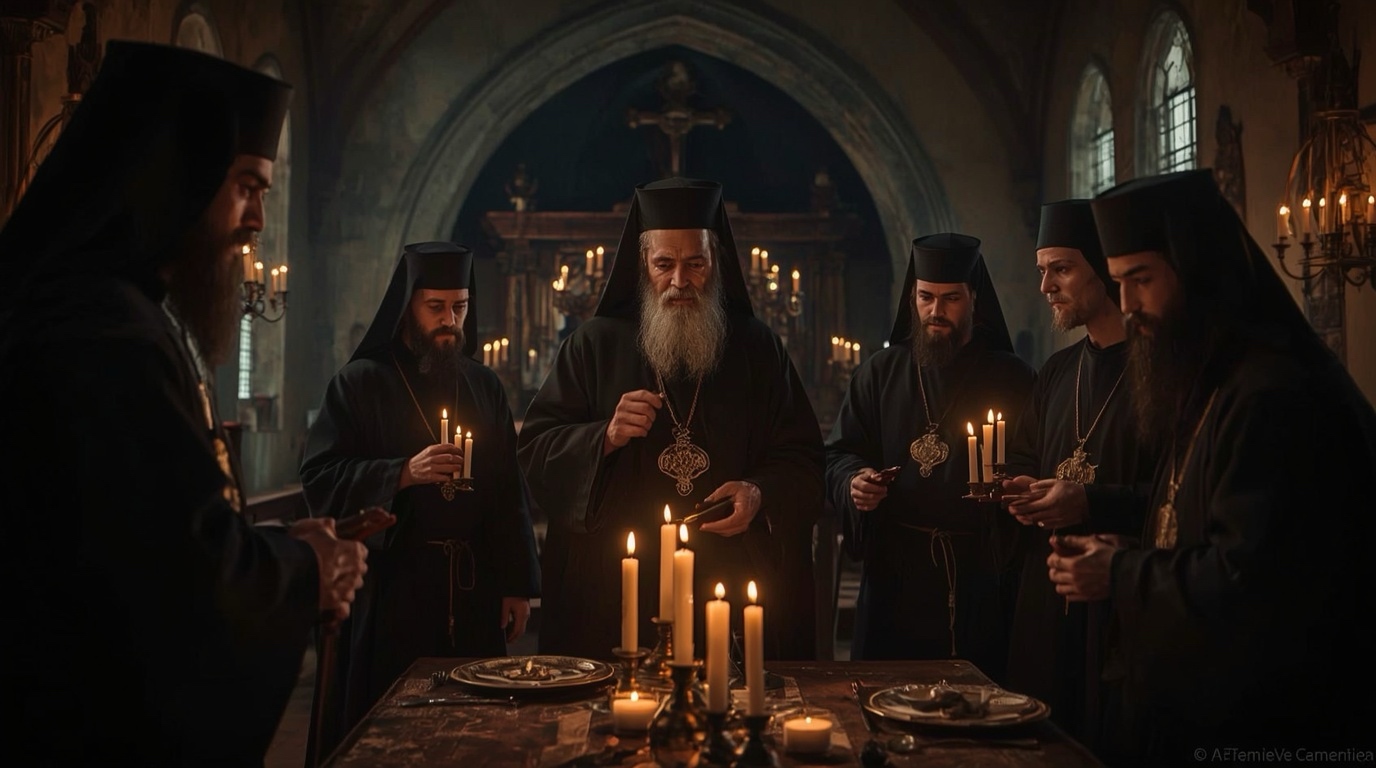
In the Eastern Church's tradition, nepsis means watchfulness: the disciplined, patient attention of a practitioner who has stilled himself enough to perceive what is actually present, rather than what he expects to find. The Hesychast fathers called it the guarding of the heart. The monks of the Neptic Brotherhood call it the precondition for everything else they do.
The Brotherhood is an Orthodox monastic community, formally a skete (a small cluster of monks living under a common rule attached to a larger monastery that provides administrative cover). Practically, it is a dispersed network of Orthodox priests, monks, and trained laymen who address supernatural threats under their own ecclesiastical authority, by their own rites.
They have been doing this since before the Latin Church's current exorcism procedures were formalized. They will note this if asked. They will not bring it up unprompted, because they consider unprompted score-keeping to be a failure of the hesychast discipline. They keep score. They are simply quiet about it.
Their authority comes from the Orthodox Church's continuous apostolic succession, which the Brotherhood holds to be as valid as Rome's and in some respects older in its practice. Their exorcism rite, the Akolouthia epi daimonizomenon with additional prayers drawn from the Desert Fathers and the Philokalia, differs substantially from the Latin Rite in procedure, language, and theological framing. The outcomes, when both are properly executed by properly formed practitioners, are functionally equivalent. The Brotherhood is aware of this. The Order of Mercy is also aware of this, and this awareness produces a specific quality of mutual regard that observers have variously described as respect, tension, and détente, depending on how the last joint case went.
Membership
Monastic at the core: most senior members are ordained monks or priests in the Orthodox tradition. The Brotherhood also includes trained laymen (doctors, academics, professionals in regions where a monk's presence would be conspicuous) who operate under the Brotherhood's authority and with their blessing. Women are present in the lay network, though the monastic core remains male.
They are strongest in Eastern Europe, Greece, the Middle East, Egypt, Ethiopia, and Russia, where Orthodox Christianity is the historically dominant tradition and the Brotherhood's institutional relationships run deep. In Western Europe and North America they are thinner, present but not embedded, and they are aware of their relative weakness in these areas. Cases that cross into their geographic territory are cases where they were probably already there.
Charter Trait — The Elder Rite
The Brotherhood performs exorcism by their own rite under their own authority. When a Neptic Brotherhood character conducts their rite of exorcism or prayers of exorcism, they do so at full holy authority. The rite stands equal to the Latin Rite, and its differences are occasionally significant: certain entities with specific theological associations respond differently to the Eastern tradition's framing, and a Brotherhood practitioner aware of this can exploit the difference.
In regions where Orthodox Christianity is the historically dominant tradition, the Brotherhood's authority extends to the local Church infrastructure: Orthodox churches, monasteries, holy sites, and clergy networks that the Order of Mercy cannot access through institutional channels. A Brotherhood character in Athens or Kyiv or Cairo has access that an Order character does not, and the Order knows this, and calls on it when the work requires it.
The Brotherhood's hesychast discipline provides an additional effect: when assessing spiritual conditions (Wound intensity, entity presence, the difference between genuine spiritual crisis and psychological disturbance), they may reduce their Discernment check difficulty by one step.
The Link — Order of Mercy
The relationship between the Brotherhood and the Order is the relationship between two institutions that agree on the nature of the threat and disagree, at a foundational level, about the structure of Christian authority. This has been the condition of their relationship since 1054 AD. It is not expected to resolve.
What functions is the operational understanding: when the Order has a case in Orthodox-majority territory, the Brotherhood can move in ways the Order cannot. When the Brotherhood encounters something that exceeds their resources, the Order has the archive, the hierarchy, and the institutional weight to provide what's needed. These exchanges happen. They are documented on both sides in ways that are technically accurate and contextually incomplete. Neither party reports more than it must.
The Order sends men. The Brotherhood sends monks. They do not stay at the same place during joint operations unless the case absolutely requires it. When they must work side by side, it is functional, it is professional, and it is not easy. The theology is not the difficult part; both parties have learned to leave the theology in the room where it belongs. The difficult part is the authority question, which never fully leaves the room regardless of where it is put.
In The Field
The Brotherhood appears on cases in their geographic range and on cases involving entities that have a particular relationship to the Eastern tradition's theology: certain types of ancient spirits, certain categories of haunting associated with Orthodox holy sites, certain Named entities that appear primarily in Eastern European folklore. They also appear when the Order sends for them, which the Order does with less frequency than the Brotherhood's capabilities would warrant, for reasons that have more to do with institutional politics than operational judgment.
A Brotherhood NPC will be patient in a way that can frustrate investigators working on a deadline. They will not rush their preparation. They will not conduct a rite they do not consider properly prepared. They will sit in silence for a period that seems excessive and emerge from it knowing something they did not know before. This is the hesychast discipline in practice. It produces results. It is not compatible with every investigation's timeline.
They are neither warm nor cold. They are monks who have seen things and learned that the first thing watchfulness teaches you is how much you are not watching.
GM Notes — The Neptic Brotherhood
The Brotherhood's most productive role is the peer who cannot be managed. The Order of Mercy is used to being the Catholic authority in the room. The Brotherhood is not subordinate to the Order, does not behave as though it is, and has the ecclesiastical standing to back this up. An Order character who tries to assert jurisdiction over a Brotherhood practitioner will find the assertion returned with polite, immovable, theologically precise clarity.
Design scenes where both are present for cases that require what both bring: the Order's archive and hierarchy, the Brotherhood's geographic access and rite. The friction of the joint operation is the interest.
The hesychast patience is a GM tool. The Brotherhood NPC who says we are not ready when the investigators want to move now is not an obstacle to be overcome; they may be correct, and overruling them may produce consequences. They may also, on occasion, be too careful for the situation. The investigators have to make that call.
Their geographic specialty widens the campaign's map. Cases in Eastern Europe, the Balkans, the Middle East, and North Africa have a natural Brotherhood presence. Cases that begin somewhere else and trail into those regions will find the Brotherhood already embedded in the situation, with relationships and history that predate the investigators' involvement by years.
We do not hurry. The thing we are addressing has been here longer than the urgency you are feeling. It will still be here after the urgency passes. Prepare correctly or do not begin. Neptic Brotherhood field instruction, The Hollow
The Kept
Associated Organization — Linked to the Black Road
The Kept are a community in the way a scar is a community: defined by what happened, shaped by it, permanently marked by it. Possession survivors. People who were present when a Wound escalated and got out. Families who lost someone to something the police couldn't explain and who needed to understand why before they could stop. Witnesses whose exposure lasted long enough that Merciful Dissonance didn't fully take, and who had to build a life around seeing clearly when everyone around them was still protected by not seeing at all.
They found each other the way people in that situation do: slowly, carefully, by noticing something in the way a stranger responds to a particular kind of question. They compared what they had survived and what surviving taught them, and they built protocols from accumulated experience, rough rather than theoretically sound, but proven in the exact situations they were built for. And then, because they now knew what was out there, some of them went back in.
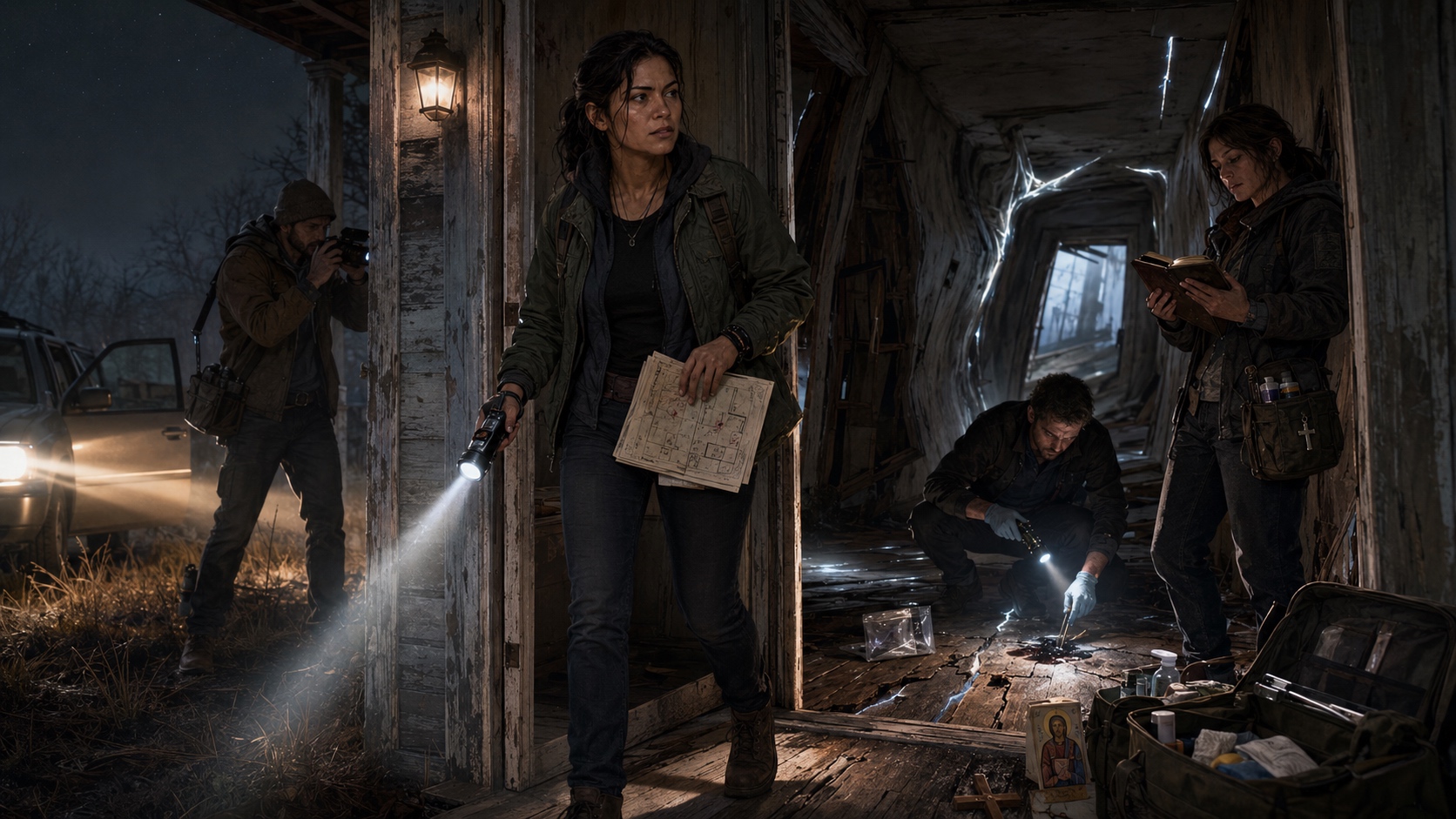
Some leave the field and do not return, and the Kept do not judge this; survival has its own terms. The ones who go back carry something no training produces: they know what it is like to be on the wrong side of the work, and this knowledge changes what they can see and what they can do.
Membership
Anyone who survived. That is the criterion, and it is both simple and brutal.
The Kept neither recruit nor vet. One survivor finds another, each realizes what the other has been through, and everything after that is voluntary: some stay in contact, some become operational, some contribute what they know and return to their lives. The only demand membership makes is honesty about what a person survived and what they learned from it.
Active field members vary widely in capability, training, and psychological stability. Some are the most capable operatives the Black Road has ever worked alongside; some are holding together with the competence people develop when they have no choice, and the competence is real while the holding together is fragile. The Black Road has learned to assess this on an individual basis rather than assuming either.
Some members carry residual marking from what they survived: spiritual contamination from proximity to possession, entity contact, or extended Wound exposure. This is not universal, and most members who carry it are aware of it. What it does varies. Sometimes it provides sensitivity that trained investigators spend years trying to develop. Sometimes it complicates interactions with the supernatural in ways nobody predicted. The Kept are honest about this among themselves, more honest than they are with the other factions.
Charter Trait — Survivor's Read
The Kept have been through what the cases are trying to prevent. This is the asset. Once per scene, a Kept character may declare direct experiential knowledge of this specific type of threat: the inside of a possession, the pressure of a Wound escalating around them, what an entity's attention feels like when it fixes on a person. On a successful Willpower check (Average ), they identify one thing that research alone could not reveal: a behavioral pattern, a procedural detail, a warning sign that only appears from the inside.
Survivor's Read draws on embodied experience rather than research or lore: the character was once the thing the threat was doing something to, and recognizes it.
If the character carries residual marking from their original encounter (a condition the GM determines based on what they survived and how), this check is automatic; no roll is required.
Kept Characters and Residual Marking
A Kept player character may begin play Marked or Unmarked, with GM approval.
An Unmarked Kept character uses Survivor's Read normally: once per scene, make the Willpower check when direct experience applies.
A Marked Kept character begins with Corruption 1 or another visible spiritual liability approved by the GM. Their Survivor's Read is automatic when the marking is relevant to the threat type they survived, but spiritually sensitive entities may notice them first, prioritize them, recognize the old contact, or treat them as a useful opening. The marking is a liability that sometimes points in the right direction.
The Link — The Black Road
The Black Road's respect for survivors is a cultural fact rather than a formal policy, and it runs through every layer of the Road, from the oldest families to the newest recruits: you are in because you had to be, and that is enough, and no one will ask you to justify it further.
The Road noticed the Kept the same way it notices everything: through operational contact, through sharing territory, through the specific experience of working a case alongside someone who had already been through something and finding that person more useful than expected. Some Road hunters came up through the Kept community before the Road found them. Some joined the Kept after the Road put them through something they needed to process with people who would understand it.
What the Road provides: operational structure, weapons, field support, the Road's network of contacts and safe houses, and the specific knowledge of how to kill things that need killing. What the Kept provide: knowledge the Road cannot generate through hunting, because hunting the thing is a different experience than being hunted by it, and both experiences teach something the other does not.
Nobody manages the relationship: the Road extends resources, the Kept contribute intelligence and experience, and no one administers any of it formally. This is the Road's way with most of its allied communities, and it functions.
Their relationship to the other factions: complex and individual. The Order finds them theologically complicated: some members were saved by things that don't fit neatly into the Church's categories, and the nature of what saved them is a question the Order would prefer answered formally. The Candleless recruits aggressively from the members who have gone furthest into understanding the thing that hurt them. The Lyncean Office has files on most active Kept operatives and maintains a working relationship with the ones who have demonstrated stable judgment. The Lantern Index wants their firsthand accounts and occasionally gets them.
In The Field
The Kept appear on cases where someone who has been through it from the inside is the most useful thing in the room. Possession cases. Wound exposure situations. Anything involving an entity that has previously had a human victim who survived. They also appear because they heard something that sounded like the thing that got them, and they came to make sure it ends differently this time.
A Kept NPC might be a combat-capable field operative with seventeen years of experience and zero sentimentality about the work, or a survivor nineteen months out from their encounter and still learning to manage what they carry. The GM should decide where on this range a specific NPC sits before the scene begins, because the range produces very different characters.
What they share: things that frighten other investigators will not frighten them, because they have already been frightened by it, or something like it, in a more direct and personal way, and they came back. That experience makes them specific rather than reckless; they know which things to be afraid of and which things they are past being afraid of, and these are not always the ones the investigators expect.
I know what it wants. I know what it says when it thinks no one is listening. I know because it said it to me, and I was still there when it finished. The Kept, The Hollow
GM Notes — The Kept
The Kept are the human cost of the supernatural. Every case the investigators work successfully means someone didn't end up in the Kept community. Keeping this in the background gives the stakes a human face.
The residual marking mechanic is a narrative tool as much as a mechanical one. A Kept NPC who carries marking from their original encounter has been changed by it in ways they may or may not fully understand. Design the marking specifically for each NPC: what it was, what it did, and what it left. The character should feel the weight of a specific history, not a generic supernatural contamination.
The Candleless recruitment pressure is worth threading through any campaign that features the Kept heavily. The members who have gone deepest into understanding the thing that hurt them are closest to the Candleless's territory, not because they are corrupt, but because the most effective way to understand something is sometimes to learn from it directly, and learning from the supernatural directly has costs the Candleless understands and the Kept do not always anticipate.
The theological complication (some members were saved by something that nobody has cleanly categorized) is a long-form thread. What saved them? An angel? A saint's intercession? Something else? The Order wants to know. The Kept may not want to know, or may already know and not be ready to say.
Resist flattening them into tragic figures: what defines them is what they did afterward, not what happened to them.
Faction Summary
| Faction | Passive | Authority Skills |
|---|---|---|
| Order of Mercy | Rite of Office | Sacraments, Mercy Archives, Ecclesial Authority |
| The Watchfires | Passion | Watchfire Network, Congregational Trust, Righteous Fire |
| Directorate Vesper | Deniable Operation | Deniable Assets, Signals Access, Black Clearance |
| The Lyncean Office | Impossible Evidence | Federal Jurisdiction, Evidence Chain, Local Liaison |
| The Latchkey Archive | Do Not Touch That | Vault Access, Containment Authority, Archive Clearance |
| The Black Road | Kill It Right | Hunter Marks, Road Debt, Kill Ledger |
| The Lantern Index | The Older Version | Index Access, Rare Texts, Peer Review |
| The Candleless | Ugly Solution | Black Market, Infernal Contacts, Unclean Sanctuary |
| Independent | Free Association | None (story-event access only) |
Associated Organizations
| Organization | Charter Trait | Linked Faction | Notes |
|---|---|---|---|
| Sisters of Nursia | Individual Authority | Order of Mercy | Full holy authority; no institutional fingerprint |
| The Lamed Vav | The Weight of Names | Lantern Index | Dybbuk identification; pre-Christian archive access |
| The Neptic Brotherhood | The Elder Rite | Order of Mercy | Orthodox exorcism rite; Eastern Church authority |
| The Kept | Survivor's Read | Black Road | Experiential threat intelligence; residual marking |
The Charter Trait replaces the linked faction's passive; full membership rules are under Associated Organizations, above.