In This Chapter
This chapter profiles the threats characters encounter in The Hollow: their nature, how they operate, how to detect and identify them, their weaknesses, and how to address them. Each entry pairs its stat block with behavior, agenda, and history.
Entries are organized by threat category: Demons, Devils, Ghosts, Spirits, Psychic and Emotional Predators, Transformed and Tainted Humans, Ancient and Constructed Entities, and Cults and Human Antagonists. Angels are addressed separately at the end of this chapter. They do not receive stat blocks.

How to Read an Entry
Each threat entry uses the following format:
Tier and Type appear at the top of the entry. Tier (Minor / Significant / Major) sets baseline difficulty for formal rites (see below). Type categorizes the entity for talent and item interactions.
Threat Stat Block lists the entity's key mechanical values using the standard Homebrewery stat block snippets:
- MIG, AGI, INT, SAV, WIL, CHA: the entity's characteristics. WIL is used in opposed checks (Binding at Stage 3, spiritual resistance, and other direct contests).
- RES — Resistance: the entity's damage reduction, exactly as for a character. Subtract it from incoming Weapon Damage before Wounds are applied. An entity's hard-to-destroy quality is handled by its Legendary ability and its Supernatural Defense (below).
- WND: how much physical harm the entity can sustain before it is disrupted, destroyed, or driven off. Some entities list
n/abecause they cannot be physically harmed in their current state. - STR: Strain, used for Significant and Major adversaries when mental, social, or spiritual pressure can wear them down.
- MDEF and RDEF: Melee Defense and Ranged Defense. Each point adds 1 Bane die to attack checks of that type made against the entity. Most entities are 0.
- Concealment: listed under Skills. It is the difficulty to detect, identify, or assess the entity using Discernment, Monster Lore, or related skills.
Beneath each stat block, the Abilities line names the entity's powers; each is detailed under that entry's Supernatural Defense and Threat Capabilities headings. Group Size is one entity, host, or manifestation unless the entry says otherwise.
Adversary Roles in The Hollow
The Hollow uses the core Exodus NDS adversary roles. Use the entry's Tier and Group Size to choose the role:
- Minions — entities presented as a group (Group Size greater than one). The group shares a single Wound pool and is eliminated one member at a time. Minions have no Strain track (Strain becomes Wounds at 1 Strain = 1 Wound), do not suffer Critical Injuries, and cannot spend Story Points.
- Elites — singular notable entities (most Minor and Significant threats). They act as individuals with their own Wound pool, have no Strain track (Strain becomes Wounds at 1:1), and can suffer Critical Injuries. Entities that cannot be harmed corporeally are the exception: demons, devils, ghosts, spirits, and displaced human souls carry a STR line at every tier, because Strain is the only track that can be worn down.
- Nemeses — Major (Tier 3) threats and all named demons and devils. They have full Wound and Strain tracks, can suffer Critical Injuries, and may spend the GM's Peril Points as a player spends Fortune Points.
The stat-block snippet is only a display convention: a minion-style block shows no Strain line; an adversary-style block can. A singular entity shown in a minion-style block ("Group Size: One") is run as an Elite, not a group. An entity whose Wound line reads n/a cannot be physically harmed in its current state and is addressed by the method in its Resolution section.
Possessing demons always carry Strain. Any demon capable of possession has a Possession skill rank and a full Strain track (STR), regardless of role. The possession engine in Chapter Twelve (possession checks, control checks, the Strain economy, Rushed Possession) runs on these two values; a possessing demon cannot be run without them. The Strain-becomes-Wounds conversion above applies only to entities that do not possess.
Legendary is an ability, not a stat-block number. While an entity's Legendary protection is active, it takes no damage from any source except a confirmed weakness (iron, silver, holy means, or a researched weakness for that entity). Ordinary force simply does not work until the right method is found.
Supernatural Defense is the specific protection each entity possesses that normally cannot be bypassed; for a physically untouchable entity, its Supernatural Defense entry is how its Legendary immunity manifests and describes what bypasses it. Any character exploiting a confirmed weakness bypasses one such protection per action (see Weakness Mechanics below). Iron, silver, holy means, and confirmed weaknesses likewise bypass Legendary (see Weapon Qualities in Chapter Seven).
Adversary Talents are recurring entity abilities defined once here and referenced by name in individual entries and in Chapter Twelve. They are never player purchases.
- Resist Exorcism — The entity is practiced at surviving the rite. When it opposes exorcism Stage 3 (Binding), it adds 1 Boon die to its opposing pool. At Stage 5 (Expulsion), where the entity rolls no pool, the expulsion difficulty instead increases by one step. True-name leverage, domain weaknesses, and confirmed binding conditions apply against it normally.
Demonic Talents are Adversary Talents available only to possessing demons. All Demonic Talents require the Possession skill (see Chapter Twelve, Demonic Possession). A demon's entry lists the Demonic Talents it carries; the GM may add any of them to any possessing demon.
- Possession Mastery — The demon is an old hand at taking vessels. It upgrades one additional ability die to a mastery die on possession checks and control checks. Requires Possession 2+.
- Full Memory — When possession ends by any means, the victim retains a complete, continuous record of everything the demon did with their body and said to them, immediately and permanently, in place of the default fragmented recall (see Chapter Twelve). The demon treats this as a weapon.
- By My Will — When attempting a Rushed Possession (see Chapter Twelve), the demon may target a viable host at medium range instead of short range, or add 1 Boon die to the check against a target at short range.
Detection describes what specific skill checks reveal, at what difficulty.
Weaknesses are the things research uncovers that change how the entity can be engaged. Discovering them requires successful Research, Monster Lore, Theology, or Occult Lore checks. A confirmed weakness (known to at least one character) can be exploited by anyone under the Weakness Mechanics rule below.
Threat Capabilities describes what the entity can actually do to characters: what harm it causes and in what form.
Resolution covers how to address the threat: what works, what doesn't, what the common mistakes are.
Tier Reference
| Tier | Label | Exorcism Stage 5 Difficulty | Scale |
|---|---|---|---|
| 1 | Minor | Easy | Addressable by prepared investigators |
| 2 | Significant | Hard | Requires coordinated response and research |
| 3 | Major | Extreme | Faction resources, expert practitioners, campaign-level threat |
Note: Exorcism Stage 5 difficulty is listed here for reference. Not all entities are expelled via exorcism, the Resolution section of each entry specifies the correct method.
Weakness Mechanics
Weaknesses in The Hollow are not automatic advantages. They are knowledge advantages: they change what is possible.
A character who has confirmed a weakness through successful research (Research, Monster Lore, Theology, Occult Lore, or Dead Languages, whichever the GM determines is appropriate) can exploit that weakness in play. When a character exploits a confirmed weakness:
-
They gain +1 Boon die on the relevant action
-
They reduce the target's Resistance to 0 for that action: the correct tool goes through cleanly, ignoring the toughness that turns ordinary attacks aside
-
They bypass the entity's Supernatural Defense for that action
"Confirmed" means the character (or a character who communicated it to them) succeeded on the research check and the GM has acknowledged the information as accurate. For most characters, a guess, rumor, or partial information does not activate the bonus. The exception is a Black Road hunter using Kill It Right (Chapter Four), who may act on a suspected weakness as though it were confirmed and take the full benefit if the read is correct.
Most entities have 2–3 weaknesses. Knowing one is enough to exploit it. Knowing all of them opens additional options described in each entry's Resolution section.

Demons
Demons are fallen angels operating in the physical world through possession of a host: person, place, or object. Alien to the physical plane, they require something to inhabit, and they arrive with agenda, history, and in many cases, names.
Every demon is part of a larger infernal operation. Understanding what its presence is meant to accomplish beyond the immediate harm it is causing is often what separates a permanent resolution from a temporary one.
Gripping Demon
Tier 1: Minor | Type: Demon
A low-order possessing entity capable of oppression and partial possession. The most commonly encountered demonic presence in field work.
Gripping Demon (Minor Demon)
- Group Size: One. As a possessing demon it is run as an Elite (see How to Read an Entry).
- Skills: Concealment 2; Possession 1; spiritual contests use Willpower 2.
- Abilities: Non-corporeal.
- Equipment: None.
Supernatural Defense: Non-corporeal: physical attacks pass through the entity without effect while it remains in a host.
Behavioral Profile
Gripping demons do not enter hosts without invitation, however indirect. The invitation may be as explicit as a summoning ritual or as subtle as sustained exposure to a Wound Site combined with significant personal spiritual vulnerability. The demon enters through the gap.
Once established, a Gripping Demon works toward two goals simultaneously: deepening its hold on the host and acquiring leverage over the people who care about the host. It studies the host's relationships, fears, and failures. It uses what it learns in Stage 4 of any exorcism against the exorcist. It is not especially intelligent by higher demonic standards, but it is patient and it learns quickly.
At oppression level, the host retains full agency but is under sustained pressure: emotional volatility, intrusive thoughts, unusual behavior in specific contexts. At partial possession, the demon can displace the host's consciousness in moments of high stress.
Detection
- Discernment check (Average ): confirms demonic presence, oppression vs. partial possession
- Monster Lore or Theology (Average ): identifies as minor possessing demon, estimates how long it has been established
Weaknesses
Research (Average ) reveals one of the following; Hard reveals all:
- Specific prayers of binding from its origin tradition (Theology 2+ to use effectively)
- Salt perimeter disrupts its ability to re-establish grip if driven from the host temporarily
- Direct use of ordained authority (Order of Mercy ordination or equivalent) imposes a Bane die on all its Stage 4 interference actions
Threat Capabilities
- Through the host (oppression): the host may act aggressively, make statements they would not make, or provide accurate private information about other characters (the demon has been paying attention)
- At partial possession: the demon can directly cause 1 Wound of harm to the host as a deliberate action, or use the host's body for physical actions
- Against the exorcist at Stage 4: standard interference (bargaining, accusing, escalating harm to host), see Chapter Eight
Resolution
Formal exorcism as described in Chapter Eight. The Gripping Demon resists but is not capable of the sustained strategic interference that higher-order entities mount. As the exorcism progresses it will bargain, and its bargaining is desperation rather than leverage.
Do not: Attempt exorcism without Stage 2 preparation: even at Tier 1, skipping preparation puts the exorcist at a disadvantage. Do not mistake partial success at Stage 4 for expulsion.
Legion Fragment
Tier 2: Significant | Type: Demon
A fragment of a larger demonic entity, capable of full possession and limited mobility between hosts. Presents as a distinct entity but retains connection to its source.
Legion Fragment (Significant Demon)
- Skills: Concealment 3; Possession 2; spiritual contests use Willpower 4.
- Abilities: Fragmented multiplicity; By My Will (see Demonic Talents).
- Equipment: None.
Supernatural Defense: Fragmentation: if expelled at Strain 0 or driven out by a Stage 5 Calamity, the fragment immediately attempts a Rushed Possession (see Chapter Twelve) of a viable host within range, surviving by seizing the nearest available body. A salt perimeter around the exorcism space prevents the attempt.
Behavioral Profile
Legion Fragments are pieces of a named demon that has distributed itself across multiple hosts, sometimes deliberately to avoid concentrated exorcism, sometimes as a result of a partially successful attempt to expel the parent entity. Each fragment shares awareness with the others but has limited communication capacity. It knows, in a vague and dreamlike way, what its sibling fragments are experiencing.
A single Legion Fragment is a Tier 2 threat. Multiple fragments operating in proximity escalate toward Tier 3 as they share information and coordinate interference.
The fragment's primary goal is reunion: it wants to find its parent entity or its sibling fragments and reconsolidate. It will manipulate the host toward situations that bring it into contact with other fragments or that provide the parent entity operational advantage.
During exorcism, the Legion Fragment brings real tactical intelligence to Stage 4. It knows who is in the room, what their vulnerabilities are, and which supporting characters can be turned against the exorcist. It is also aware of its own distributed nature and may taunt the exorcist with the information that expelling this fragment is not the same as stopping the threat.
Detection
- Discernment check (Hard ): confirms demonic presence and full possession; may detect the fragmentary quality (distributed entity rather than unified presence)
- Monster Lore or Theology (Hard ): identifies as Legion Fragment; on Boon spend, estimates how many other fragments exist
Weaknesses
Research (Hard ) reveals one of the following; Severe reveals all:
- The parent entity's partial true name (if known) applies name leverage against the fragment (see Chapter Eight, Name Leverage in Exorcism): 1 Bane die on its Stage 3 opposing pool, and +1 Strain per Stage 4 interference action
- A salt perimeter must surround the exorcism space to block post-expulsion transfer (see Supernatural Defense)
- Preventing fragmentation consolidation, if the parent entity and all fragments can be isolated from each other during the exorcism, the fragment's effective Willpower drops by 1
Threat Capabilities
- Through the host: full access to the host's body and memories; may cause up to 2 Wounds of harm to the host as a deliberate action; can perform physical actions at the host's capability
- Host damage on failed exorcism: 2 Wounds to host at end of failed Stage 4 attempt
- Fragment transfer: see Supernatural Defense above
- Information sharing, if other fragments are present in the area, this fragment knows what they know, investigators who have spoken to affected hosts in other locations may find their private conversations referenced
Resolution
Formal exorcism, conducted with the salt perimeter in place (see Supernatural Defense). If multiple fragments exist, they should ideally be addressed sequentially with knowledge of their total number: expelling fragments without knowing how many remain risks believing the threat is resolved when it is not.
If the parent entity can be identified and directly addressed (requiring additional Research and potentially a Tier 3 engagement), expelling the parent may dissolve all fragments simultaneously. This is rare but is the most complete resolution.
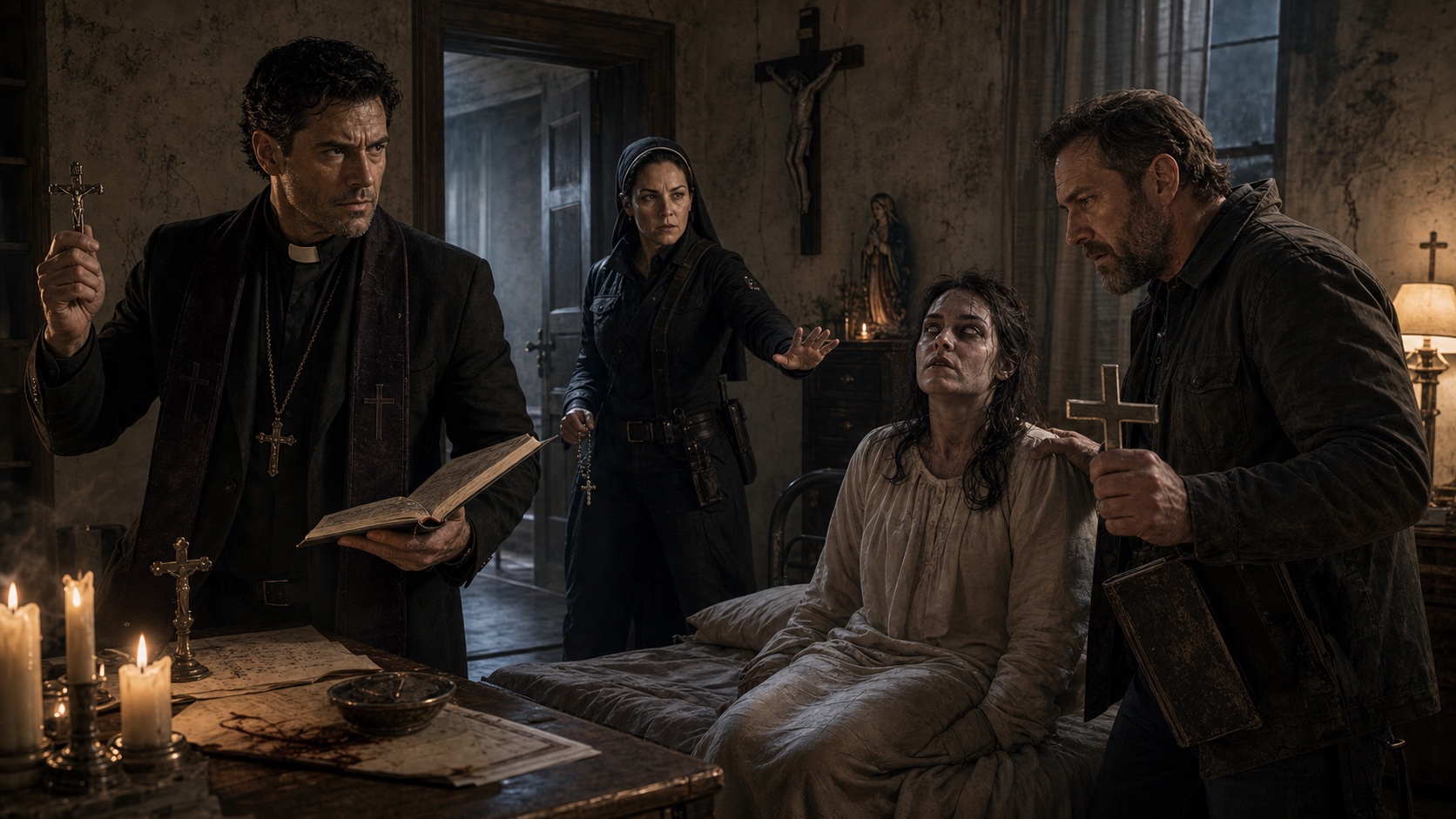
The Named
Tier 3: Major | Type: Demon
A high-order demonic entity of specific identity, history, and infernal authority. The Named have been cast down long enough to have developed distinct character, specialization, and operational scope.
The Named (Major Demon)
- Skills: Concealment 4; Possession 3; spiritual contests use Willpower 5.
- Abilities: Named demonic authority; Legendary; Resist Exorcism, Possession Mastery, Full Memory (see Adversary Talents and Demonic Talents).
- Equipment: None.
- Peril Uses: Escalate host harm, speak a known name, corrupt a rite, or create an opening for a lesser entity.
Supernatural Defense: Authority Presence: characters with Corruption 3+ in the room during an exorcism of The Named must succeed at a Composure check (Hard ) at the start of each Stage 4 check or lose their action to involuntary cooperation with the entity's interference.
Behavioral Profile
Each of The Named has a specific domain: a sin, a category of human suffering, a type of spiritual destruction it has been pursuing for centuries or longer. When The Named appears in a case, it is because the case is inside its domain.
The Named prepares its possessions. It creates conditions, arranges circumstances, and establishes itself in a host who represents something specific: a particularly significant person, someone in a position of institutional authority, someone who provides access to a target population. The possession serves a purpose larger than the individual case.
During exorcism, The Named conducts a prepared campaign. It knows the names of everyone in the room, has researched their history before the rite began, and arrives with arguments, accusations, and offers tailored to each person: accurate accounts of past sins, real failures, and unresolved debts, with sustained pressure reserved for whoever is spiritually weakest. It will offer things it can actually provide.
Detection
- Discernment (Severe ): confirms major demonic presence; on Boon spend, perceives the entity's specific domain
- Monster Lore or Theology (Severe ): on success, names the entity's category and provides 1 known weakness; on Breakthrough, the entity's partial true name surfaces
Weaknesses
Research (Severe , extended: multiple sessions may be required) reveals:
- The entity's true name (see Name Leverage in Exorcism, Chapter Eight; True Name talent tree, Chapter Six): knowing the true name allows it to be directly commanded at Stage 4, reducing the difficulty of all Stage 4 checks by one step
- Its domain weakness: each Named has a specific opposing virtue that, when someone in the room embodies it in earnest, imposes a Bane die on its checks (a Named whose domain is despair is weakened by witnessed hope; a Named whose domain is betrayal is weakened by demonstrated loyalty)
- Its binding conditions: specific physical and ritual arrangements from its documented history that suspend its Legendary protection for the duration of the exorcism, so it can be harmed by ordinary means while the binding holds
Threat Capabilities
- Full possession, with complete host control; can cause up to 3 Wounds to the host as a deliberate action
- Multi-Tactic (Stage 4 action): The Named may simultaneously bargain, accuse, and escalate harm to the host within a single Stage 4 check: three interference actions resolved at once. This replaces the standard one-interference-per-check limit that applies to Minor and Significant demons. Each tactic resolves separately; characters targeted by the Accusation still make their individual Composure checks, the bargain is still real, and the escalation still costs the host 1 Wound.
- Against the exorcist directly, if the exorcist has Corruption 3+, the entity may attempt a directed spiritual assault. Willpower check (Hard ) or the exorcist suffers 1 Strain and adds 1 Bane die to the next Stage 4 check
- Authority Presence (see above)
Resolution
Formal exorcism is the correct method, but The Named should not be attempted without preparation that would be excessive for a Tier 1 or 2 entity. Minimum requirements for a viable attempt: full provenance research on the entity, known partial or full true name, at least one confirmed weakness, complete Stage 2 preparation, and a team of at least 2 characters (one conducting, one supporting perimeter/Stage 4 assistance).
This is a campaign-level threat. A single session exorcism of The Named is unlikely to succeed without exceptional preparation. More commonly: the first engagement establishes the entity's identity; subsequent sessions develop the research and relationships needed for a formal attempt.

Devils
Devils do not possess. They negotiate. The threat is the agreement you made before you knew what you were agreeing to.
The Street Devil
Tier 1: Minor | Type: Devil
A low-order infernal operative working within narrow authority. Offers small deals, collects small debts, reports upward.
The Street Devil (Minor Devil)
- Group Size: One.
- Skills: Concealment 3; negotiation and temptation use Charisma 4 or Willpower 2 as appropriate.
- Abilities: Contractual leverage.
- Equipment: Mundane identity, legal instruments, or favors appropriate to its current mask.
Supernatural Defense: Contractual Immunity: a character who has any active devil contract, even with a different devil, cannot take offensive spiritual action against this devil without first succeeding on a Willpower check (Average ) to assert independent agency.
Behavioral Profile
Street Devils appear human. They are indistinguishable from ordinary people without Awakened Blood and a Discernment check. They work neighborhoods, industries, subcultures, wherever people are vulnerable and wherever small wants are common. Their deals are minor: a small advantage, a piece of information, a protection from a specific danger. Their price is commensurately small. The Corruption this generates (+2, same as all devil deals) is the real product. They are farming spiritual compromise for their supervisors.
A Street Devil has no significant physical capability and will not fight. Confronted directly, it negotiates: an offer to the confronting characters, or a reminder to any character with an existing contract of that contract's terms.
Detection
- Discernment (Hard ): identifies a human-appearing entity as infernal in nature; does not confirm tier or authority
- Theology or Occult Lore (Average ): recognizes the behavioral pattern of a deal-making operative
- Perception (Hard ): up close, minor physical anomalies are detectable to Awakened Blood, ambient temperature, wrong-colored reflection in mirrors, animals avoiding proximity
Weaknesses
Research (Average ) reveals:
- Street Devils cannot enter a space protected by a proper salt-and-consecration perimeter
- Naming the devil's supervising authority (partial true name of its superior) causes it to become evasive and reduces its Concealment to 1 for the rest of the scene
- Any active contract the devil holds can be reviewed aloud, clause by clause, requiring the devil to confirm or deny. This is not breaking the contract, but it forces disclosure
Threat Capabilities
- Negotiation: the devil's primary action is to make an offer, a spiritual threat rather than a physical one. The offer is always real.
- Contract enforcement, if any character in the scene has an active contract with any devil, the Street Devil may invoke awareness of that contract, imposing a narrative constraint on the character's freedom of action in this scene
- Physical confrontation: no significant combat capability; it will flee if pressed. Iron weapons deal full damage; blessed weapons deal +1 WD.
Resolution
Street Devils possess no one, so exorcism does not apply (see Chapter Eight). They can be physically confronted (they will leave) or formally banished from a location by established perimeter. The more permanent resolution is identifying and severing their operational network: what they are doing in this area, who their supervisor is, what contracts they hold.
The Advocate
Tier 2: Significant | Type: Devil
A mid-order devil specializing in the construction, enforcement, and exploitation of contracts. Patient, articulate, and dangerous in sustained interaction.
The Advocate (Significant Devil)
- Skills: Concealment 3; negotiation and legal pressure use Intellect 5 or Charisma 5.
- Abilities: Infernal contract authority; Legendary.
- Equipment: Contract records, proxies, and whatever resources its bargain network provides.
Supernatural Defense: Legal Standing: any character who has made any devil deal of any kind in their history cannot initiate hostile action against The Advocate without succeeding on a Willpower check (Hard ). The Advocate considers all existing contracts as establishing a professional relationship.
Behavioral Profile
The Advocate appears as a professional: an attorney, an advisor, a consultant. Its presentation is polished and its manner courteous to the point of deliberate performance. Lying is beneath its method. The entire operation runs on technically accurate statements arranged to create false impressions, offers that deliver exactly what they promised while the real cost is in the adjacent clause, and the patient exploitation of commitments its targets made without understanding the scope.
An Advocate is assigned to a territory or a person of interest. It may manage dozens of contracts simultaneously. When it appears in a case, it is because something in the case is within its portfolio: a character has an existing contract, a location involves an active deal, or the case is moving toward something the Advocate has been contracted to prevent.
Violence is not among its methods. When confronted physically, it will remind the characters of every relevant contract in the room, produce documentation of outstanding obligations, and offer a deal for safe passage. If pressed past this, it withdraws to resources of its own: Street Devils in the area, information it can share with other parties, and the capacity to make things administratively difficult for characters who have any institutional footprint.
Detection
- Discernment (Hard ): confirms infernal nature and identifies as a negotiating entity, not a possessing one
- Theology or Occult Lore (Hard ): confirms Advocate classification; on Boon spend, surfaces one piece of information about its current operational portfolio
- Research or Inquiry (Hard ): identifies the Advocate's public-facing cover identity and begins to surface its contract network
Weaknesses
Research (Hard ) reveals:
- A contract the Advocate holds that contains a clause it has violated (requires Research into the specific contract terms), confronting it with this forces a formal acknowledgment and eliminates the Legal Standing defense for the rest of the scene
- Its supervising authority's partial true name: significantly reduces its willingness to escalate
- An existing contract it is currently in breach of (from its side): leverage rather than a weakness per se, and it changes the power dynamic in negotiation
Threat Capabilities
- Contract exploitation: any character with an active devil contract of any kind is potentially in the Advocate's operational sphere, it knows about their contract and may invoke it
- Information threat: it will deploy accurate private information at the most damaging moments.
- Legal Standing (see above)
- Administrative pressure: can mobilize institutional obstruction: inspections, complaints, investigations, against characters with any public-facing identity. Not supernatural, but effective.
Resolution
The Advocate possesses no one, so exorcism does not apply (see Chapter Eight). Direct physical confrontation is possible but rarely useful: it withdraws before taking significant harm and returns through institutional channels. The correct resolution involves identifying what contract or operation brings it to this case, addressing that underlying matter, and neutralizing its leverage. Contract dissolution (see Chapter Eight) removes its primary tools.
Ghosts
Ghosts were people. They had lives, and what keeps them here is almost always something that was interrupted, which is why they are understood and released rather than driven out. Some become dangerous; all deserve the respect owed to what they were.
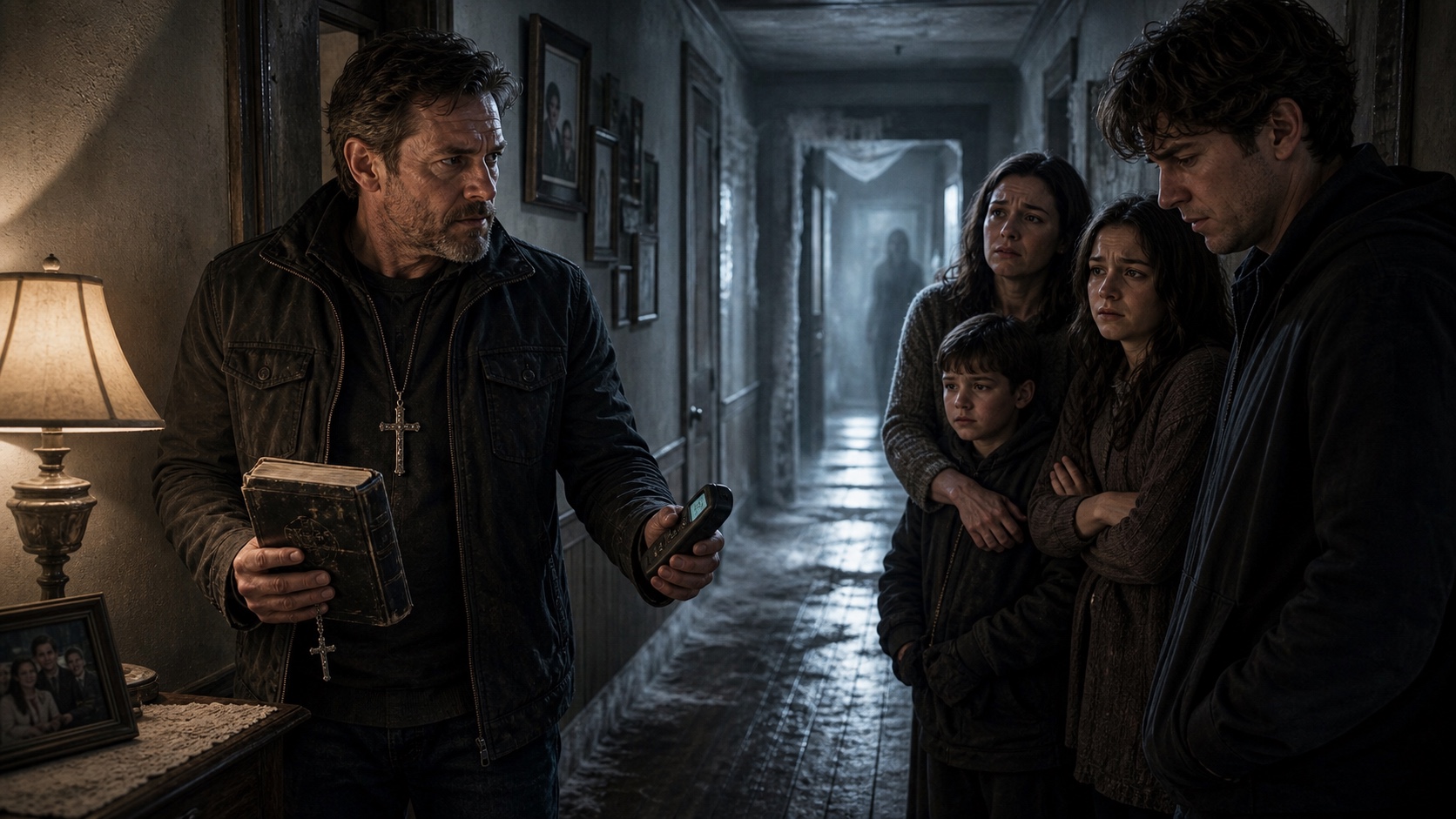
Anchored Spirit
Tier 1: Minor | Type: Ghost
A human spirit tied to a specific location by unresolved circumstances. Disoriented, often fragmented in memory, typically not yet dangerous.
Anchored Spirit (Minor Ghost)
- Group Size: One.
- Skills: Concealment 2; spiritual contests use Willpower 2.
- Abilities: Bound to anchor.
- Equipment: None.
Supernatural Defense: Non-corporeal: cannot be physically engaged. Standard weapons have no effect.
Behavioral Profile
Anchored Spirits are tied to a place by something specific, where they died, an object they valued, a relationship they could not let go, an injustice that has not been acknowledged. They do not always know they are dead. They move through the space they occupied in life, interact with their environment as they remember it, and experience confusion or distress when the world does not match their expectation.
They are generally not aggressive. They may become distressed when living people intrude on their space, particularly if those people disturb the anchor point. Distress can manifest as environmental phenomena, temperature drops, sound anomalies, movement of objects, which escalates as the ghost's distress increases. A sufficiently distressed Anchored Spirit is temporarily comparable to a Grief Shade (see below) without having that entity's sustained rage.
Detection
- Discernment (Average ): confirms spiritual presence; confirms it is human in origin (not demonic)
- Discernment (Average ): makes communication attempt viable; Mediumship-tree talents (Chapter Six) apply their benefits
Weaknesses
Research (Easy–Average) reveals: address the anchor condition: identify what holds the spirit here, address it in the world (acknowledge the injustice, resolve the unfinished business, communicate something the spirit needed to know). A spirit whose anchor is addressed may move on without any formal banishment.
Threat Capabilities
- Environmental manifestation: cold, sound, object movement, emotional intrusion (characters in the space may experience emotional states not their own, sorrow, fear, urgency)
- At full distress: 1 Strain to all characters in the space per scene of extended presence without engagement
Resolution
Communication-first (see Chapter Eight Spirit Banishment). Address the anchor condition if identifiable. Formal banishment (Willpower + Discernment, Easy–Average) for spirits who cannot be communicated with or whose anchor cannot be resolved.
Grief Shade
Tier 1: Minor | Type: Ghost
A human spirit whose attachment has curdled into something more volatile: driven by intense emotion that has suppressed its coherent self.
Grief Shade (Minor Ghost)
- Group Size: One.
- Skills: Concealment 2; emotional pressure uses Willpower 3.
- Abilities: Grief resonance.
- Equipment: None.
Supernatural Defense: Emotional Anchor: characters who have experienced a loss similar to the specific grief driving this spirit must succeed at a Composure check (Average ) or have disadvantage on all checks to interact with the spirit, as the resonance is overwhelming.
Behavioral Profile
Grief Shades have passed through the disoriented phase of haunting into something more consolidated around a single overwhelming emotion, grief, rage, guilt, terror. The emotion is real, was real, and is now the primary driver of everything the spirit does. It may have a name. It may be identifiable. It does not have much accessible coherent self left.
Grief Shades are more dangerous than Anchored Spirits because their emotional state makes them capable of more targeted action. They are drawn to people who resonate with their specific emotional core. They will push that resonance, amplifying the corresponding emotion in living people in their space.
Detection
- Discernment (Average ): confirms human spiritual presence, aggressive or volatile state
- Discernment (Hard ): makes communication attempt viable; Mediumship-tree talents (Chapter Six) apply their benefits; on failure, the attempt itself agitates the shade
Weaknesses
Research (Average ) reveals: the specific loss or wrong that drove the spirit into this state. Addressing that loss directly, naming it, witnessing it, refusing to look away from it, is the most reliable way to create a moment of coherence in which communication and potential release become possible.
Threat Capabilities
- Emotional projection: all characters in the space experience the shade's core emotion at intensified volume (Composure check, Average , or gain 1 Strain)
- Targeted emotional assault: against a character resonating with the shade's grief, a directed action causes 1 Strain and may trigger specific memories or fears
- At full agitation: can cause 1 Wound of physical harm through poltergeist-level object manipulation
Resolution
Communication is harder than with an Anchored Spirit but remains the most complete resolution if achievable. Acknowledgment of the spirit's specific grief, specific recognition rather than generic comfort, may create enough coherence for release. Formal banishment (Average ) if communication is not viable. Destruction (see Chapter Nine) is technically possible but leaves residue.
The Bound Dead
Tier 2: Significant | Type: Ghost
A human spirit that has been magically bound to a location or object through deliberate ritual, unable to move on, aware of its imprisonment, and often hostile as a result.
The Bound Dead (Significant Ghost)
- Skills: Concealment 3; spiritual contests use Willpower 4.
- Abilities: Binding tether.
- Equipment: None.
Supernatural Defense: Binding Anchor: standard banishment does not work. The spirit cannot move on regardless of its desire to do so because the binding holds it. Banishment attempts without first dissolving the binding fail automatically.
Behavioral Profile
The Bound Dead stay because someone else bound them: a practitioner who wanted a guardian, a devil who wanted a tool, a ritual that required anchored spiritual presence to function. The binding may have been performed on the person while living (rare), at or shortly after death, or sometime thereafter.
The spirit's character has been shaped by the duration and nature of its imprisonment. A recently bound ghost may still be recognizably itself, frightened, angry, asking for help. One that has been bound for decades or centuries may be significantly transformed by the experience. Long-term binding corrodes coherent self and amplifies volatility.
The Bound Dead knows what it is. It knows it cannot leave. What it wants varies: release, revenge against whoever bound it, resolution of something that mattered before the binding, or simply an end. What it does depends on the capacity of whoever bound it; some Bound Dead are dangerous precisely because they were bound as weapons.
Detection
- Discernment (Hard ): confirms human spiritual presence and identifies the binding structure
- Occult Lore or Dead Languages (Hard ): identifies the type of binding and its approximate age; on Boon spend, identifies the binding tradition
Weaknesses
Research (Hard ) reveals the binding's dissolution requirements: specific ritual, specific object, specific action, or specific person. No two bindings dissolve identically; the dissolution requirement is specific to the ritual that created it.
Threat Capabilities
- Full range of Grief Shade capabilities at higher intensity
- If bound as a weapon: directed physical manifestation dealing up to 2 WD per round to targets in the bound location (subtract Resistance)
- Binding awareness: the spirit knows who created its binding and what they wanted. It will share this information with anyone who demonstrates credible intent to free it.
Resolution
Step one is identifying and dissolving the binding (Research extended check, Hard ; dissolution method varies). Step two, once the binding is dissolved, is standard banishment (Average ) or natural release if the spirit chooses to go freely. A spirit that has been freed from its binding and then released has no reason to return; a spirit banished while still bound will reconstitute at the binding point.

Human Soul Possessions
Dybbuks and Ibburs are both human souls occupying a living person without permanent right: one harmful, one not, and both requiring correct identification before any procedure is attempted. The Lamed Vav exists partly because the rest of the hidden world has spent centuries confusing them.
See Chapter Eight for full possession procedures, wrong-tool consequences, Tzror capture mechanics, and Reconciliation.
Dybbuk
(DIH-buk; Hebrew דִּיבּוּק, "to cling")
Tier 1–2: Minor to Significant | Type: Human Soul Possession
A human spirit occupying a living body without consent. The soul was once a person, and it answers to different rules than a demon.
Dybbuk (Minor/Significant Human Soul Possession)
- Skills: Concealment 3; spiritual contests use Willpower 2-4 by soul type.
- Abilities: Misidentification.
- Equipment: Uses the host body and whatever the host can access.
Willpower 2 for wandering purgatory souls; Willpower 3–4 for hell-escaped souls weighted with a dominant sin.
Supernatural Defense: Misidentification. Most investigators will recognize something is wrong. Few will know to call what they are dealing with a dybbuk before they have already made one significant mistake, and the standard mistake is exorcism (for what the wrong rite does, see Chapter Eight, wrong-tool consequences).
Behavioral Profile
A dybbuk's behavior in a host is shaped by what kind of soul it is.
A wandering purgatory soul that missed passage is often confused, distressed, and only partially aware of what it has done by entering the host. It may not have intended to possess anyone; it pressed too close to the living world, found a gap in a spiritually vulnerable person, and fell in. These souls are frequently in distress. They may cooperate with investigators if they can be communicated with effectively. They are not necessarily dangerous, though the host suffers from the imprint of the soul's emotional state regardless of the soul's intent.
An escaped hell-soul is more deliberate. It left hell because it chose to, through whatever means were available to it: exploiting a momentary weakness in the barrier, finding a crack at an active Wound Site, being pulled through by a cult that did not understand what it was releasing. A hell-escaped soul carries its sin. The seven deadly sins each produce a recognizable signature in the host: the host becomes the sin. Not metaphorically. An envy-weighted soul makes the host burn with covetousness so acute it can rupture relationships and judgment. A pride-weighted soul makes the host capable of any act that preserves their self-image. The sin is not the host's sin; it is the soul's, and it is being projected into the host's nervous system like a standing wave.
A cast-out purgatory soul (one ejected by purgatory itself as a final test of worthiness) may be in either state. It was given a chance to prove something. Whether it is using that chance correctly is the question that determines whether the case ends in Reconciliation or in Banishment.
Detection
- Discernment (Average ): confirms possession is present; cannot alone confirm type
- Theology or Monster Lore (Hard ): distinguishes human-soul possession from demonic; on Boon spend, identifies whether the soul is a wanderer, a hell-escapee, or a cast-out
- Dead Languages (Hard ): if the soul is a hell-escapee, may identify which sin dominates it from the host's behavioral pattern
- Weight of Names (Lamed Vav Charter Trait): first examination confirms all of the above without a check; additionally identifies whether the soul is reconcilable
Weaknesses
Research (Average–Hard) reveals one of the following:
- The soul's true name and identity; using the name during Phase 2 Communication grants +1 Boon die on Phase 3 Banishment
- The soul's dominant sin (for hell-escaped souls); knowing the sin allows a practitioner to address the soul's actual condition rather than its surface behavior, reducing Communication difficulty by 1
- Whether the soul is a cast-out rather than an escapee; this changes the procedure significantly: cast-outs may be reconcilable, escapees are not
Threat Capabilities
-
Imprint: The host experiences the dybbuk's dominant emotional state as their own. The host retains agency, but their judgment, priorities, and emotional regulation are operating through a filter that is not theirs. In an escaped hell-soul, this imprint is the sin, expressed continuously.
-
Knowledge access: The dybbuk has access to everything the host knows and will use it to navigate, protect itself, and resist identification.
-
Physical use: The dybbuk can direct the host's body. A hell-escaped soul will use the host purposefully. A wandering soul may use the host's body while half-asleep in the spiritual sense, creating erratic behavior rather than directed action.
-
Against practitioners: A dybbuk that realizes it is being investigated may attempt to pass as the host, perform normality, and buy time. An escaped hell-soul may actively deceive investigators about its nature, presenting as an ibbur with a redemptive purpose to gain a Reconciliation window and escape cleanly.
Resolution
Spirit Banishment, dybbuk procedure (Chapter Eight). Exorcism does not work and causes serious harm. Correct identification of the soul type before Phase 3 determines whether the resolution ends in Banishment (free-floating window begins), Tzror capture (soul bound for eventual purgatory passage), or Reconciliation (if applicable).
Do not: Begin any procedure before completing Phase 1 Research. A dybbuk who knows it has been identified will behave differently than one who believes its cover holds, and those behavioral differences are useful information.
Ibbur
(IH-boor; Hebrew עִיבּוּר, "passing through")
Special Case | Type: Human Soul Possession
A human spirit that has entered a living person with redemptive intent. It is still a possession requiring resolution, but treating it as a threat on the dybbuk's level is a mistake with consequences.
Ibbur (Special Human Soul Possession)
- Skills: Concealment 4; spiritual contests use Willpower 1-3 by soul condition.
- Abilities: Misidentification with redemptive intent.
- Equipment: Uses the host body and whatever the host can access.
Concealment 4 reflects how likely investigators without specific expertise are to misread the ibbur as either a dybbuk or a demonic presence, rather than any attempt at hiding.
Supernatural Defense: Misidentification, same as the dybbuk but more dangerous in the opposite direction: a soul attempting to do right, treated as a threat and forcibly expelled, is a tragedy as well as a wrong-tool error (see Chapter Eight).
Behavioral Profile
An ibbur enters a host because it has something to do. It is working. The possession is instrumental: a soul that cannot right its wrongs through any other means has, by some combination of desperation and spiritual weight, fallen into a living person and is trying to use that person's access to the world to complete something.
The host under an ibbur's influence becomes better, or at least the expression of qualities higher than their usual register. Unusual courage. Unexpected compassion. Skill at something they never studied. Certainty in a situation that would normally produce doubt. The host may not know why they are different. People who know the host will notice the change. Investigators with Discernment will notice the presence.
The spiritual signature of an ibbur reads as a lift where a dybbuk's reads as a weight: a dybbuk feels like something bearing down, an ibbur like something holding up. This is the only reliable in-field tell without expert assessment, and it is a qualitative read that requires Discernment 3+ or the Lamed Vav's Weight of Names to access reliably. A character with Discernment 1–2 may get a vague impression of difference without being able to articulate it accurately.
An ibbur in a willing host (where the host has given some form of agreement to the soul's presence) operates cooperatively. The soul submits to the host, allows the host to speak first, and will explain itself and its purpose to investigators who address it properly. This is the best-case scenario. It is also the scenario that a deceptive soul performing an ibbur will construct with precision, because it knows investigators are more likely to extend good faith to a willing-host presentation.
Detection
- Discernment (Average ): confirms possession is present
- Discernment (Hard , or Theology/Monster Lore Severe ): distinguishes ibbur from dybbuk: the qualitative read on lift versus weight, if the investigator knows what to look for
- Weight of Names (see Dybbuk, above): first examination distinguishes ibbur from dybbuk immediately and further indicates whether the host is willing, whether the soul's stated purpose is honest, and whether Reconciliation is appropriate
Threat Capabilities
An ibbur in a cooperative willing host is a complication rather than a threat: a possession that requires resolution but does not require defense.
An ibbur in an unwilling host, or one whose stated purpose turns out to be false, is a dybbuk wearing better clothes. The soul has access to the host's full knowledge, can direct the host's body, and if deceptive, has had the benefit of investigators treating it with more initial goodwill than a dybbuk would receive.
Resolution
An ibbur in a willing host may be resolved through Reconciliation if the soul qualifies (Chapter Eight). This is the preferred resolution when the soul's redemptive work is real or already complete.
An ibbur whose host is unwilling, or who is determined through assessment to be deceptive, is treated as a dybbuk: Spirit Banishment, dybbuk procedure. The same Tzror capture option is available.
Exorcism causes the same serious harm as with a dybbuk.
GM Notes — Ibbur Cases
The ibbur is the most ambiguous possession type in The Hollow because it requires the GM to hold two possibilities simultaneously: the soul is sincere, or the soul is performing. The mechanics do not resolve this for you; assessment can fail, and a deceptive soul will invest in making the deception hold through Step 1.
Design ibbur cases around the question that will not leave: what would it mean if this soul is telling the truth? A soul that claims it entered a dying woman's body to stop her from taking her own life: was she actually in danger, and did the soul stop it, and what does it want in return? If the claim is true, the investigators are talking to something that sacrificed its own passage to help a stranger. If it is false, they are about to give a deceptive hell-escaped soul a Reconciliation window.
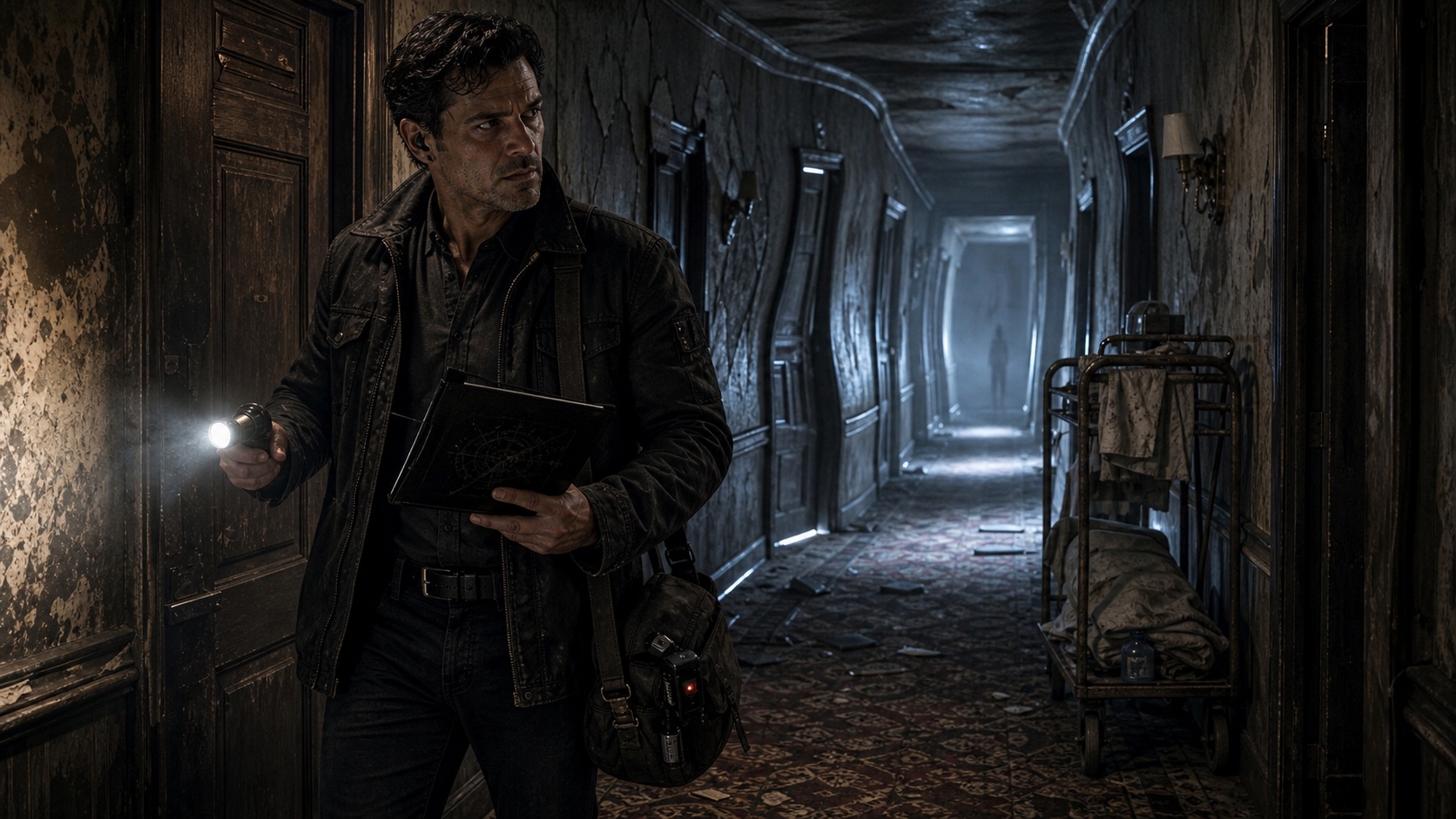
Spirits
Spirits emerged from the spaces between: places adjacent to the afterlife that are not fully of it. They never lived as humans, carry no unfinished mortal business, and operate by a different logic.
Threshold Watcher
Tier 1: Minor | Type: Spirit
A spirit that has slipped through from the edge of the afterlife into the physical world, disoriented by the transition and establishing itself in a space it finds hospitable.
Threshold Watcher (Minor Spirit)
- Group Size: One.
- Skills: Concealment 3; boundary contests use Willpower 2.
- Abilities: Threshold-bound presence.
- Equipment: None.
Supernatural Defense: Non-corporeal and dimensionally adjacent: partially visible to Awakened Blood, nearly invisible to everyone else.
Behavioral Profile
Threshold Watchers are disoriented rather than malicious. They ended up here without clear intent, found a space that felt liveable, and established a presence. They observe. They have nothing like human emotion but something like preference: stillness, familiar patterns, and a bad reaction to disruption.
A Threshold Watcher that has been undisturbed for a long time develops routines. It may become associated with an object or a room in ways that make it look like an Anchored Spirit to casual Discernment. The tell is communication: Threshold Watchers do not communicate in human terms. They respond to presence and intent, not language.
Detection
- Discernment (Hard ): confirms spiritual presence; confirms non-human origin (distinguishes from ghost)
- Occult Lore (Average ): identifies as a between-spaces entity; confirms banishment method
Weaknesses
Research (Easy ) reveals: iron disrupts its presence in the physical plane; consecration of the space it inhabits significantly weakens its hold; it cannot maintain presence in a fully salt-perimeter-sealed space.
Threat Capabilities
- Environmental manifestation (weaker than ghost: more visual, less emotional)
- Territorial response to intrusion: 1 Strain to characters who enter its established space without preparation
- At agitation: mild physical manifestation: small objects moved, brief contact that produces cold-shock sensation (0 WP, but memorable)
Resolution
Standard banishment (Easy ). The Threshold Watcher does not have the anchoring conditions of a ghost, once addressed with proper authority, it returns to wherever it came from without significant resistance. Consecration of the space afterward prevents re-establishment.
Hollow Walker
Tier 2: Significant | Type: Spirit
A spirit that has been in the physical world long enough to develop self-direction, territorial control, and the capacity for intentional harm.
Hollow Walker (Significant Spirit)
- Skills: Concealment 3; territorial contests use Willpower 4.
- Abilities: Territorial Claim.
- Equipment: None.
Supernatural Defense: Territorial Claim: in the space the Hollow Walker has established as its territory, it gains +1 Willpower and its Legendary protection holds, so it cannot be harmed except by a confirmed weakness. Outside that territory, it loses Legendary and Willpower returns to baseline, and it can be harmed by ordinary means.
Behavioral Profile
Hollow Walkers are Threshold Watchers that stayed. Over years, often decades, they have developed something that functions like personality, territory, and purpose. Their hostility is territorial rather than random: they have established what belongs to them and they defend it.
A Hollow Walker's territory is typically a building, a specific floor, or a significant room, somewhere it has been undisturbed long enough to settle its claim. It knows everything that happens in its territory. It can observe, respond, and in its territory, act with significant force.
Communication in the ghost's sense is unavailable; Hollow Walkers have no human grievances to address. They are intelligent after a fashion, though: they recognize patterns, they understand that some people intend to remove them, and they will use everything in their territory to prevent that.
Detection
- Discernment (Hard ): confirms significant spiritual presence, non-human origin, territorial establishment
- Occult Lore (Hard ): identifies as long-established between-spaces entity; on Boon spend, identifies the territorial boundary
Weaknesses
Research (Hard ) reveals: the Walker's claim is weakened significantly if its territory is thoroughly consecrated by an authorized practitioner (Theology 2+); iron laid at all entry points disrupts its movement within its own territory; the original point of entry from the between-spaces, the specific threshold where it first appeared, can be sealed, which removes its ability to reconstitute if driven off.
Threat Capabilities
- Territorial environmental control: within its space, can drop temperature sharply (1 Strain, Composure Average ), manifest physical force (1–2 WP from controlled object impacts), and disorient navigation (characters who have not mapped the space carefully may find themselves in unexpected locations)
- Direct spiritual assault: against characters who enter its territory with hostile intent, a directed action causes 2 Strain
- Reconstitution, if driven from its territory without the original threshold sealed, it returns within 24 hours
Resolution
Banishment (Willpower + Discernment, Hard in its territory; Average outside). Banishment without sealing the original threshold point is temporary. Full resolution requires: identify the threshold, seal it (Theology check, Average ), then banish. Once the threshold is sealed, the Walker cannot return.

Psychic and Emotional Predators
Some threats, whether entities or people who have become something adjacent to entities, sustain themselves by feeding on the spiritual and emotional resources of others. They pass as human, operate within human relationships, and are among the most difficult threats to identify because their feeding looks like ordinary social behavior until you know what to look for.
The Leech
Tier 1: Minor | Type: Predator
An entity or severely altered human that feeds on emotional distress. It sustains itself by maintaining or amplifying the conditions that produce distress in its targets.
The Leech (Minor Predator)
- Group Size: One.
- Skills: Concealment 4; feeding pressure uses Willpower 3.
- Abilities: Emotional feeding.
- Equipment: None.
Supernatural Defense: Merciful Dissonance Active: under active MD, the Leech's feeding reads as ordinary social behavior. A character who succeeds on a Discernment check to detect it must then succeed on a Theology or Occult Lore check (Hard ) to correctly identify what they detected rather than rationalizing it as ordinary.
Behavioral Profile
The Leech finds environments rich in distress and makes itself welcome. Grief support groups. Hospital wards. Addiction recovery programs. Family counseling. Anywhere people come when they are suffering becomes a natural habitat. It presents as caring, attentive, and invested, and it is skilled at appearing helpful while subtly sustaining the conditions that keep its targets in distress.
Targets do not know they are being fed on. They experience the Leech as a supportive presence. They may feel worse after extended interaction, slightly more hopeless, slightly more isolated, slightly more convinced that they cannot recover, but they attribute this to the circumstances, not the relationship.
The Leech manages its targets toward chronic distress: healing would end the meal, and killing wastes the food source. Over time, targets experience ongoing Strain that does not recover at normal rates, increasing isolation, and in severe cases, spiritual vulnerability that makes them more susceptible to other supernatural attention.
Detection
- Discernment (Severe , given Active MD): detects something spiritually wrong in proximity to the Leech
- Perception or Inquiry (Hard ): pattern recognition: the targets all have similar profiles, all have gotten worse not better, all have the Leech as a common element in their social environment
- Medicine (Hard ): the physiological profile of long-term Leech targets is distinctive, specific stress marker patterns
Weaknesses
Research (Hard ) reveals:
- Communal joy in its presence disrupts feeding (the Leech cannot sustain distress against authentic celebration. Composure check for the Leech itself, Average , or it must leave)
- Direct expression of founded hope by a character with Theology 2+ in its presence imposes a Bane die on its feeding actions
- Iron in sustained contact (jewelry, not weapons) creates discomfort that reduces the Leech's Concealment by 2 in its presence
Threat Capabilities
- Passive feeding: each hour of sustained proximity to the Leech, a target who is unaware of the threat recovers 1 less Strain at their next natural recovery point (end of encounter or rest, minimum 0; they are not healing as fast as they should)
- Active feeding (rare, when desperate): directed action causes 1 Strain and may plant a specific intrusive hopeless thought
- Secondary effect on long-term targets: characters who have been fed on for weeks or months may begin accumulating Corruption (the spiritual vulnerability the Leech creates opens other doors)
Resolution
The Leech is physically vulnerable: it has Wound Points and will flee when physically threatened if it has not already established enough control over the environment to prevent exit. Its primary defense is not being recognized. Once recognized, it loses most of its advantage.
Remove it from access to its food source and address the conditions of its targets (Medicine and pastoral care for the spiritual vulnerability; recovered Strain returns at normal rates once the Leech is gone). If it was once human, there may be a person to address; if it was never human, banishment or physical removal are both effective once MD is pierced.
The Hunger
Tier 2: Significant | Type: Predator
A fully non-human predatory entity that feeds on life force directly. More aggressive and more visible than a Leech. Its feeding produces physical harm, not just spiritual depletion.
The Hunger (Significant Predator)
- Skills: Concealment 3; compulsion and feeding pressure use Willpower 4.
- Abilities: Predatory compulsion.
- Equipment: None.
Supernatural Defense: Spiritual Drain: any character who engages The Hunger in direct physical contact (grappling, close melee) loses 1 Strain at the start of each round of sustained contact. This is not a deliberate action by the entity, it is what contact with it does.
Behavioral Profile
The Hunger is hungry, persistent, and blunt, and its feeding produces effects that are hard to rationalize as ordinary behavior. Targets experience sudden profound exhaustion, inexplicable physical weakness, and a specific quality of cold that is different from ambient temperature. Multiple exposed targets in an area will all describe the same experience.
Where the Leech cultivates relationships, The Hunger feeds and moves. It may return to a productive feeding site, but it is a predator rather than a parasite.
The Hunger is drawn to spiritual concentration: places where strong spiritual energy is present, positive or negative. Church services, significant prayer events, active Wound Sites, ongoing exorcisms. It finds energetic environments hospitable and will establish itself nearby.
Detection
- Discernment (Hard ): detects a non-human predatory spiritual presence; on Boon spend, distinguishes from demonic entity
- Medicine or Perception (Hard ): pattern recognition from affected targets: the specific combination of cold, exhaustion, and Strain loss is distinctive
Weaknesses
Research (Hard ) reveals:
-
Sustained sacred music or chanted liturgy in its presence disrupts its ability to maintain presence (must succeed on Willpower check Average each round or withdraw)
-
Iron weapons deal full damage and Holy quality deals +2 WD per hit
-
Salt water applied directly causes 1 WD per application
Threat Capabilities
- Passive feeding: as with the Leech, proximity slows recovery; targets recover 1 less Strain at each natural recovery point (end of encounter or rest, minimum 0)
- Active feeding touch: directed contact causes 1 Wound and 1 Strain
- Drain Aura (Spiritual Drain, see above)
- Escalation: The Hunger that has fed significantly in an area for multiple sessions may have elevated an ambient Cold Shard to Waking Shard status through accumulated spiritual activity
Resolution
Physically confrontable: it has Wound Points and iron/holy weapons are effective. Banishment is also viable (Willpower + Discernment, Hard ). The area it has been feeding in should be assessed for Wound escalation after resolution.
Transformed and Tainted Humans
Sometimes people walk across the line between human and something else. The infernal world finds the corruption already present in a person and offers it a very good deal. Because these threats began as people, each retains a surviving human element, and reaching that element is part of every complete resolution; each entry gives the specific mechanics.
The Corrupted
Tier 1: Minor | Type: Transformed Human
A person who has received enough infernal investment: through willing deal-making, sustained ritual involvement, or long-term cult participation, to have capabilities that exceed ordinary human range.
The Corrupted (Minor Transformed Human)
- Group Size: One.
- Skills: Concealment 4; violence uses Might 4 or Agility 3.
- Abilities: Human body altered by corruption.
- Equipment: Weapons and tools from former human life.
Supernatural Defense: Looks Human: Discernment check (Severe ) required to detect supernatural alteration. MD actively supports the human appearance.
Behavioral Profile
The Corrupted is still recognizably human. They have a life, relationships, a job. Their alteration is not visible and they do not always know its full extent, the changes came gradually and they attributed each new capacity to personal development rather than infernal modification.
What they have acquired varies by the nature of the deals they made or the rituals they participated in: enhanced perception, minor physical capabilities, the ability to sense spiritual activity, resistance to harm that exceeds normal human tolerance. None of it is dramatic at Tier 1. All of it makes them more effective in whatever role they fill within the operation they are part of.
They are usually loyal to whoever invested in them. The loyalty may be sincere (they believe in what they are doing) or contractual (the deal included a compliance clause). In either case, they will not turn willingly without significant cause.
Detection
- Discernment (Severe ): detects infernal marking
- Inquiry or Perception (Hard ): behavior patterns that do not quite add up: they know things they should not know, react to stimuli before they should be able to detect them
Weaknesses
Research (Average ) reveals: they are still mostly human. Holy water causes 1 WD (same as on demonic entities at their corruption level). Iron weapons deal full damage. Their Corruption marking, if Corruption is 5+, is visible as actual spiritual stain to any character with Discernment who succeeds at the check.
Threat Capabilities
- Perception of spiritual activity: aware of Wound Sites, can detect Awakened Blood in others
- Infernal backing: may have a Street Devil or similar entity they can contact for assistance
- Wound Points and physical resilience: effectively tougher than an ordinary person
Resolution
They are physically confrontable. They can also be reached: the path back (see Corruption reduction in Chapter Eight) is open to them if they want it. Resolution through persuasion (Inquiry, Negotiation) removes the threat without violence and potentially provides significant intelligence about the operation they are part of.
The Forsaken
Tier 2: Significant | Type: Transformed Human
A person who has crossed a threshold of moral and spiritual violation so fundamental that the crossing has physically and spiritually altered them. No longer fully human in any meaningful operational sense.
The Forsaken (Significant Transformed Human)
- Skills: Concealment 3; violence uses Might 4 or Agility 3.
- Abilities: Deep corruption adaptation.
- Equipment: Weapons, trophies, or survival gear appropriate to its history.
Supernatural Defense: Corruption Armor: The Forsaken's accumulated Corruption (always 7+) manifests as spiritual density. Holy authority checks targeting them directly are at +1 Difficulty. Commands and bindings that rely on the target having accessible spiritual integrity find weakened purchase.
Behavioral Profile
The Forsaken varies in origin. Some were ordinary people who made one catastrophic choice at a decisive spiritual moment. Some were cult operatives who were deliberately walked across the threshold by an infernal entity that wanted a more durable asset. Some were investigators who were compromised one decision at a time until something broke that could not be repaired from inside.
What they have in common: the threshold crossing was voluntary, even if the full consequences were not understood. The Forsaken chose what they became, and that choice is the fact that makes certain resolution methods impossible and others essential.
The Forsaken retain human intelligence and, in many cases, intact affect: they may appear functional, coherent, even charming. What has changed is a fundamental spiritual orientation: they are now partially legible to infernal entities as kin, partially invisible to holy defenses that assume good-faith human presence, and capable of action that ordinary humans cannot sustain against the resistance their conscience would generate.
There is no possessing entity in a Forsaken; exorcism does not apply.
Detection
- Discernment (Hard ): detects profound spiritual compromise; recognizes as human-origin
- Theology (Hard ): identifies the threshold-crossing pattern; on Boon spend, approximates the nature of the crossing event
Weaknesses
Research (Hard ) reveals: The Forsaken retains a specific tie to what they were before, a relationship, a belief, a loyalty that survived even the threshold crossing. Addressing that specific tie directly creates a moment of human accessibility that bypasses the Corruption Armor. Silver-blessed weapons deal +1 WD. The specific sin that drove the crossing, if named aloud with full knowledge and without fear, imposes a Bane die on all their checks for the rest of the scene (they have not fully reconciled it, even now).
Threat Capabilities
- Physical capability at enhanced human maximum (Might 4, Agility 3)
- Spiritual resistance: Composure checks that would normally be required are made at +1 Boon die for The Forsaken (their spiritual density reduces spiritual-emotional vulnerability)
- Infernal perception: detects active holy authority within range, detects Corruption in others, detects active exorcisms
- Corruption Armor (see above)
Resolution
Physical confrontation is viable but dangerous. The more complete resolution is reaching the surviving human element: knowing the tie that survived and speaking to it directly, which requires successful Research and a difficult Inquiry or Charisma check (Severe ) to make the human appeal land.
A Forsaken who is reached is not automatically resolved; they are accessible. The path back from this level of Corruption is arduous (see Chapter Eight). But it exists.
Ancient and Constructed Entities
Some things in The Hollow fit the cosmological taxonomy poorly. They were made, or they have simply been here long enough that the categories applied to newer arrivals do not capture what they are.
The Fetch
Tier 1: Minor | Type: Constructed
A purpose-built entity assembled through ritual instruction and infernal material. Given a specific task. Does not persist beyond its assignment's completion or failure.
The Fetch (Minor Constructed Entity)
- Group Size: One.
- Skills: Concealment 3; pursuit uses Agility 3 or Savvy 3.
- Abilities: Constructed purpose.
- Equipment: None unless built into the body.
Supernatural Defense: Task Focus: The Fetch cannot be deterred from its assigned task by persuasion, negotiation, or threatened harm. It does not process threats. Social or emotional approaches have no effect.
Behavioral Profile
A Fetch is a tool, assembled by a practitioner for a specific purpose: deliver a message, retrieve an object, harm a specific person, observe and report. It pursues that single purpose until it succeeds or is destroyed, with no wider agenda and no self-preservation drive. It will walk into iron, into holy perimeter, into direct physical confrontation, without changing behavior, because none of those things are part of its operational parameters.
The Fetch's appearance varies by the tradition and intent of its maker. Some appear as roughly human shapes assembled from wrong materials. Some appear as animals, specifically the animal associated with the maker's tradition. Some appear as idealized versions of an object relevant to their task. All of them have the tell of single-minded directed behavior that real animals and real people do not exhibit.
Detection
- Perception (Average ): the behavior pattern is unmistakably non-human once noticed
- Occult Lore (Hard ): identifies as a constructed entity; on Boon spend, identifies the maker's tradition
Weaknesses
Research (Average ) reveals: the maker's name or signature disrupts the Fetch's task programming (it has been keyed to report to and be commanded by its maker, invoking that key imposes a Willpower check, Hard , or the Fetch temporarily halts); iron physically damages it; the binding word used to activate it (if research uncovers it) can be inverted to deactivate it immediately.
Threat Capabilities
- Physical capability at assignment-relevant parameters: a Fetch assigned to harm someone may have enhanced physical capability for that task (Might 3); a Fetch assigned to observe has enhanced Perception
- Will not retreat, will not be deterred
- Reports to maker, if not destroyed, information gathered reaches the maker
Resolution
Physical destruction (10 WP, iron weapons effective) or binding word inversion (requires research). Once destroyed, it does not reconstitute. It was a single-use tool. The maker remains a problem.
The Unnamed
Tier 2–3: Significant to Major | Type: Ancient
An entity that predates the current spiritual order and does not respond to standard approaches. Has its own rules, its own history, and its own specific weaknesses that do not generalize from any other entity type.
The Unnamed (Significant/Major Ancient Entity)
- Skills: Concealment 4; direct contests use Willpower 4-5.
- Abilities: Pre-cosmological presence; Legendary.
- Equipment: None.
- Peril Uses: Alter the site, reveal impossible knowledge, suppress a rite, or force a character to choose between safety and comprehension.
Supernatural Defense: Category Failure: standard spiritual authority (exorcism rites, banishment protocols, holy commands) do not function against The Unnamed. It does not recognize their authority as applicable to it. Standard approaches fail not because of the Unnamed's power, but because the framework that gives those approaches their authority is not one the Unnamed belongs to.
Behavioral Profile
The Unnamed is a placeholder designation for an entity category rather than a specific creature. Ancient entities vary enormously in their appearance, behavior, and capability. What they share: they are old enough to predate the spiritual structures the characters are trained to use. Good and evil, as human investigators categorize them, may simply be the wrong lens; these entities operate by their own rules, followed with perfect consistency, that human investigators have no way to already know.
Some ancient entities are territorial in ways that make them dangerous without malicious intent, their presence in a space damages it over time simply as a byproduct of their nature. Some are pursuing goals established before living memory that bring them into conflict with current inhabitants. Some have been dormant for so long that their reactivation itself is the crisis.
The first task when encountering one is research: what is this, specifically, and what are its actual rules?
Detection
- Discernment (Severe ): confirms significant non-human, non-standard-category supernatural presence
- Monster Lore (Severe ): confirms pre-cosmological entity; on Boon spend, surfaces one specific behavioral characteristic
- Research or Dead Languages (Severe +): the path to understanding what it is and what it responds to
Weaknesses
The Unnamed's weaknesses are specific to the individual entity and require dedicated research (Severe , extended). They do not follow predictable patterns. They may involve specific materials, specific locations, specific times, specific relationships between conditions. They may involve actions that are not combative at all, fulfilling a specific obligation, restoring a disrupted pattern, acknowledging something it was owed.
Once a specific ancient entity's weaknesses and response conditions are researched, they are reliable. The problem is that research must be done from near-zero baseline knowledge for each new entity.
Threat Capabilities
- Specific to the individual entity and its nature. An ancient entity of territorial type causes environmental damage in its presence. One pursuing a specific goal may be entirely non-threatening unless it has a reason to interact with the investigators directly.
- Category Failure means that characters cannot fall back on standard tools: they must use what they learn specifically about this entity.
Resolution
Research is the resolution: understanding the entity well enough to either address it within its own framework (satisfying its actual rules), contain it physically if it cannot be addressed, or find its specific dissolution condition. This is necessarily a multi-session engagement; no single session produces sufficient knowledge to resolve an Unnamed encounter from scratch.
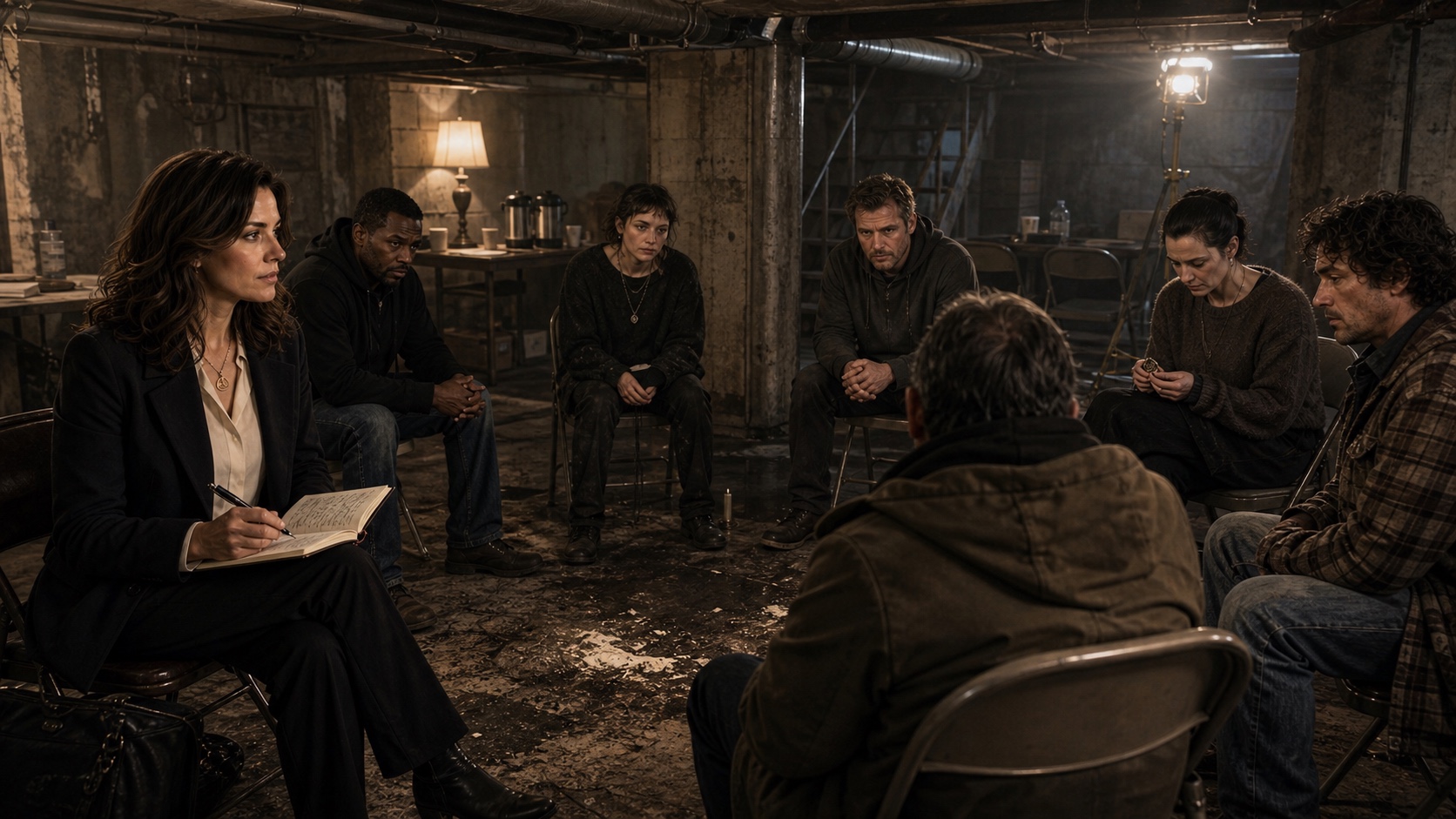
Cults and Human Antagonists
Cults exist because supernatural forces need human infrastructure. Demons require willing hosts. Devils require contract partners. Ancient entities sometimes require maintenance from human practitioners. The human organizations that provide this infrastructure vary enormously in scale, sophistication, and the degree of sincere belief versus pragmatic operation.
Street Cell
Tier 1: Minor | Type: Human Antagonist
A small group (5–15 persons) with low-level supernatural backing, typically recent formation, limited institutional footprint.
Street Cell (Minor Human Antagonist Group)
- Group Size: 3-6 cultists or one active cell scene.
- Skills: Concealment 3; typical member uses ratings 1-2 in violence, deception, or ritual support.
- Abilities: Human cult cell.
- Equipment: Improvised weapons, burner phones, ritual supplies, and mundane cover materials.
Supernatural Defense: None beyond mundane concealment: they are ordinary people.
Behavioral Profile
Street Cells are usually organized around a specific entity (a demon they are facilitating, a devil they serve) or around a charismatic leader who has established contact with an infernal element and recruited from their social network. They are amateurish, with poor operational security. Their belief in what they are doing varies widely: some are true believers, some were coerced, some are pragmatically exchanging services for personal benefit.
They are dangerous primarily because of their human capabilities: weapons, numbers, local knowledge, willingness to act in the physical world in ways that supernatural entities cannot. A Street Cell does not outfight experienced investigators, but it can provide obstacles, early warning, and escalation triggers for the entity it serves.
Detection
- Inquiry or Perception (Average ): behavioral anomalies; the social network structures characteristic of cult organization; prior incidents in the area
- Research (Average ): prior law enforcement contact; property ownership patterns; financial connections
Weaknesses
Remove their supernatural backer: a Street Cell whose patron entity is removed will typically fracture within days. Its members are not bound to each other without the shared supernatural element.
Individual members are human and reachable: defectors are the most efficient path through Street Cell investigation.
Threat Capabilities
- Physical: standard firearms, edged weapons; numbers (5–15); home-field advantage in their operational area
- Information: they know investigators are present before investigators know they are known
- Escalation facilitation: they conduct the blood letting, manage the ritual site, recruit the host for possession
Resolution
Disrupt the patron entity and the cell disperses. Or disrupt the cell first and the patron entity loses operational capacity. The cell's members can be addressed through law enforcement if their activities are documentable; through the mundane world if their leader can be discredited; through direct confrontation if necessary.
The Established Organization
Tier 2: Significant | Type: Human Antagonist
A structured, well-funded cult with significant supernatural backing, internal hierarchy, real operational sophistication, and long institutional history.
The Established Organization (Significant Human Antagonist Organization)
- Skills: Concealment 4; lieutenants use ratings 2-4 in social pressure, logistics, violence, or ritual support.
- Abilities: Institutional reach.
- Equipment: Safehouses, vehicles, legal cover, weapons, money, and ritual assets.
Supernatural Defense: Institutional Cover: the organization has embedded itself within legitimate institutions (businesses, charities, religious bodies, political offices). Direct confrontation exposes the investigators to institutional counterattack.
Behavioral Profile
Established Organizations have been operating for long enough to have solved the problems Street Cells have not: leadership succession, operational security, management of infernal relationships, and protection from investigative attention. They look like something legitimate, a church, a private foundation, a fraternal organization, a professional society. Their public profile is carefully maintained and often positive in fact, not just appearance.
Their relationship with their infernal backers is mature: a sustainable operation that delivers what their backers want (ritual activity, human resources, cover for infernal operations) in exchange for what they want (protection, capability, longevity). It is a business.
Detection
- Research (Hard , extended): the institutional footprint that looks clean on the surface has anomalies under extended examination
- Inquiry (Hard ): members who have left, who are disaffected, or who believe the story is not what they were told
- Lyncean Office passive Impossible Evidence: the mundane explanation for this organization has specific things it fails to explain
Weaknesses
Their mundane infrastructure is their vulnerability. Legal exposure, financial pressure, the human beings within the organization who are not fully committed, these are more reliable attack surfaces than supernatural ones. The organization can be dismantled through institutional channels if investigators can build sufficient documented evidence. This is slow. It works.
Threat Capabilities
- Institutional retaliation: legal, financial, political pressure on investigators with any public-facing identity
- Operational reach: they can coordinate across multiple locations, surveil investigators, move resources in advance of confrontation
- Corrupted members (see The Corrupted, above): the organization's senior members have typically received infernal investment and are more than ordinarily human
- Their patron entity: a Tier 2 or Tier 3 entity backs the organization and will act to protect its infrastructure
Resolution
This is a campaign arc, not a single case. The organization must be understood (Research, multiple sessions), its leadership identified, its patron entity revealed, and its institutional cover stripped. The resolution may involve law enforcement (the mundane crime is real even if the supernatural element is what matters), direct spiritual action against the patron entity, and exposure of the corrupted leadership. These tracks run simultaneously and each one makes the others easier.
The Architect
Tier 2: Significant | Type: Transformed Human / Cult Leadership
An individual who has been designated by a devil or high-order demon as its primary human operative, given sufficient infernal investment to be more than human in fact, and structured as the operational leadership of a cult organization.
The Architect (Significant Transformed Human / Cult Leadership)
- Skills: Concealment 3; command, deception, and ritual pressure use Intellect 4, Savvy 4, Willpower 4, or Charisma 4.
- Abilities: Patron-shaped leadership.
- Equipment: Cult infrastructure, hidden records, proxies, and prepared ritual space.
Supernatural Defense: Patron Protection: the Architect's patron entity monitors attempts to directly harm the Architect and can intervene once per scene (relocating the Architect, imposing a Bane die on the attacker's check, or causing a distraction that disrupts the confrontation).
Behavioral Profile
The Architect is the human face of an infernal operation. They may believe sincerely in what they are doing, or they may be purely contractual. In either case, they are effective. They have organizational capability, infernal perception, personal resilience that exceeds ordinary human range, and a patron entity that treats them as a protected asset.
Architects tend to be charismatic, intelligent, and good at reading people. These were likely the qualities that made them attractive as an operative. Their infernal investment has amplified these capabilities and added spiritual perception, physical endurance, and in some cases specific supernatural capabilities depending on the nature of their patron.
Detection
- Discernment (Hard ): detects infernal marking and the patron's presence as a kind of overlay
- Inquiry or Research (Hard ): surfaces the organizational role; the behavior patterns that distinguish leadership from membership
Weaknesses
Research (Hard ) reveals: the patron entity's partial true name. Naming it in the Architect's presence disrupts the Patron Protection defense for the rest of the scene and imposes a Bane die on the Architect's checks (the patron has been named and is now in a reactive position rather than a protective one). The specific contract between the Architect and their patron, if its terms can be surfaced, contains leverage. The Architect's pre-infernal life includes something they have not fully released, and that surviving element is accessible.
Threat Capabilities
- Organizational authority: commands the cult's full resources
- Physical capability: ordinary (Might 2, Agility 2); he does not fight directly. Willpower 4 anchors his resistance to spiritual pressure
- Infernal perception: detects active spiritual authority, approaching investigators, and Corruption in anyone he encounters
- Patron Protection (see above)
Resolution
The Architect is not resolved in isolation. The patron entity must be addressed; the organization must be dismantled; the Architect themselves must be confronted. In that confrontation, the possibility of reaching the surviving human element (as with The Forsaken) is real, the Architect has not necessarily crossed the same threshold. Whether they are reachable is a story question.

Angels
Angels appear in this chapter without stat blocks.
The angels who visited Sodom and Gomorrah were not concerned with their Might characteristic. The angel who wrestled Jacob did not have a strain. Angels in The Hollow operate outside the bestiary entirely.
What is true about angels at the table:
They exist and they are present. They are working in the world. Characters may see the effects of their activity without seeing the activity. They may encounter evidence that an angel has been at a location, spiritual residue with a specific quality unlike anything demonic, ghostly, or ancient. They may be warned of something through means they cannot fully explain.
They are good. They are not safe. An angel whose assignment brings it into contact with the characters is operating within a scope that may not prioritize the characters' comfort or survival. The angel is doing what it was sent to do. If that overlaps with what the characters need, they benefit. If it does not, they are not the angel's primary concern.
They can be perceived. A character with Discernment 3+ who is in a location where an angel is present or has recently been present detects something, a spiritual presence unlike anything demonic, ghostly, or ancient. The detection tells them something real is there. It does not give them information about the angel's assignment, nature, or purpose. Of course, if the angels are sent to be seen, everyone will see them.
They cannot be summoned or controlled by characters in this book. The Summoning magical talent tree (Chapter Six) addresses the summoning of entities. It does not apply to angels. Angels are at the command of God only.
When an Angel Is in the Story
An angel's appearance in a session should be preceded by a Discernment check that tells the characters something significant is present before they understand what it is. The experience of angelic presence should feel different from every other supernatural encounter, not threatening in the demonic sense, not mournful in the ghostly sense, but weighty in a way that suggests authority that cannot be negotiated with.
Angels remind the characters that the war they are participating in is larger than any individual case. Use them sparingly. Use them intentionally.
Threat Quick Reference
| Entity | Tier | Exorcism? | Banishment? | Physical? | Primary Weakness Access |
|---|---|---|---|---|---|
| Gripping Demon | 1 | Yes | No | No | Research Average |
| Legion Fragment | 2 | Yes (full perimeter required) | No | No | Research Hard |
| The Named | 3 | Yes (campaign prep required) | No | No | Research Severe (extended) |
| Street Devil | 1 | No | Perimeter only | Yes (iron/holy effective) | Research Average |
| The Advocate | 2 | No | No | Yes (will flee) | Research Hard |
| Anchored Spirit | 1 | No | Yes | No | Research Easy–Average |
| Grief Shade | 1 | No | Yes | No | Research Average |
| The Bound Dead | 2 | No | Yes (after dissolution) | No | Research Hard |
| Threshold Watcher | 1 | No | Yes | No | Research Easy |
| Hollow Walker | 2 | No | Yes (seal threshold) | No | Research Hard |
| The Leech | 1 | No | Possible | Yes (will flee) | Research Hard |
| The Hunger | 2 | No | Yes | Yes (iron/holy effective) | Research Hard |
| The Corrupted | 1 | No | No | Yes | Research Average |
| The Forsaken | 2 | No | No | Yes (silver-blessed effective) | Research Hard |
| The Fetch | 1 | No | No | Yes (iron effective) | Research Average |
| The Unnamed | 2–3 | No | No | Varies | Research Severe + (extended) |
| Street Cell | 1 | No | No | Yes | Remove patron; find defectors |
| Established Organization | 2 | No | No | Yes | Campaign dismantlement |
| The Architect | 2 | No | No | Yes | Name patron; reach surviving self |