In This Chapter
This chapter is a toolkit for the GM. It covers how to build and run cases, how to manage Merciful Dissonance at the table, how to use factions as ongoing narrative resources and as antagonists, how to run entities so they feel like what they are, how to build Forbidden Workings for adversarial occultists, how to use the Corruption track as a story driver, and the complete rules for demonic possession. It does not prescribe how to structure a campaign. It gives you the tools to structure it however serves your table.

What Running The Hollow Requires
Running this game well requires three commitments.
Take the supernatural seriously. The Hollow is not a game where demons are metaphors for addiction, possession is a stand-in for mental illness, or devils represent systemic injustice. These interpretive frames exist in the real world and have their value. At this table, the supernatural is literal. When a character is possessed, an entity that once served in a divine order has taken residence in a human being and is using that person's body to pursue its own agenda. The moral weight is real, the stakes are real, and the investigation has real consequences. Players respond when the table treats all of it as fact.
Honor the moral complexity. The Hollow has no simple heroes. The Order of Mercy can be corrupt. The Watchfires can be manipulated. The Candleless can occasionally be right. A character who makes a devil deal had reasons for making it. The cult leader was a person before they were an Architect. The horror comes from what the entities do and, just as much, from what the humans around them choose. Your job is to keep that complexity alive rather than resolve it prematurely.
Let the fiction breathe. Some scenes should stay quiet, and some sessions should end without a confrontation. Cases are investigations, and investigations involve time spent in libraries, long conversations with reluctant witnesses, arguments about methodology, and moments of ordinary human connection between characters. That material is what makes the confrontations matter.
Running Merciful Dissonance
The GM-Side Procedure
Chapter Two describes Merciful Dissonance for players and Chapter Ten describes it for investigations. This is the moment-to-moment table procedure.
Rule one: witnesses believe what they tell you. A witness who saw something supernatural tells the investigator what they remember, and the MD rewrite edited that memory automatically, before the witness had any opportunity to choose. Play them as people giving sincere testimony that happens to be wrong. Sincerity is scarier than deception because it cannot be resolved by detecting a lie.
Rule two: the mundane explanation is coherent. Before your session, know what the official record says and why it says it. The gas leak, the electrical fault, the psychological break, whatever the mundane explanation is, it should be internally consistent, and characters should be able to follow it all the way to its conclusion.
Rule three: MD cracks under contradiction, not perception. A player who says "I want to see through the MD" doesn't get a Perception check to do so. MD is a cognitive framework that holds until the evidence against it is overwhelming, not a disguise or an illusion to be seen past. The correct response to that player's intent is: "Tell me what your character is looking for and what they are using to look for it." Point them at specific skills and evidence types.
Rule four: the seams show. Witnesses who experienced something sufficiently extreme will have the seams of the rewrite visible: specific words or images that don't quite fit the mundane explanation, a recurring dream about the thing they cannot remember, a reflexive physical response (going cold, heart rate spike) when certain topics come up. Treat these as evidence that MD is doing real work and that something happened here, not as clues that bypass it.
What MD Does Not Cover
Merciful Dissonance applies to ordinary people encountering the supernatural without context or preparation. It does not apply to:
- Characters with Awakened Blood. They see and remember accurately.
- Trained investigators who encounter evidence they specifically know how to read. A forensic pathologist examining wounds that are inconsistent with the stated cause of death may not have Awakened Blood, but their expertise makes them harder to dismiss. They will say the wounds are inconsistent. They will not say "demon." But they will create documentary evidence of the inconsistency that becomes useful.
- People with a previous supernatural encounter. A person who has had a genuine prior experience, one that was significant enough to resist full rewrite, may see the next event more clearly. Prior encounters with the Latchkey Archive, a prior possession in the family, a grandmother who told them things that seemed crazy until now.
- People the entity has specifically chosen to perceive it. Some entities want specific people to know they are there. The demon communicates through the host to terrorize. The devil makes sure the character knows they were just visited. These entities are choosing not to be hidden.
Running the Crack
Once the contradictions pile up past what the record can absorb, play the moment clearly at the table: the GM names what has changed. "You've established that: the fire started simultaneously in four locations with no connection to each other; the burn pattern doesn't match any accelerant in the record; two witnesses who were on opposite sides of the building both independently described a figure in the smoke that doesn't appear in the fire marshal's report. The gas explosion theory is no longer tenable. Whatever happened here, it was not a gas explosion."
This is the GM acknowledging that the players have done the investigative work and naming the result, not staging a reveal. After the crack, the case shifts from "what is the real explanation" to "what exactly is happening and how do we address it."
Building a Case
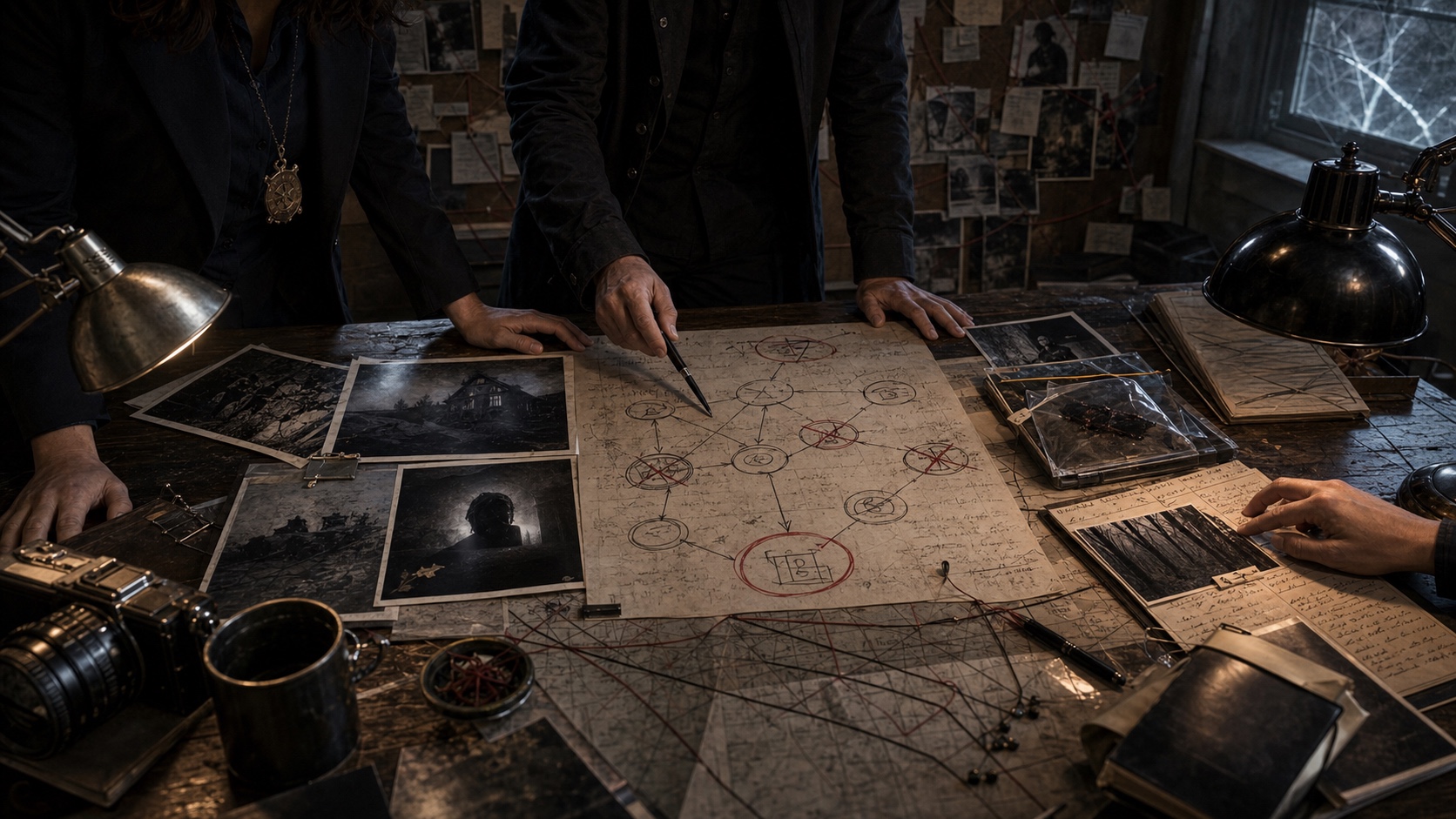
A case in The Hollow is built from five elements. You do not need to resolve all of them before play, building partially and discovering the rest during play is legitimate and often produces better sessions than over-prepared material. But knowing all five gives you the skeleton.
The Wound Site
Every case is anchored to a place or a person. Establish:
-
What is the Wound Site? A specific location, a Shard that has become active, a person who has become a mobile focal point (possession makes the host a walking Wound Site).
-
What is its current escalation state? Cold Shard cases feel like subtle wrong. Open Wound cases feel like active haunting. Weeping Wound cases are obviously wrong to anyone with Awakened Blood and increasingly obvious to everyone else.
-
What is anchoring it? Is there an entity present? A past event? An ongoing ritual that keeps feeding it? The anchor is what the characters must address for the case to be resolved, not just managed.
The Antagonist's Pattern
Who or what is driving the case, and what are they trying to accomplish?
The antagonist's goal and timeline matter more than their capabilities. What do they need, what have they done to get there, and what are they about to do? This gives you the case's urgency: the characters are in a race, and knowing the race's finish line tells you what happens if they lose.
Pattern examples: the Established Organization is three rituals into a seven-ritual sequence; the Named demon has been preparing a specific possession for six months and the intended host is a chaplain at a children's hospital; the Advocate has two weeks until a contract compliance demand activates and will do whatever is necessary to ensure that activation.
The Evidence Trail
What evidence exists and where is it? Build this backward from the truth.
Start with what actually happened. Then work out: what did it leave behind? Who saw something? What physical evidence exists? What documentary record exists? What would the mundane explanation have done with each piece?
Then distribute the evidence across scenes. Not all evidence is in one place. Not all of it is findable in one session. The characters may get a clear picture from three separate scenes: the initial site, a witness they find through the first investigation, and a documentary record they access through Research.
Be specific about what each piece of evidence shows on its own and what it shows in combination with others. A burned symbol means more once they have the witness account. The witness account means more once they have the archive record. Building the evidence so that it accumulates into understanding is more interesting than front-loading a clear explanation.
The Mundane Surface
What does the official record say? What are the mundane explanations for what the characters will encounter?
This is worth actual writing: a few notes on what the police report says, what the hospital record says, what the neighbors have been told. When characters ask, you want to have coherent answers that feel like a real mundane world doing its best with incomplete and cognitively edited information.
The mundane surface also contains the case's connection to ordinary life: the family whose house is the Wound Site, the school whose chaplain is the next intended host, the insurance investigator who has been asking inconvenient questions. These are the human stakes around the supernatural threat, the people who will be affected by whether the case is resolved.
The Resolution Space
Build at least two or three viable resolutions and know what each one requires; a case plays better as an open situation than a puzzle with one correct answer.
- Full resolution: the entity is expelled, the Wound Site begins to de-escalate, the victims are protected and the cult is dismantled. What makes this possible? What research, what preparation, what confrontation is required?
- Partial resolution: the immediate threat is addressed but something remains. What might be left unfinished and what does it set up for later?
- Failure condition: the antagonist completes their goal. What does that look like? What changes permanently? Treat it as the condition that makes the next case necessary and harder, rather than a game-ending outcome.
The Case You Did Not Plan
Players will find things you did not build. An NPC who was flavor will become a key relationship. A piece of evidence you put in for texture will be the thing they build their theory on. A location you mentioned once will become where they spend three sessions. Let the case flex to match, since stories work that way. When players invest in something you did not plan, invest back. Improvise in the direction they're going. The case you planned is the scaffold; the case they play is the building.
Seeding and Running Wound Sites
Establishing a Site
When you create a Wound Site for a case, decide:
- Location: specific enough to have texture (not "an old warehouse" but "the processing floor of the former Heldrich Meatpacking facility, closed 1978, arson-damaged east wing")
- Starting escalation: pick the stage that matches the case's urgency, Cold Shard for one the characters will spend time approaching, Open Wound or higher for an emergency already in progress
- What caused the Shard: the originating event. Something happened here. Even if that history is not the current case, it exists.
- What is currently feeding it: the escalation triggers planned for this case. What is the antagonist doing? When will they do it?
- What it looks and feels like now: specific sensory details at the current escalation level. Characters with Awakened Blood notice the spiritual temperature. Characters without it may notice that the building is inexplicably cold, that animals avoid it, that photographs taken here look wrong in ways that are hard to name.
Running Escalation
When an escalation event occurs during play, name it: the ritual was completed, the blood was shed, the moral failure occurred at the site, and the site responds.
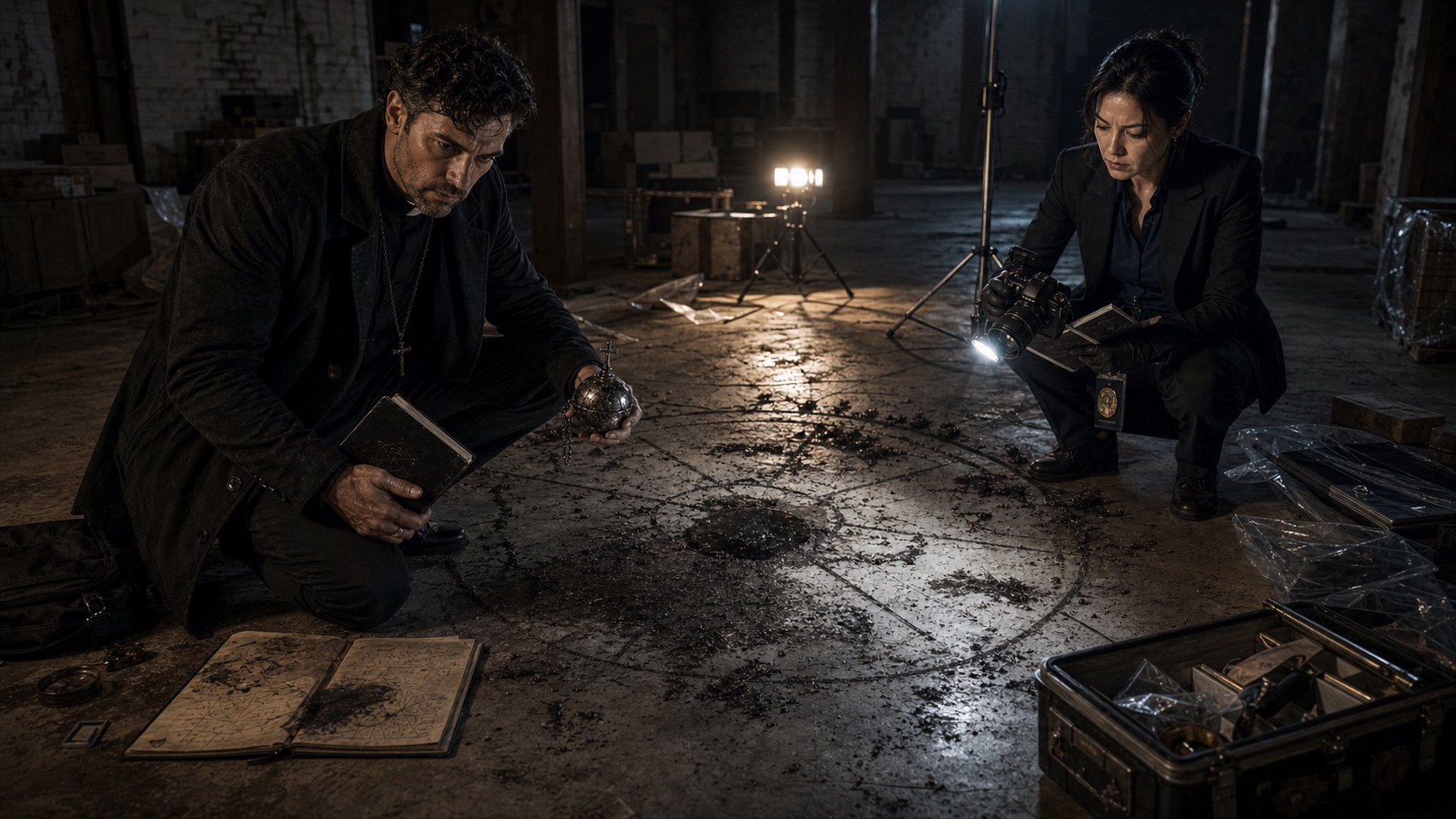
If characters with Discernment are present: tell them directly. "You feel the site shift. Something just happened or just was completed, and the Wound here is deeper than it was an hour ago."
If characters are not present: establish what the characters will find when they return. The temperature in the space has dropped. The entity, if present, is more capable. The effects on people in the building are more pronounced. The evidence of escalation is in the physical record.
Escalation tells the characters how the case is going independently of their investigation. They may be making excellent progress in understanding the threat, and still find that the threat has advanced because the antagonist was also working.
De-escalation
Wound Sites can de-escalate. This is slower than escalation and requires deliberate action:
- Addressing the anchor: resolving the specific condition that created the Wound Site (expelling the entity, dissolving the ritual binding, completing the ghost's unfinished business)
- Sustained spiritual presence: a consecrated space with active holy authority maintained over time will slowly de-escalate a Cold or Waking Shard
- Spirit Banishment Breakthrough: (see Chapter Eight): a Breakthrough on a banishment check can immediately de-escalate by one step
De-escalation is a reward for successful investigation and resolution. It should feel meaningful, the place is healing. Characters who revisit a location where they successfully resolved a case should find it quieter, warmer, more ordinary than before.
Forbidden Workings
Player-facing magic in The Hollow is talent-based, specific, and costly. Antagonist occult practice is different. Cult leaders, Candleless extremists, failed exorcists, infernal lawyers, and desperate researchers do not need a full player-facing talent tree for every terrible thing they try to do. They need a working: a procedure with intent, sacrifice, evidence, and consequences.
A Forbidden Working is an ad hoc occult talent or rite used primarily by adversaries. It should be stronger than a normal player talent at the same tier because it is powered by real cost. It should also be more dangerous to use, especially on failure.
Do not make Forbidden Workings free. Do not make the sacrifice symbolic. A finger prick is theater. Bloodletting that causes at least 1 Wound Point is real. An animal sacrifice is real. A human sacrifice is an atrocity and should move the case, the Wound, and the moral state of everyone involved. A destroyed relic, surrendered true name, broken vow, or betrayed innocent may also count if the loss is concrete and cannot be casually repaired.
Sacrifice Is Not Set Dressing
Seriousness here doesn't require graphic description. Keep the physical detail spare and let the aftermath, and how the world responds, carry the weight.
Building a Forbidden Working
When you need an adversarial occult talent, define the following:
| Element | Question |
|---|---|
| Intent | What does the working do: summon, bind, feed a Wound, prepare a host, corrupt an object, conceal evidence, imitate holy power? |
| Tier | How large is the effect: local nuisance, scene threat, case-defining event, campaign-level rupture? |
| Sacrifice | What real cost powers it: Wounds, animal death, human death, destroyed relic, surrendered name, broken vow, devil contract? |
| Anchor | What holds it in the world: vessel, circle, body, relic, contract, location, true name, repeated act? |
| Check | What roll resolves use: usually Willpower + Forbidden Rites, Intellect + Occult Lore, or Willpower + Dead Languages. |
| Success | What happens if it works? Name the concrete effect and duration. |
| Failure | What turns back on the practitioner? Scale this to the working's tier. |
| Tell | What evidence does it leave for investigators? Blood pattern, heatless ash, wrong prayer, residue, missing animal, altered object, witness dream. |
| Interruption | What can the characters disrupt: fuel, anchor, geometry, name, timing, consent, vessel, sacrifice? |
If the working required a roll, failure means the occultist mishandled something that was already dangerous, and it should read that way. Use remaining Failure symbols after cancellation as Boon dice for the backlash, entity, or Wound response where that makes sense. On a Calamity, the working does not merely fail; it teaches the table why sane people do not do this.
Sacrifice Scale
| Sacrifice | Mechanical Weight | Usual Consequence |
|---|---|---|
| Minor bloodletting | User suffers 1 WP that cannot be prevented or reduced; not a finger prick | Single-scene or narrow working; leaves physical evidence |
| Major bloodletting | User suffers 2-4 WP, or multiple participants each suffer 1 WP | Scene- or arc-scope working; may add Strain, exhaustion, or a lingering mark |
| Animal sacrifice | Death of a living creature used as fuel | Scene- or arc-scope working; likely Corruption for PCs; Wound pressure at the site |
| Human bloodletting | A victim suffers meaningful Wounds, fear, and violation | Arc-scope working; Corruption and legal/moral consequences |
| Human sacrifice | A person is killed as part of the working | Campaign-scope working; Wound escalation, major Corruption, case-defining atrocity |
| Surrendered name, vow, or relic | A true name, sacred promise, or meaningful object is destroyed or given over | Scope varies; creates long-term leverage, haunting, or infernal claim |
These are defaults, not a shopping list. Choose the cost that matches the story.
Occult Attachments and Body Relics
Some Forbidden Workings do not create an effect in the room. They install the effect into a person.
Hands of dead occult leaders, eyes of executed seers, tongues of false prophets, ribs of failed saints, teeth from a possessed corpse, and similar objects have real power because they were part of someone whose body became a record of supernatural action. Call these occult attachments, a category above ordinary relics: cursed body parts that must be grafted, swallowed, stitched, buried under skin, nailed through bone, or otherwise joined to a living body before their strongest effects manifest.
Use occult attachments when you want power to be both useful and visibly horrifying. A character with the Hanged Man's Grip can break doors and knock enemies down. They also cannot fully open that hand, cannot hide it easily, and cannot use it for gentle holy touch. A character with a dead seer's eye can see in darkness and perceive Wound residue. They have also given up something human and installed a witness that may not be loyal.
| Element | Question |
|---|---|
| Source Body | Whose body part is this, and why did it retain power after death? |
| Installation | What terrible act joins it to the user: bloodletting, amputation, sacrifice, swallowed ash, stitched skin, devil contract? |
| Benefit | What concrete capability does it grant: upgraded die, Boon die , Bane removal, natural weapon, impossible perception, occult access? |
| Visible Cost | What can no longer be hidden: deformity, pain, smell, holy reaction, social impossibility, medical anomaly? |
| Spiritual Cost | How much Corruption, attention, debt, or possession risk comes with it? |
| Removal | What does it take to remove without killing or ruining the bearer? |
As a default, installing an occult attachment is at least a Tier 3 Forbidden Working. Minor attachments require major bloodletting and cause 1 Corruption. Significant attachments require human bloodletting, destroyed relic, or devil contract and cause 2 Corruption. Major attachments require human sacrifice, surrendered true name, or equivalent atrocity and cause 3+ Corruption, a cost steep enough that few player characters should clear it casually.
Failure during installation is severe. The body part may attach to the wrong person, act independently, carry the donor's last command, invite the donor's patron, or become a possession vector. Remaining Failure symbols after cancellation may become Boon dice for the backlash. On Calamity, the attachment works, but on terms set by the thing behind it.
Player characters may attempt this only with GM permission. Treat the moment as a major campaign choice, not a clever optimization. The benefit should be useful enough that the choice is tempting, and the cost should be obvious enough that nobody mistakes it for advancement.
Example Adversarial Occult Talents
Use these as models, not as a player-facing catalog.
| Working | Tier | Sacrifice | Check | Success | Failure |
|---|---|---|---|---|---|
| Red Door Invitation | 2 | Major bloodletting or animal sacrifice, plus a correct name fragment | Willpower + Forbidden Rites, Average | Calls a minor spirit, shade, or low-order messenger to the prepared circle for one exchange | The entity appears outside the intended boundary or answers through the nearest vulnerable witness |
| Blood-Bound Vessel | 3 | Major bloodletting, animal sacrifice, or a vessel tied to a prior death | Willpower + Forbidden Rites, Hard , opposed by entity Willpower if present | Binds a minor demon, spirit, or free-floating soul into a prepared vessel for one scene or until containment fails | The entity makes an immediate possession or influence check against the practitioner at Average , adding 1 Boon die per remaining Failure symbol |
| Skin of Stolen Grace | 3 | Desecrated holy object, false confession, or animal sacrifice performed in a sacred space | Charisma + Deception or Willpower + Forbidden Rites, Hard | Produces counterfeit holy signs that pass casual Discernment and impose 1 Bane die on genuine holy authority in the scene | The false holiness collapses visibly; all practitioners gain 1 Corruption if they have a track, and the nearest demonic entity learns who attempted it |
| Feed the Shard | 4 | Human bloodletting at the site, repeated across three nights (slower, more evidence; treat as operationally harder), or one human sacrifice (faster, atrocity-grade; treat as categorically worse for Corruption and Wound consequences) | Willpower + Forbidden Rites, Severe | Advances a Cold or Waking Shard by one step, or stabilizes an Open Wound against de-escalation for one session | The Wound lashes out: all participants suffer 2 WP plus the Wound's current stage, the site produces an immediate manifestation, and investigators with Discernment feel the shift |
| Host Preparation | 5 | Human sacrifice, coerced consent under infernal contract, or surrender of a true name | Willpower + Forbidden Rites, Severe , opposed by the intended host's Willpower + Composure if present | The target adds 2 Bane dice to the next possession resistance check by the named entity | The named entity attempts immediate possession of the officiant or nearest willing participant, adding 1 Boon die per remaining Failure symbol; on Calamity, it also escalates the Wound one step |
If Players Find One
Characters may find a Forbidden Working in a cult ledger, a Candleless notebook, a dead priest's private papers, or a devil's contract appendix. Finding it does not mean they can use it safely.
If a player character attempts a Forbidden Working:
- Require the listed sacrifice at full weight.
- Require GM permission and the appropriate access to the power being attempted. Forbidden Rites, Occult Lore, Dead Languages, or Theology can identify, prepare, translate, or interrupt a working; they do not by themselves replace the appropriate magical, Corruption, Forbidden Rites, or story-specific talent needed to perform a supernatural act.
- If the GM allows a one-scene exception without the usual talent, make that exception part of the horror: the full sacrifice is required, the Corruption consequence applies, and failure turns the working back on the character at full force.
- Apply Corruption for the act, not only for failure, when the working violates moral or spiritual boundaries.
- Make the tell visible. Other factions can discover what they did.
- On failure, turn the working back on the character at full force.
The purpose is to make the choice honest rather than to forbid it. If the characters decide that the only way to stop a worse thing is to use a working like this, the table should understand why that decision will follow them.
Running Entities
Making Each Type Feel Different
Chapter Eleven's entity roster covers stats and behavioral profiles. This section is about performance: what to actually do at the table so each type reads as itself.
Demons. Build Stage 4 interference as prepared material, not improvisation, and hold the strongest accusations and offers for the moment the exorcist is closest to succeeding. Play it like an opponent who has done this before.
Devils. Run the negotiation slow and let silences sit unfilled. The offer being genuine, and the devil's willingness to let a target sit with it, is the whole threat; the devil does not need to be unpleasant to close.
Ghosts. Give each grief shade one driving emotion, guilt, longing, rage, whatever anchors it, and let that emotion color everyone and everything it touches instead of defaulting to generic anger.
Spirits. Play them as alien on their own terms: no human grievances, no response to appeals, a logic the table can eventually map but never negotiate with.
Predators. Play the Leech as warm and useful for as long as you can stand it. Let the players notice on their own that everyone near it is getting worse before anything about it looks wrong.
Transformed humans. Keep the person visible under the threat. Their old relationships and loyalties still function, and that recognizability is what makes the encounter land.
Ancient entities. When a standard approach does nothing, play the non-response as quiet, patient indifference rather than a rebuff, since the thing genuinely has no reason to register the characters.
Cults. Differentiate them by institutional maturity: the Street Cell runs on momentum and half-certainty, the Established Organization on decades of practiced confidence.
Running Stage 4
The exorcism's Confrontation stage is where the demon is most active and most dangerous. Prepare for it in advance:
Before the session, write down for your demon: three real sins or compromises of the characters in the room (you know what the players have done across the campaign, the demon has been paying attention), two offers tailored to two characters (one thing each of them genuinely wants, offered in terms that are real), and one piece of information the demon has that the characters do not.
During Stage 4, deploy these by strategic value rather than desperation. A minor accusation tests the room's composure first. The escalation to the host is the coercive tool, saved for when the argument is losing. The tailored offer goes to the most vulnerable character, held until the moment it might actually land.
The demon is playing for a moment of genuine hesitation, not an argument won: a pause long enough that something breaks in the exorcist's focus or someone else in the room does something that changes the situation.
Demonic Possession
Demons do not act on the physical plane directly; they require a vessel to anchor them here (see Demonic Vessels, below). This section contains the complete rules for demonic possession.
All possessing demons have the Possession skill. All Demonic Talents (see Chapter Eleven) require Possession as a prerequisite.
Possession
Adversary skill. Prerequisite for all Demonic Talents.
Possession skill ranks upgrade ability dice to mastery dice on possession checks and control checks, as with any skill. The Possession Mastery talent applies to both check types.
Establishing Possession
Possession is an opposed check.
Victim: Willpower + Composure
Demon: Willpower (Possession skill ranks upgrade ability dice to mastery dice)
The demon must achieve at least one net success more than the victim to establish possession.
- Demon wins by 1 or more: possession is established.
- Tie: no possession. No cost to either side.
- Victim wins by 1 or more: possession fails. The demon suffers 1 Strain per net success the victim achieved over it.
The demon sees the full die pool before committing. It may choose to withdraw rather than risk Strain.
The check is impossible on consecrated ground.
Modifiers adding boon dice to the demon's pool:
- Victim is frightened, injured, or in a state of significant spiritual or psychological vulnerability
- Victim is superstitious or has practiced occult rituals that compromised their spiritual defenses
- Threats have been made against people the victim loves
Modifiers adding bane dice to the demon's pool:
- Victim is deeply religious and actively practicing
- Victim holds strong, demonstrated moral conviction
- Victim possesses relevant Talents
Victim upgrades one die to mastery if:
- Victim is sanctified (ordained clergy, or formally blessed as part of a recognized religious order)
- Victim is aware the attempt is coming and is actively, deliberately resisting
Demon upgrades one die to mastery if:
- The victim has been previously possessed and that possession ended by any means other than Strain 0 expulsion. A victim who forced a demon out through Strain 0 does not grant this modifier; they demonstrated resistance, and the demon knows it. Any other prior possession ending (exorcism, voluntary departure) does grant it.
A character with Deliverance rank 1+ may add their Deliverance rank as bonus dice to their resistance pool if they are aware the possession attempt is occurring.
Duration
Once established, possession holds until the demon is expelled by exorcism, an artifact, holy authority, or other supernatural means, or until the demon chooses to leave. The demon may depart at any time.
Exorcism sends the demon back to hell and it survives; Strain 0 expulsion with no viable host kills the demon permanently (see Demon Death, below).
What Possession Is
The victim does not lose consciousness. They see, hear, and feel everything. They remain present throughout: aware, capable of thought, and unable to act. The demon operates their body while they watch from inside.
The demon perceives through the victim's senses from the moment possession is established. It has immediate access to the victim's memories, fears, relationships, and private history. It uses this knowledge deliberately. It narrates what is about to happen before it happens. It taunts the victim while using their body. It selects acts calculated to destroy what the victim values: their relationships, their reputation, their sense of self.
Memory. The default after possession ends is fragmented recall: vivid flashes, specific sensory impressions, isolated moments. Not a complete record. Full understanding of what happened arrives in pieces, often over days or weeks. The Full Memory talent changes this.
Sleep. Neither the demon nor the victim sleeps during possession. The demon keeps the body functional but does not allow genuine rest. A physically and mentally degraded victim is more controllable and easier to push toward the next step. When possession ends, the victim suffers the full accumulated effects of deprivation. Most lose consciousness immediately on release. Some remain awake long enough to begin understanding what they remember.
Modes of Possession
Every possession has a purpose. The GM sets this before the possession begins; it governs the demon's behavior throughout.
Possession for Destruction is the default. The demon's intent is gradual ruin: moral, social, relational, and legal. It works slowly, with patience. The process is enjoyable to the demon. It will ultimately push the victim toward self-destruction, and in many cases releases them at the final moment so they survive to live with what they did and what was done to them.
Possession for Purpose is mission-directed. The demon has a specific objective: reach a location, retrieve an object, deliver it, eliminate anyone in the way. Behavior is direct and controlled. The demon does not linger for additional damage unless the mission requires it. It exits when the objective is complete.
Control Checks
Once inside a host, the demon does not control the victim for free. Every action it forces the victim to take beyond Step 1 requires a control check.
This is a one-sided check: the demon rolls its Willpower pool (with Possession skill upgrades) against a fixed difficulty set by the step of the action it is attempting. The victim does not roll. This is not the same check as establishing possession. The victim is not actively fighting each individual action; they are trapped. The resistance happened at the moment of possession and in the exorcism that will free them.
One exception exists: the victim may attempt to surface briefly on their turn (see Chapter Eight, What the Resistance Can Do). Surfacing does not contest control of any action; it buys one moment. The demon spends 1 Strain to reassert control.
| Step | Action Type | Difficulty |
|---|---|---|
| 1 | Minor personality drift: crude language, petty irritability, small selfishness | Automatic — no check required |
| 2 | Social damage: arguments, neglected obligations, bodily transgressions | Easy |
| 3 | Minor criminality: petty theft, harassment, public incidents | Average |
| 4 | Serious harm: violence, major crimes, targeting loved ones | Hard |
| 5 | Self-destruction | Severe |
Conditioning. Each time the demon successfully forces a specific action, that action becomes 1 difficulty step easier on future checks. Once an action reaches Automatic, it requires no check. The demon's goal is to strip the victim's resistance one behavior at a time until control is total.
Rushing. If the demon attempts an action more than one step above where the escalation currently sits, the victim may resist: an opposed Willpower check, no additional modifiers. This is not a control check; it is the victim fighting back.
The victim's characteristics remain their own with one exception: the demon substitutes its highest-rated skill for the victim's whenever the demon is directing an action that skill covers. The demon chooses which skill applies on a tie.
Strain Economy
The demon's Strain track is the resource governing everything it can do while possessing a host.
Strain costs:
- Failed possession attempt: 1 Strain per net success the victim achieved over the demon
- Banes: 2 Strain per bane result, on any check, whether the check succeeded or failed
- Exorcism Stage 4 interference: 1 Strain per interference action taken (the Named demon's Multi-Tactic ability costs 3 Strain, as it resolves three actions simultaneously)
Recovery:
- Once per day, the demon automatically recovers Strain equal to its Willpower score
- On any check, each boon result reduces the demon's current Strain by 1
Strain 0. The victim regains control and the demon is expelled; the demon must immediately attempt a Rushed Possession or die, except as noted under Subjugating the Demon (see Rushed Possession, below).
Tell-Tale Signs
Possession does not announce itself, but a victim's subconscious will attempt to signal through whatever channels remain available: the victim broadcasting, not the demon's habits.
- Objects left in subtly wrong places the victim cannot explain: a glass of water by the bedroom door, a stone on the windowsill. Always the same objects. Always the same locations. The victim does not remember placing them.
- Animals that were bonded to the victim will not approach them.
- The victim stops using the first person. "Sarah forgot her keys" instead of "I forgot my keys." A half-beat pause before answering to their own name.
- A faint wrong smell: old paper, struck matches, copper. Not strong. Easy to dismiss.
- They know when someone is talking about them from another room. They appear in the doorway before being called.
- Their handwriting has changed slightly. Same letter shapes, different pressure distribution.
- One room in the home has a light left on that was never left on before. Always the same room. Usually the one used least.
- They have started accumulating something they cannot explain: folded news clippings about crimes, smooth stones from specific locations, small objects that held no meaning before.
- Their voice in private conversation, when they believe no one is listening, has a slightly different cadence.
A character who asks the right questions and succeeds at an Investigation or Discernment check recognizes the pattern. A character without relevant knowledge registers that something is wrong but cannot name it.
Rushed Possession
When a demon is expelled at Strain 0 and a viable mammal is within range, the demon may attempt a Rushed Possession immediately. This is its only option. If no viable mammal is within range, or if the expulsion occurred on consecrated ground, the demon dies.
Consecrated ground. A demon expelled at Strain 0 on consecrated ground dies instantly. No Rushed Possession is possible, even if a viable target is in range.
The check. Rushed Possession is one-sided. The demon rolls its Willpower and Possession pool against a base difficulty of Hard , modified by the target's Willpower.
- The target's Willpower provides a minimum of 1 upgrade: one difficulty die upgrades to mastery.
- If the target's Willpower is 4 or higher, add ability dice to the difficulty pool equal to the target's Willpower beyond 3. A Willpower 5 target adds 2 additional ability dice.
- The target applies all standard modifiers that benefit them: Spiritual Kill Marks, sanctified status, and any other relevant bonuses.
- The demon applies no situational bonuses. No talents. No boons for vulnerability. No preparation.
- Exception: if this specific target was previously possessed and that possession ended by any means other than Strain 0 expulsion, the demon retains the possessed-before upgrade.
Strain recovery on rush. When a demon attempts a Rushed Possession, it immediately recovers Strain equal to its Willpower score. This prevents a sudden Strain 0 from automatically ending in the demon's death. If the rush succeeds, the demon carries that recovered Strain into the new host. If it fails, the demon dies.
After a successful rush, the demon will typically withdraw and recover before acting again. Expect days of quiet in the new host before it begins pushing.
Range. By default, the viable target must be within short range. The By My Will talent extends this to medium range, or adds a boon die at short range.
Viable targets. Any mammal. Unclean mammals (per Levitical law) cannot resist and are automatically possessed. Clean mammals resist with 1 ability die. Human targets use their standard Willpower + Composure, plus any applicable modifiers.
Demon Death
If a demon cannot complete a Rushed Possession, it dies. Not expelled. Not returned to hell. Destroyed.
Demon death is permanent. Strain 0 expulsion in a controlled environment, on consecrated ground or with all nearby mammals removed, is the most complete resolution available to an investigator. Formal exorcism, by contrast, removes the demon and sends it back to hell, which is the demon's preferred outcome by a considerable margin.
Spiritual Kill Marks
A person who causes a demon's permanent death through Strain 0 expulsion carries a permanent spiritual mark.
First mark. The character is automatically treated as sanctified for all purposes related to possession. They will always be aware when a demon is attempting to possess them. They upgrade two dice to mastery on all checks to resist possession.
Additional marks. Each subsequent demon death adds one boon die to the character's resistance pool against possession, to a maximum of additional boon dice equal to their Willpower score.
Kill marks are visible to any character with sufficient Discernment. They read as authority: something that has been through fire and come back carrying it. They are distinct from the corruption mark carried by a host who has subjugated a demon.
Exorcism and Strain
The exorcism procedure in Chapter Eight works with these rules as written, with the following clarifications.
Stage 3 — Binding. Named demons resist the binding using their full Willpower die pool. The Resist Exorcism talent applies here.
Stage 4 — Confrontation. Interference actions cost Strain per the Strain Economy costs, above. A demon that fights hard through Stage 4 is weakening itself for Stage 5 and for any Rushed Possession that follows. This is the central resource tension of a Named demon exorcism: conserve Strain and risk losing the confrontation, or spend Strain and risk dying if expelled without a host nearby.
Stage 5 — Expulsion. On success: the demon is expelled and sent to hell. It survives. The Resist Exorcism talent applies to the demon's final resistance. On Calamity : the demon is not expelled cleanly. It attempts a Rushed Possession of the highest-Willpower target in the room. All Rushed Possession rules apply, including the target's modifiers and the difficulty formula. This is not a free possession.
Holy water. When holy water makes direct contact with a possessing demon through the host, the demon takes 1 Strain and 1 bane die on its next action (see Chapter Seven).
Demonic Vessels
A demon not currently possessing a living host must occupy something. Demons are not native to the physical plane and cannot sustain themselves in open air.
Voluntary residence. A demon may choose to inhabit an object and enter dormancy. It perceives nothing while dormant. It can sustain this indefinitely.
Forced binding. A demon may be confined to an object against its will through ritual: magical imprisonment, an infernal contract gone wrong, or inscription of the demon's true name under specific conditions. The requirements are significant. A true name inscribed casually does nothing. A true name written in ritually significant medium during a specific confluence of conditions, bound into the physical substrate of an object by someone who understood what they were doing, holds.
Books. Books are the preferred voluntary vessel for possessing demons. Possession requires focused, individual attention. A doorknob receives none. A book demands it: one reader, alone, in a private space, following content toward the demon's name. The demon observes a reader through the vessel before committing to an attempt. It may wait years for the right person. A demon occupying a book remembers every reader who has opened it.
On films. One recorded incident exists of a demon attempting to use an original film reel as a vessel. The attempt required simultaneous possession of every person in the theater. It failed. No demon has attempted a film vessel since. Digital copies carry nothing; the medium must be the original physical reel.
Recognizing a vessel. A character with Discernment who handles an occupied object may detect something wrong (Discernment check, Difficulty based on how well the demon is concealing itself). A character with Monster Lore or Theology may, on a successful check, identify what kind of object is being used and what that implies. A character without either skill senses something is off without being able to name it.
Subjugating the Demon
At Strain 0, the demon is expelled and the victim regains control, the normal outcome described under Strain Economy, above.
A victim who chooses not to expel the demon may instead subjugate it: forcing it into permanent internal captivity and bending its power to their own use. This requires three things: the victim must understand what is happening to them, the choice must be deliberate, and the victim must be willing to make it.
Through possession, the demon strips away the victim's moral compass one step at a time. By the time the host seizes control at Strain 0, they may have learned to want what the demon was doing to them. Subjugation is a willful, knowing choice to keep it. Whatever it has already cost them, this decision is theirs.
The Corruption Mark. A host who subjugates a demon immediately gains Corruption. The GM sets the amount based on the demon's tier and how far the possession had progressed. The host continues to gain Corruption at GM discretion as long as they hold the demon.
The host carries a visible spiritual mark distinct from a kill mark. A character with Discernment who succeeds at a check sees something darker and more complicated than the clean authority of someone who expelled a demon. Investigators will be uneasy around a subjugated host before they understand why.
Power Leeching
The host may draw on the demon's characteristics. For each characteristic where the demon's score exceeds the host's, the host adds ability dice equal to the difference for the duration of an encounter. The host declares which characteristics they are drawing from at the start of the encounter.
Example: the demon has Might 4 and Intelligence 5. The host has Might 2 and Intelligence 3. The host may declare both at the start of a fight. For the entire encounter, they add 2 ability dice to Might checks and 2 ability dice to Intelligence checks.
Knowledge Access
The host and demon communicate as a free action at the speed of thought. The demon cannot refuse to respond, but it can lie about what it does not know and is not required to volunteer information unprompted.
The host may access:
- The demon's memories and experiences from its time on earth
- Information about other possessions the demon has conducted
- What the demon has observed about specific people, places, and events it has encountered
- A knowledge bonus: any skill check related to supernatural matters within the demon's domain or experience is treated as if the relevant skill were 1 rank higher
The host may not access:
- True names of any entity
- Secrets of Hell or infernal hierarchy beyond what the demon has personally witnessed
Breaking Subjugation
Subjugation breaks if:
- The host is rendered unconscious by wounds (not by willful choice, medication, or natural sleep)
- The host dies
- The host reaches Strain 0
When subjugation breaks, the demon immediately attempts a Rushed Possession of the host using all standard Rushed Possession rules. On a Breakthrough result, the demon does not merely escape: it regains full possession of the host.
The demon cannot voluntarily break subjugation. It is locked until the host makes one of the three mistakes above.
Holy Water and the Subjugated Host
Holy water causes the subjugated demon 1 Strain and 1 bane die on its next action. The host cannot suppress the involuntary reaction: a flinch, a momentary layering of the demon's voice beneath theirs, eyes going wrong for a half-second. The spiritual mark flares briefly to any character with Discernment.
The tell is in the direction of the reaction. A standard possessed host reacts outward: the demon rages, tries to make the host flee or attack. A subjugated host reacts inward. They hold still and grimace while something inside them screams and cannot act.
A character with Discernment who observes this difference and succeeds at a check can identify that this person is carrying something that is not in control.
If the demon is near Strain 0, holy water contact may trigger a breaking-subjugation check. An investigator who splashes a subjugated host without accounting for this may cause a Breakthrough at the worst possible moment.
Strain Expenditure
The host may spend their own Strain to compel the demon to act. The demon cannot refuse, though the GM adjudicates the quality of the result. Heavy use reduces the host's Strain and brings them closer to the moment subjugation breaks.
| Cost | Ability | In Play |
|---|---|---|
| 1 Strain | Translate | The demon speaks or writes through the host in any language, living or dead. The host does not need to understand the language. Works on both written text and spoken words. |
| 1 Strain | Spot Consecrated Ground | The host knows whether any ground within short range is consecrated and approximately how strongly. |
| 1 Strain | Infernal Knowledge | The host asks the demon one specific question about supernatural matters within its experience. The demon answers truthfully on what it knows, but may claim ignorance. No true names, no secrets of Hell. |
| 1 Strain | Identify | The host makes visual contact with a person or handles an object. The demon identifies: active possession in a nearby person, whether an object is cursed, or whether a document is a devil's contract (existence only; terms and exit conditions are not revealed). |
| 1 Strain | Divine Direction | The host states a goal. The demon provides its best instinct on which path leads toward it. This is not prophecy. The demon may be wrong. It may also lie. |
| 1 Strain | Spiritual Vulnerability | The demon names who in the area is most open to temptation, what kind of temptation, and what specific hook would work. Useful for targeting manipulation, social attacks, and identifying weak points in a group before moving against them. |
| 2 Strain | Hidden Secret | The host and demon focus on a specific target in the same scene. The demon assesses that person's spiritual state and reports the one thing they most want concealed. This is not mind reading; the demon perceives the shape of the shame. |
| Cost | Ability | In Play |
|---|---|---|
| 2 Strain | Demonic Awareness | The demon identifies other demons present within medium range: their presence, approximate tier, and general location. It will not volunteer names or specific identities without additional persuasion. |
| 2 Strain | Terrifying Presence | For the scene, the host's appearance partially shows the demon's visage. Mortal opponents must succeed at a Composure check (Average ) or spend their first action retreating. Characters with Discernment 2+ or extensive supernatural experience are not subject to this check. |
| 2 Strain | Project Nightmares | The host targets one person within short range who is asleep or in an acute state of psychological vulnerability. The demon sends one curated nightmare drawn from that person's fears. The target wakes exhausted and suffers 1 Strain on all checks for the following day until they sleep normally. |
| 2 Strain | Seduce | The host approaches one mortal target. The demon handles the full social engineering through the host's body and voice. Treat as an opposed Social check (Hard ) against the target's Composure. On success, the target acts against their better judgment once. On failure, they notice something is wrong. |
| 2 Strain | Ritual Knowledge | The demon describes one ritual it knows in full detail: components, timing, procedure, and expected effect. The GM determines whether the host can actually perform it based on their skills. |
| 3 Strain | Unnatural Body | For the scene, the host may climb sheer surfaces at full movement, extend retractable bone claws (1 WD melee damage, Concealed quality), or ignore the mechanical effects of toxins and mild poisons. After the scene, the host shows visible scarring that cannot be easily explained. |
| 3 Strain | Heal Wounds | The demon knits the host's injuries. Recover up to 4 WP immediately. Every point healed this way leaves a permanent, visible scar. Multiple uses stack scars. |
| 3 Strain | Acid or Fire | See weapon entry. Single use per spend. |
| 3 Strain | Teleport | The host vanishes and reappears at any point within short range they can visualize, passing through physical barriers. Requires an action to activate. Single use per spend. |
Acid or Fire (weapon entry)
| Attack | Damage | Range | Qualities | Notes |
|---|---|---|---|---|
| Acid Spit | 2 WD | Short | Supernatural, Bypasses Resistance | May corrode one item carried by the target (GM call) |
| Fire Spit | 2 WD | Short | Supernatural, Bypasses Resistance | May ignite the environment (GM call) |
Factions as GM Tools

Using Factions Positively
Factions give the GM a ready supply of NPCs with established relationships to the characters, a set of institutional interests that can create complications without being adversarial, and a network of resources and obligations that give the characters texture beyond their individual stats.
Play faction contacts as people rather than dispensaries. The Order of Mercy bishop calling the party's exorcist brings his own opinion about how the last case went and his own reading of what this one means for the diocese. The Lyncean Office handler has professional pride and concerns about jurisdiction. The Watchfires network pastor is personally invested in the congregation members involved in a case. These relationships reward the characters who built them.
Use faction obligations to create story. The Directorate Vesper has a mission for the operative, and the obligation itself can become the complication when it conflicts with what the operative knows is the right call, since institutional interest and the right answer in a given situation aren't always the same thing.
Using Factions as Antagonists
Any faction in The Hollow can be the threat in a case. This requires understanding why a faction would go wrong, what the institutional pressure or the specific corruption is, rather than simply declaring "this faction is evil."
The Order of Mercy going wrong looks like: institutional protection of a priest whose possession cases have had unusual fatality rates among hosts; a cardinal who has made a private deal to keep an investigation quiet; a diocese that has covered up the source of a relic causing harm because acknowledging the source would embarrass the institution. A specific person within the Church, not the institution itself, made the bad choice the diocese is now protecting.
Directorate Vesper going wrong looks like: an operation that has prioritized strategic outcomes over the welfare of the individuals caught in the case; an asset extraction that treats a possessed person as a resource rather than a victim; a cover-up of a Wound Site escalation that would be attributable to an operation. Vesper's efficiency, not malice, is what looks like cruelty up close.
Watchfires going wrong looks like: a congregation leader whose Passion has curdled from driving force into blunt instrument, who genuinely believes the righteous end justifies methods that cost other people significantly. Or a network that has been infiltrated at a level that has turned its community intelligence into a surveillance apparatus for something infernal.
Candleless going wrong looks like: almost anything, because the Candleless already operates in unsanctioned territory. The question is what line they cross and why it matters. A Candleless operative who has decided the best way to stop a Tier 3 demon is to strike a deal with a Tier 2 devil, and is now managing the consequences of that decision, is a faction antagonist story.
Latchkey Archive going wrong looks like: a curator who has decided that certain objects are better studied than contained, and who has been conducting unauthorized experiments that produce harm to anyone in proximity. Or an Archive that has been slowly infiltrated by someone who wants access to a Class V object and has been managing acquisitions toward that access for years.
The key when running a faction as a threat: a decision made by specific people, and the institutional pressure to protect that decision, is the problem, not the faction itself. The players' characters may be loyal to their faction and still find themselves in opposition to what specific people within it are doing. That is more interesting than "your faction is secretly evil."
The Corruption Track as a Narrative Tool
When to Apply It
The Corruption table in Chapter Eight lists the mechanical triggers. This section is about the GM's role in applying Corruption as narrative rather than ledger-keeping.
Apply Corruption when the choice was real. The character who makes a devil deal while genuinely desperate, who had good reasons and knew the cost, gains Corruption, and the moment should feel significant. When you note the gain, name it: "You accepted the terms. The deal is made. Mark 2 Corruption."
Apply Corruption conservatively for the borderline cases. The table in Chapter Eight gives defaults; the GM has judgment on the edges. A character who lets a demon complete a task without trying to stop it gains 1 Corruption, but if the reason was that they were physically incapacitated rather than morally compromised, that's a different situation. The Corruption track records genuine spiritual choices. Not as punishment, as consequence: it isn't a trap set to catch players for hard circumstances.
Apply Corruption openly. Characters should know when they gain it and why; the open question is what it will cost them and when, not whether they gained it.
Corruption as Story Driver
Corruption accumulation tells you something about what the character's story is about. A character at Corruption 5 has a story that is going to involve the cost of their choices becoming more visible. A character at Corruption 7 has a story in which their spiritual authority is under genuine threat and the entities they face know it.
Use threshold crossings as story beats rather than a number changing. When a character hits Corruption 3, an infernal entity that had not previously been interested begins to find them interesting, and that should happen in play: the character gets approached, noticed, or referenced by something that would not have paid them attention before.
The path back from high Corruption is also a story. The character working to reduce Corruption from 7, pursuing restitution, seeking counsel, taking on the harder road, holds one of the most interesting narrative positions available in Exodus NDS, which supports that path. Your job as GM is to make it feel real by making the restitution actually matter.
Pacing and Scene Structure
The Rhythm of a Session
Hollow sessions tend to move through four kinds of scenes, not necessarily in order:
Investigation scenes: characters actively searching for information. These are the workhorse scenes: scenes, Inquiry interviews, Research sessions, evidence analysis. They produce information and build the picture. They should not all feel the same. The library Research session is a different texture from the Inquiry of a hostile witness who does not want to talk. Build variety.
Confrontation scenes: characters in direct engagement with the threat or its human agents. Exorcism, banishment, physical confrontation, direct spiritual contest. These are high-stakes and high-energy. They should feel earned by the investigation that preceded them.
Complication scenes: something has gone wrong or become more complicated. The mundane world has pushed back. A faction has made a demand. An escalation event has occurred while they were elsewhere. The case has developed in a direction they did not expect. These scenes reorient the investigation and provide new urgency.
Relationship scenes: characters with each other, with significant NPCs, with their faction contacts. The case pauses and the people in it are visible. Far from filler, these are where the moral weight of what the characters are doing becomes personal, doing narrative work no other scene type can do, like a scene between a possessed host's family member and the exorcist before the exorcism attempt.
Knowing When to Push
The session has its own momentum. When investigation scenes have produced enough information that the characters know what they are facing and what to do, it is time to move toward confrontation. If they are still gathering when the natural pacing suggests resolution, the GM can apply light pressure: an escalation event, a faction contact with time-sensitive information, a complication that demands action.
When confrontation has gone well: the exorcism is working, the cult cell is disrupted, give the characters the win clearly before introducing what is not yet resolved. Do not immediately complicate a success. Let it land.
When a session ends without resolution, name what they know and what they do not know. "You know the entity is a Legion Fragment, you know there are at least two other hosts, you do not know who the parent entity is or where the other hosts are." A clear accounting of the investigation's progress is satisfying even when the case is not yet closed.
Content at the Table
Content at the Table
The Hollow is rated Hard R but your table is not a rating. Talk to your players before the campaign about what the game involves. Demonic possession, child-adjacent threats, blood ritual, moral compromise, and the weight of spiritual corruption are all in scope. Know what your specific group needs from the content. Nothing in this chapter overrides the needs of the people at your table.
Building Ongoing Threads
Cases in The Hollow do not need to be connected; an episodic table that plays a different case each session and leaves them behind is playing it correctly. But cases can accumulate into something larger, and this chapter should give you tools for that too.
The recurring Wound Site. A site that was Cold Shard in the first session may be Waking Shard by the third and Open Wound by the sixth if the characters have not fully addressed what is anchoring it. Use the escalation system as a clock across sessions. The characters know the site is there. They know it is getting worse. When they finally address it fully, the resolution means more.
The unfinished case. Not every resolution is complete. The cult was disrupted but its leadership escaped. The demon was expelled but the host is still recovering and the entity is still out there looking for a new target. The Advocate made an offer that was refused, and the next session, a character finds evidence that the offer is still on the table. These threads carry forward naturally.
The faction complication. A faction contact who was purely helpful in session one has an agenda of their own. This surfaces slowly. By session four or five, the characters understand that this person's priorities are not always identical to theirs, and they have to navigate that reality of institutions and the people who serve them, which is usually just how loyalties work rather than betrayal.
The escalating antagonist. The Architect who escaped in session two has been watching what the characters did and is adapting. The next time they encounter the operation, it is structured differently, the cell structure has changed, the security has improved, the escalation events are happening faster. An antagonist who learns from defeat is more satisfying to eventually resolve than one who simply resets.
GM Checklist: Building a Case
Before the session:
- Wound Site location, escalation state, anchor, and escalation triggers defined
- Antagonist goal and timeline established
- Evidence distributed across at least 2–3 scenes
- Mundane explanation for each major piece of evidence noted
- At least 2 viable resolution paths identified
At the table:
- Run witnesses as sincere, not deceptive: they believe what they say
- Name MD crack explicitly when characters have earned it
- Prepare Stage 4 material specifically for your demon: 3 accusations, 2 offers, 1 secret
- Let successes land before introducing what is unresolved
- Track escalation events and communicate their effect through the environment
Across sessions:
- Note what was left unresolved and why it matters
- Identify one thread to carry forward from each case
- Check Corruption track and threshold crossings: do they have pending story effects?