Character sheet Investigator Record
"Janice?"
Her head hangs forward, chin nearly touching her chest. Her arms dangle from her shoulders like they were put there by someone working from memory. The tan sweater she wore this morning is ripped open across the left shoulder. Through the tear I can see the veins moving under her skin.
Not throbbing.
Moving.
She drags one foot forward. Then the other. The sound is wet and patient.
"Janice, is that you?"
My voice comes out higher than I would have liked.
"I don't think she's in there," Harold says.
That is the kind of thing Harold says when he is terrified and trying to remain useful.
"Get the device."
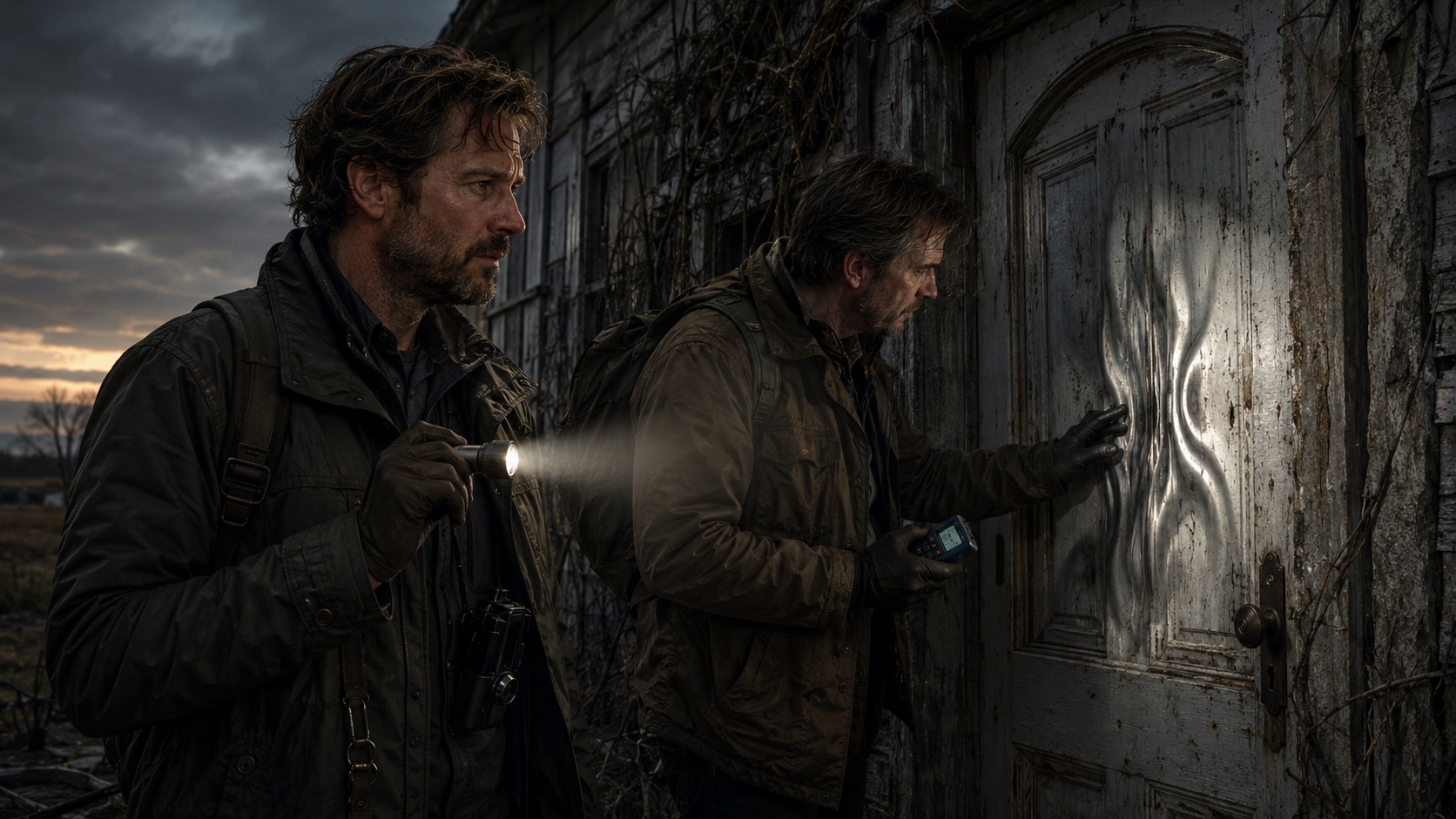
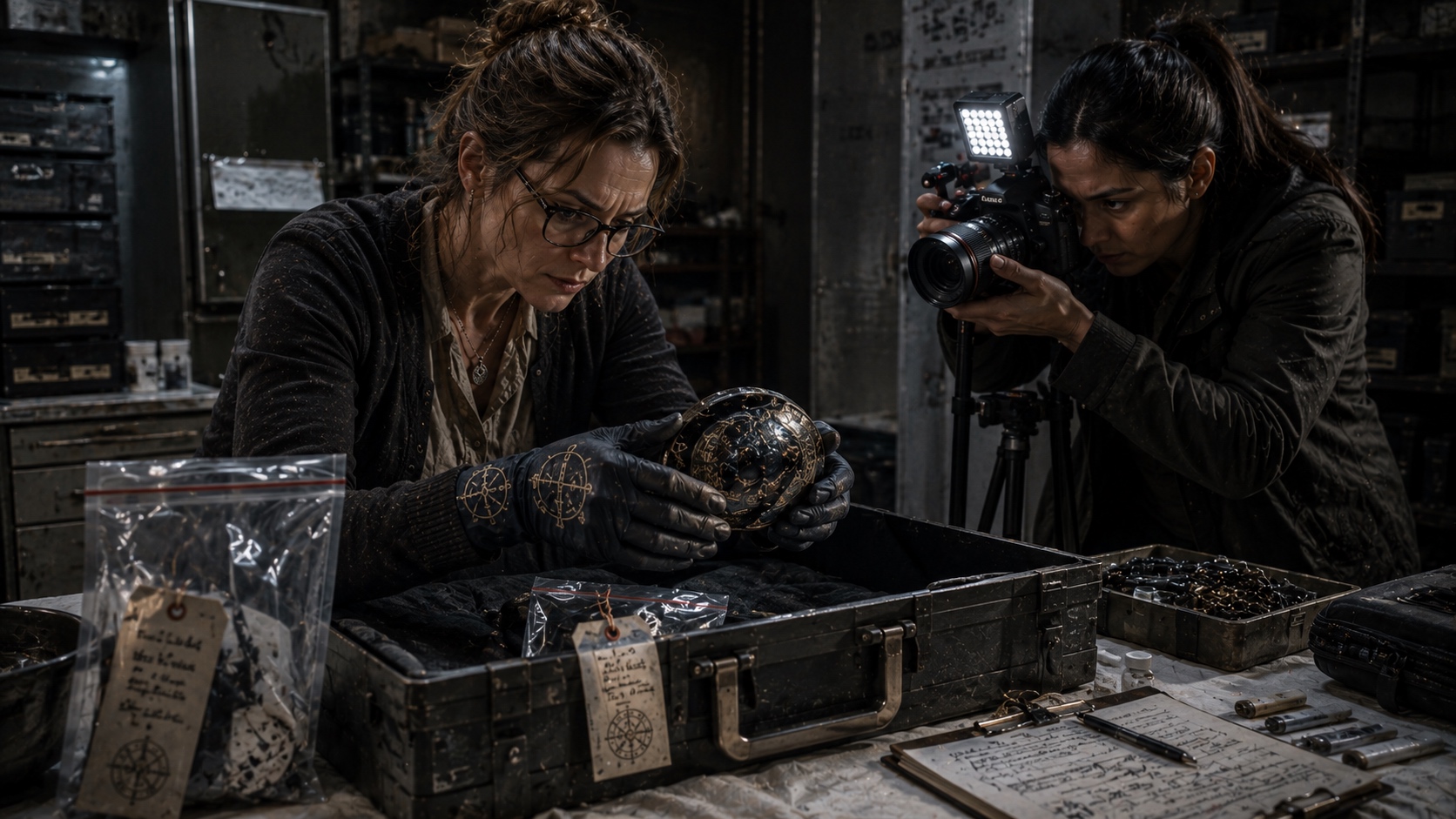
He opens the field case. Foam inserts. Brass clasps. Three warning labels, two of them handwritten. He reaches in and removes the artifact.
"Gloves," he says.
I already have them halfway on. You do not touch an artifact barehanded unless you want the report to become about you.
Harold passes me a metal doorknob.
What, you were expecting something magnificent?
It is magnificent. It just looks like a doorknob.
This particular doorknob came from Professor Renald's office at Halewick Sanitarium, before the fire, before the state inquiry, before the place became a stack of sealed records and bad dreams. For forty-three years the hand of every patient Renald examined turned this knob. Murderers. Visionaries. Catatonics. Liars. People broken by ordinary cruelty. People broken by things ordinary cruelty could not explain. The doorknob kept impressions. Pressure. Panic. Clarity. The mind at the edge of itself.
On certain subjects, it can clear the noise. On others, it opens the wrong door.
If Janice is psychically contaminated, this may bring her back. If she is possessed, this may offend whatever is wearing her.
"Janice," I say, holding the doorknob out in my gloved hand. "I brought something for you."
The room goes quiet.
Her feet stop.
Harold looks at me. I look at Harold. Neither of us knows whether that is good.
Then Janice lifts her head. Her eyes have rolled white. The skin around her jaw is taut. Her mouth is clenched shut so hard I can hear enamel crack. Her head tilts left. A smile opens across her face.
"Lars," Harold says, pointing at her with the full authority of a man who has decided this is now my problem. "That is not good."
I throw the doorknob.
It turns in the air.
Janice catches it.
Every door in the building unlocks at once.
The world is normal.
That is the lie that keeps it alive.
The Hollow is a modern occult action-horror universe about impossible cases, cursed objects, hidden factions, dangerous spirits, hungry monsters, old sins, bad miracles, worse bargains, and the people trained or unlucky enough to answer when the ordinary explanation fails.
As with comics like Hellblazer or Constantine, or shows like Supernatural, the deepest cosmology is Christian supernatural horror. Demons are fallen angels. Devils bargain through spiritual law. Holy authority has force. Angels are real, rare, and catastrophic when they arrive.
That cosmology is the spine. The same universe supports a relic retrieval team trying to warehouse an object before it bonds to a senator, a federal anomaly unit proving the official report is impossible, a road crew hunting something that learned to wear human skin, or a mixed cell trying to keep every faction from making the case worse.
It is the world under all of them.
Ways To Play
The default version of The Hollow is a mixed-cell campaign: investigators, clergy, archivists, hunters, occult scholars, survivors, intelligence assets, and independents colliding around cases no single faction can solve cleanly. That is the broadest form of play, and the one this book assumes when it gives you the full toybox.
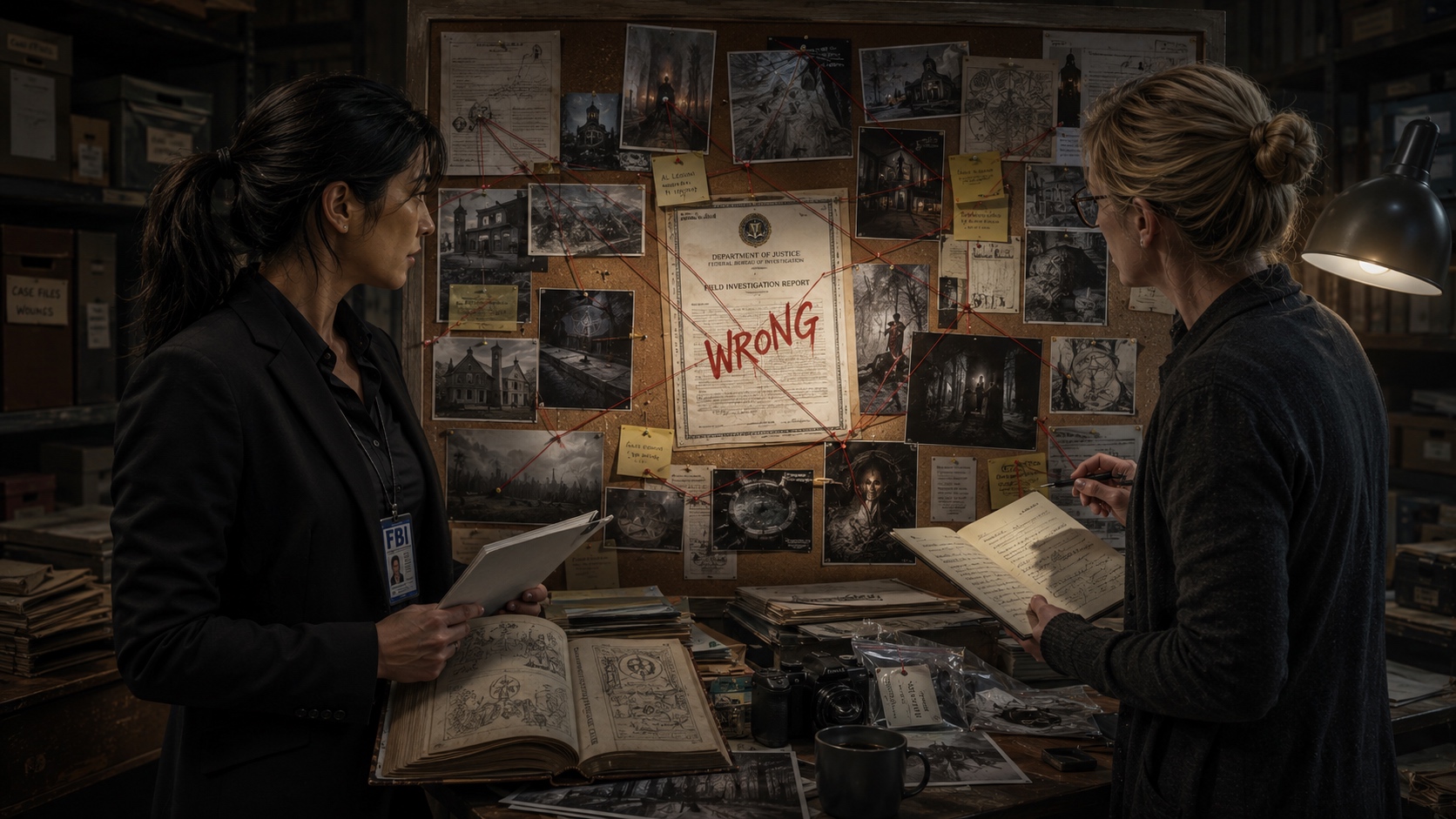
The Case File Game is X-Files, Fringe, and impossible-crime investigation. The characters work through witnesses, evidence, institutions, official lies, and Merciful Dissonance, the mind's talent for explaining the impossible away, until the mundane explanation collapses. Lyncean, Vesper, Lantern Index, and Independent characters thrive here. Faith may never enter the case directly. The horror is that the evidence is real and the system was not built to hold it.
The Warehouse Game is relic retrieval and containment. The object is the threat, the clue, the weapon, and the liability. Latchkey Archive teams identify triggers, preserve provenance, move dangerous things, survive containment breaches, and decide what can be used, what must be sealed, and what should never have been cataloged at all. A campaign can live here for years without a single possession case.
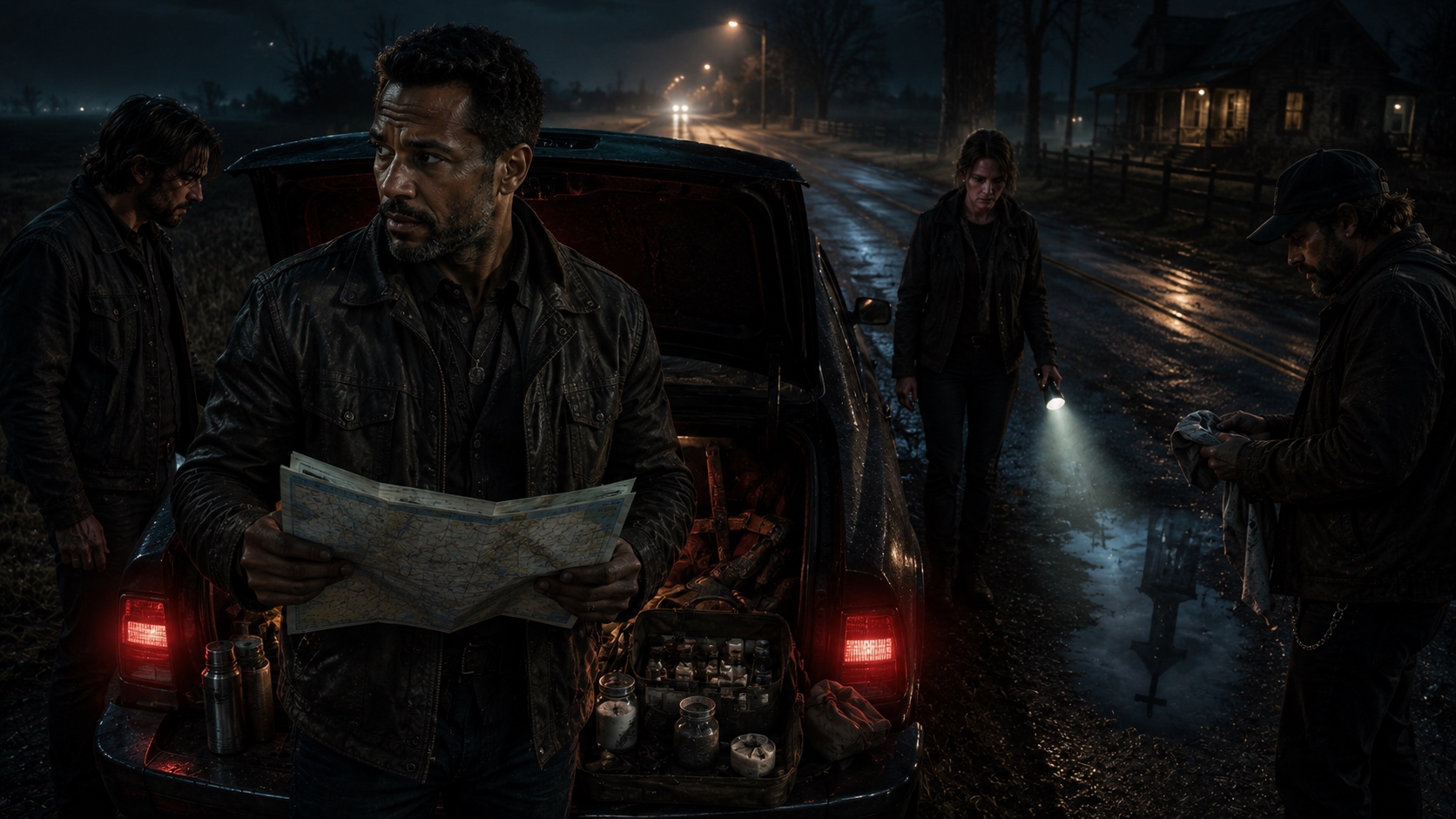
The Road Game is monster hunting. The characters follow bodies, tracks, folklore, field signs, and survivor testimony until they know what they are facing and what kills it. Black Road characters shine here, but any faction can get pulled onto the road when the thing in the woods stops being local legend and starts leaving evidence. The question is not whether evil is metaphysically real. The question is whether anyone brought the right ammunition.
The Occult War Game is cults, forbidden workings, black-market relics, names, contracts, and people who learned just enough truth to become dangerous. Lantern Index, Candleless, Vesper, and Lyncean characters often sit at the center of this mode. The enemy may be human, mostly human, formerly human, or something using human ambition as a handle.
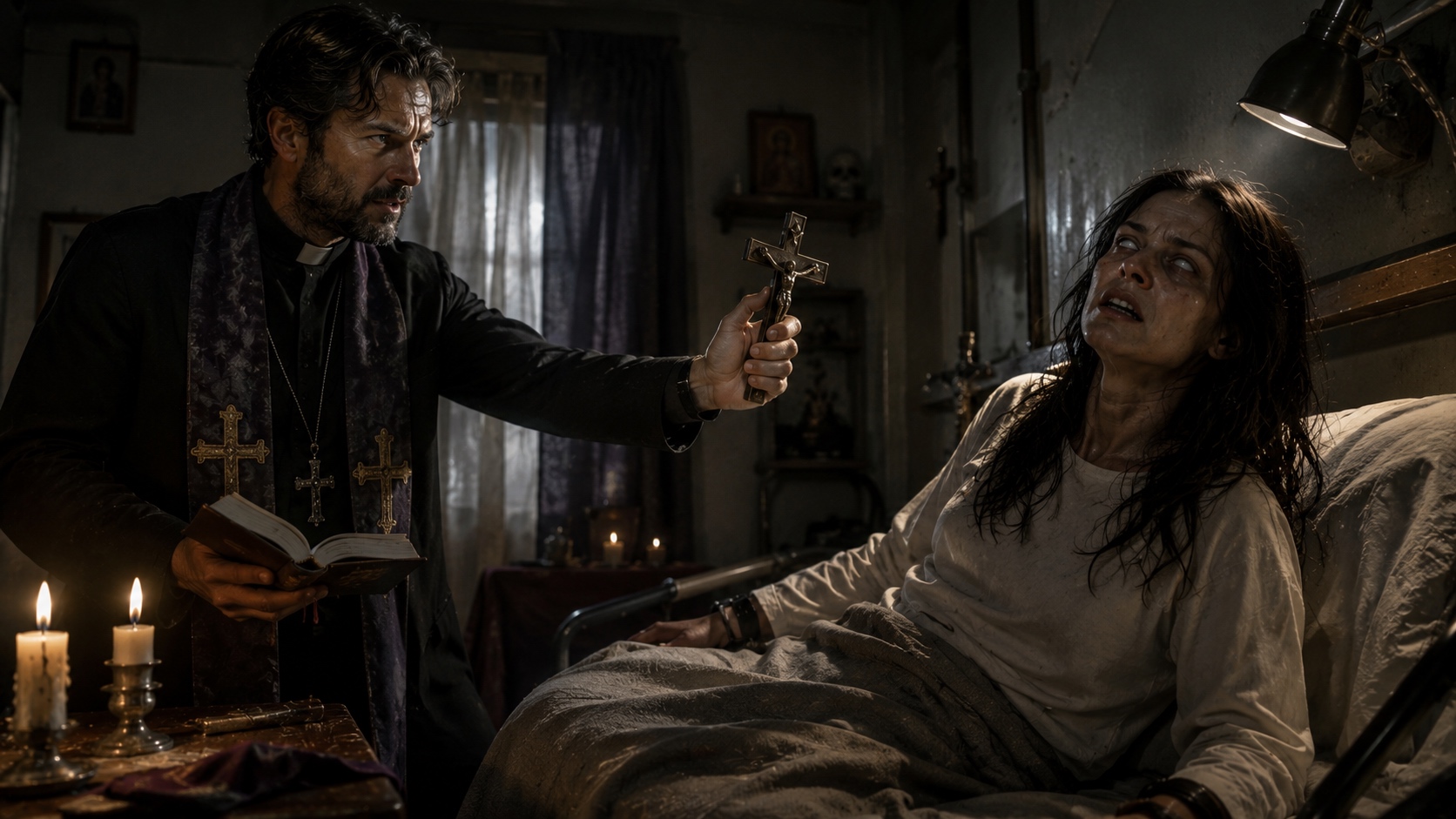
The Spiritual Warfare Game is exorcism, deliverance, sacramental authority, holy ground, demonic accusation, devil contracts, and the cost of direct confrontation with the infernal. Order of Mercy, Watchfires, Sisters of Nursia, the Neptic Brotherhood, the Lamed Vav, and The Kept all bring different answers to this mode. It is central to The Hollow, but not the whole of it.
The Mixed Cell Game is what happens when all of those modes overlap. The cursed object is also a Wound anchor. The monster is guarding a cult site. The federal case leads to a relic vault. The exorcism reveals the name of the thing that built the door. This is the default campaign described above, with the whole toybox on the table.
The underlying Universe remains the same in every mode. Run the game you most relate to.
The Wound Under The World
The Hollow is the spiritual wound left in creation when the Garden of Eden was removed from the world: an injury, not a place, and it sometimes presses close enough to the material world that the two begin to bleed into each other. Noah's Flood shattered the original wound into Shards, cold remnants buried under houses, hospitals, churches, prisons, battlefields, and roads that have seen too much. Most Shards stay dormant, humming under the floorboards of the world, distorting memory, gathering coincidence around themselves like dust.
A Shard wakes when someone feeds it: an occultist cuts deep enough, an innocent is murdered where the ground is already thin, a devil is paid, a demon is invited, a soul is forced where no soul belongs. An awake Shard is a Wound, and a Wound left alone, fed, or worshiped grows toward a breach where the world no longer has enough strength to pretend. Chapter Two covers Shards, Wounds, and the escalation between them in full.
That is where you come in.
What You Are
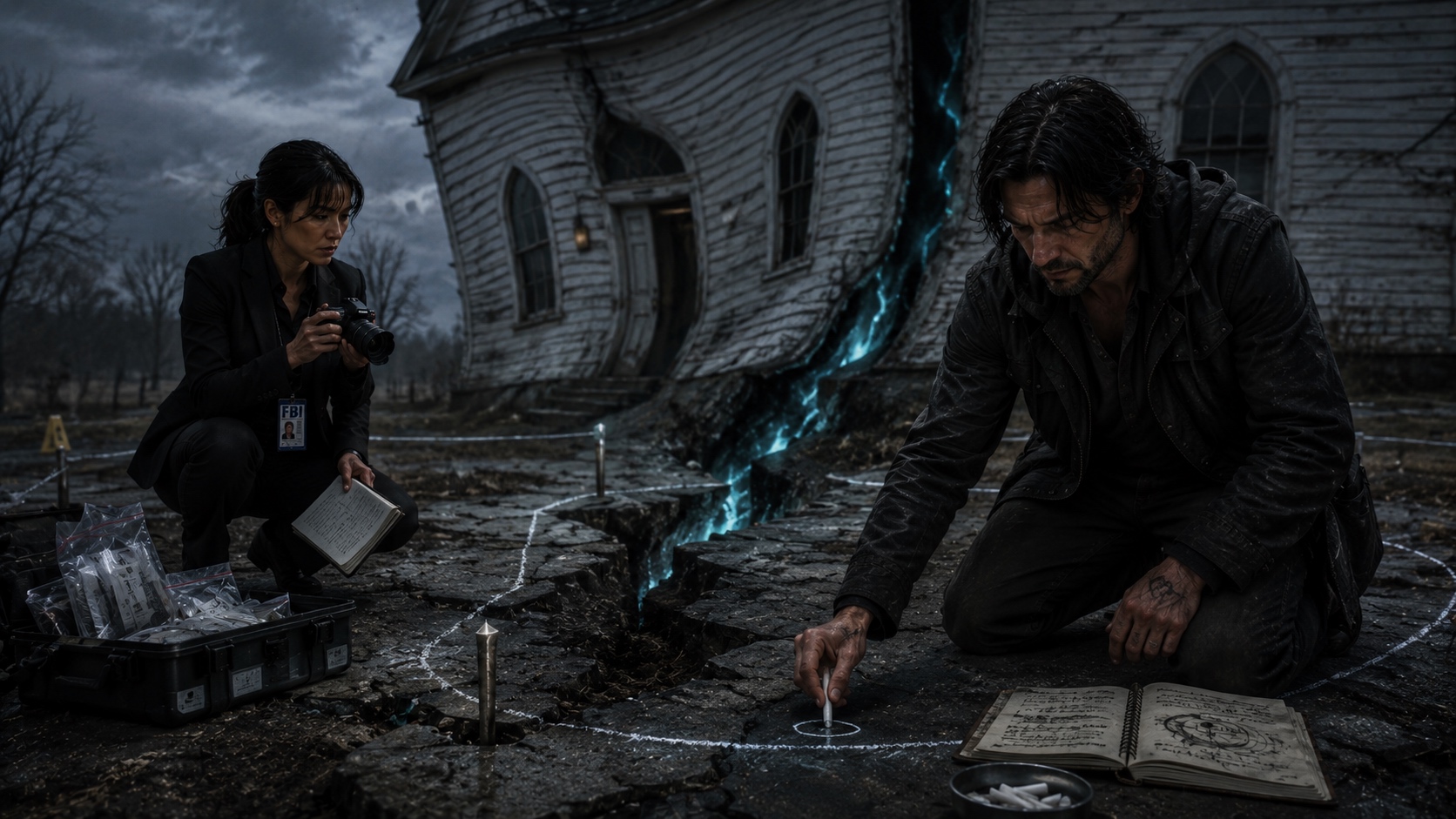
Player characters in The Hollow are Awakened: they have seen enough truth that Merciful Dissonance no longer closes the world for them. They remember what happened, and they can follow the impossible when it leaves fingerprints.
You are competent. You have training, instincts, access, faith, anger, scars, education, patronage, or all of the above. You may have a badge, a collar, a stolen keycard, a knife blessed by someone who had no authority to bless it, a camera that photographs what witnesses forget, a road kit full of iron and bad decisions, or a contact in an archive that officially does not exist.
You are also incomplete.
No one faction understands the whole war. The Order of Mercy has rites and authority, but not speed. The Watchfires have conviction and heat, but not always restraint. Vesper can move where the Church cannot, but every deniable operation has a bill. The Lyncean Office sees patterns in impossible evidence, but evidence can stare back. Latchkey knows how to contain what should not be touched, but containment is not salvation. The Black Road knows how to kill monsters, but not everything that looks like a monster is one. The Lantern Index remembers older versions of the truth, but archives are full of things that wanted to be remembered. The Candleless know the ugly solutions, and the rest of the world is right to fear that.
Independents live in the spaces between those certainties. So do Associated Organizations: women operating outside neat Catholic command structures, Jewish name-keepers carrying the weight of old bindings, Orthodox exorcists whose authority runs on a different line, possession survivors who know exactly what it costs to be saved.
What You Do
A case in The Hollow usually begins with something the world can explain badly.
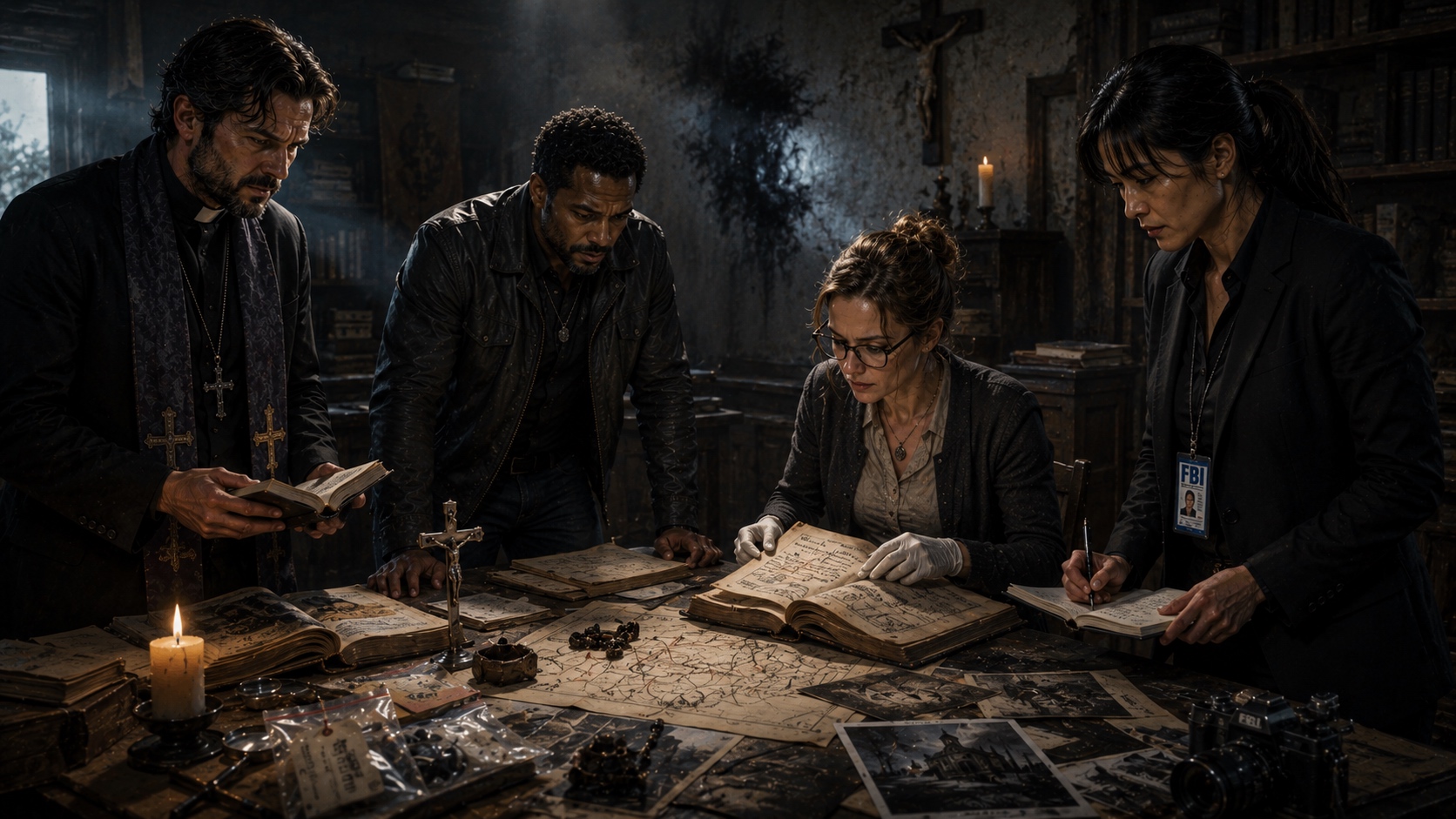
A woman disappears from a locked hospital room. A church basement floods with black water in a county where it has not rained in six months. A condemned house appears in real estate listings under three different addresses. A police officer shoots his own reflection. A relief worker recognizes a dead child in a photograph taken next week. A family heirloom begins granting favors and collecting payment from people who never agreed to the bargain. You investigate. You interview witnesses who do not know what they saw. You read the old file, the parish register, the property transfer, the autopsy, the book that should not have survived the fire. You walk the site. You test the air. You examine the object without touching it. You follow the tracks until the tracks start following you. You look for the pattern under the pattern.
Then you identify what is actually present. A demon, a devil, a ghost, a spirit, a dybbuk, and a cursed object each answer to different tools, and misidentification gets people hurt. Chapter Two defines the categories; Chapter 2.1 unpacks the vocabulary if it is new to you.
Once you know what you face, you acquire leverage. A true name. A confirmed weakness. A handling rule. A sacramental mandate. A relic's provenance. A confession. A binding vessel. A witness who remembers one detail Merciful Dissonance failed to sand smooth. A blessed shell. A door that only opens after midnight. A bargain the devil made with someone too clever to read the last page.
Then you act.
Sometimes action means an exorcism performed in stages while the entity accuses everyone in the room. Sometimes it means a spirit banishment where mercy matters more than force. Sometimes it means bagging an artifact before anyone else touches it. Sometimes it means a break-in, a road chase, a firefight, a field surgery, a containment breach, a negotiated surrender, or burning the whole site before the Wound learns how to grow legs.
You will fail sometimes, and failure matters here: it costs Strain, blood, trust, time, access, proof, sanctity, reputation, and sometimes Corruption. It can also reveal the next path. The world is wounded and under pressure; if you do not solve one problem, the problem becomes larger, hungrier, or more honest.
Faith, Horror, And Respect
In this Universe, Christian cosmology is operational reality; Chapter Two lays it out in full. Angels deserve a word even in the pitch: they are good, and their interventions are not gentle. Two angels were responsible for what happened to Sodom and Gomorrah, and where an event like that survives outside scripture, the record files it as an earthquake and a firestorm.
The cosmology runs under every campaign. Where the characters point the camera is yours to decide. A Latchkey campaign may treat holy authority as one category of object behavior among many. A Lyncean campaign may spend months inside evidence rooms and federal jurisdiction. A Black Road campaign may care more about iron, fire, salt, folklore, and confirmed weaknesses than sacramental procedure. The truth under the world is still there, and the characters do not have to look straight at it in every case. It looks back regardless.
This game uses real religious traditions. Treat them the way you'd want someone to treat yours.
The Hollow is a story built around a specific supernatural premise. That premise gives the world moral weight: evil is real, mercy is real, and neither is simple.
Power Has A Price
There are rites that drive demons from bodies. There are bullets that wound what should not bleed. There are names that make old things turn their heads. There are relics that open doors no architect drew. There are prayers that hold a room together while everything under the floor tries to crawl upward. There are forbidden workings that can do terrible things quickly, if the person using them is willing to pay with something real.
Holy power requires sanctity, authority, preparation, sincerity, and risk. It is leverage, not an automatic win. The symbol works because the truth behind it is real, not because someone waved silver at the monster and skipped the hard part.
Magic is worse.
Magic does not make you more complete. Magic hollows you out so something impossible can fit inside. Characters who seek magical access permanently give up part of their Wound Point maximum. They become more capable and less whole. They gain tools the world badly needs and carry the evidence in their bodies, habits, prayers, dreams, and appetites.
Forbidden power asks for more. Blood that matters. An animal killed for the rite. A human life. A hand grafted where no hand should be. A relic worn under the skin. These things work because they are awful, which is exactly why people want them, and why good investigators must know how they function, how they fail, and what they leave behind.
What This Game Feels Like
The Hollow lives in the space between case file and confession, evidence locker and haunted road, containment vault and emergency room.
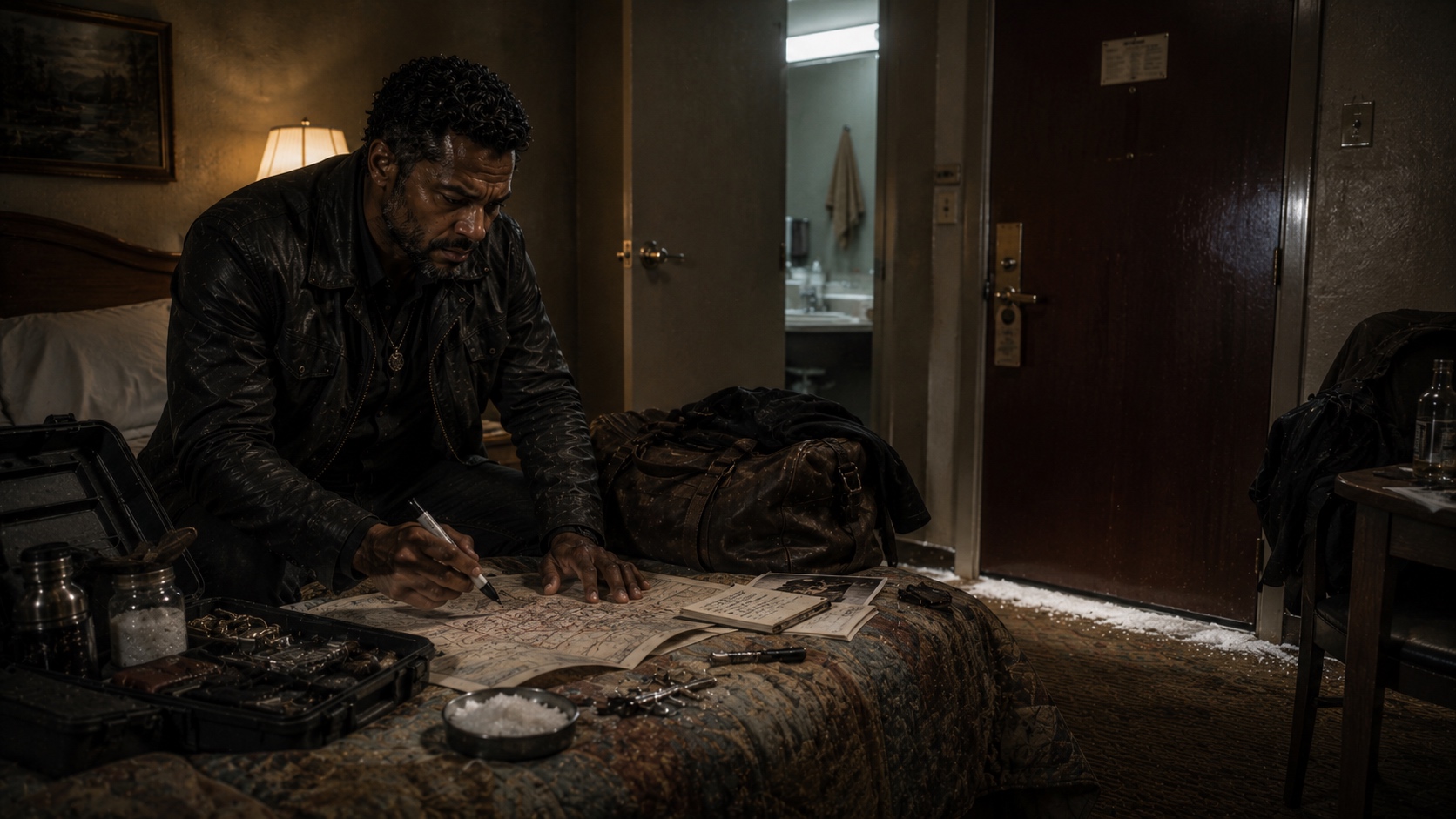
It is a game of late-night phone calls, sealed archives, bad photographs, field kits, failed prayers, blessed weapons, unreliable witnesses, basement rites, hotel rooms with salt at the door, blood on legal paperwork, old women who know more than the bishop wants them to know, and objects that look harmless until someone puts a hand on them.
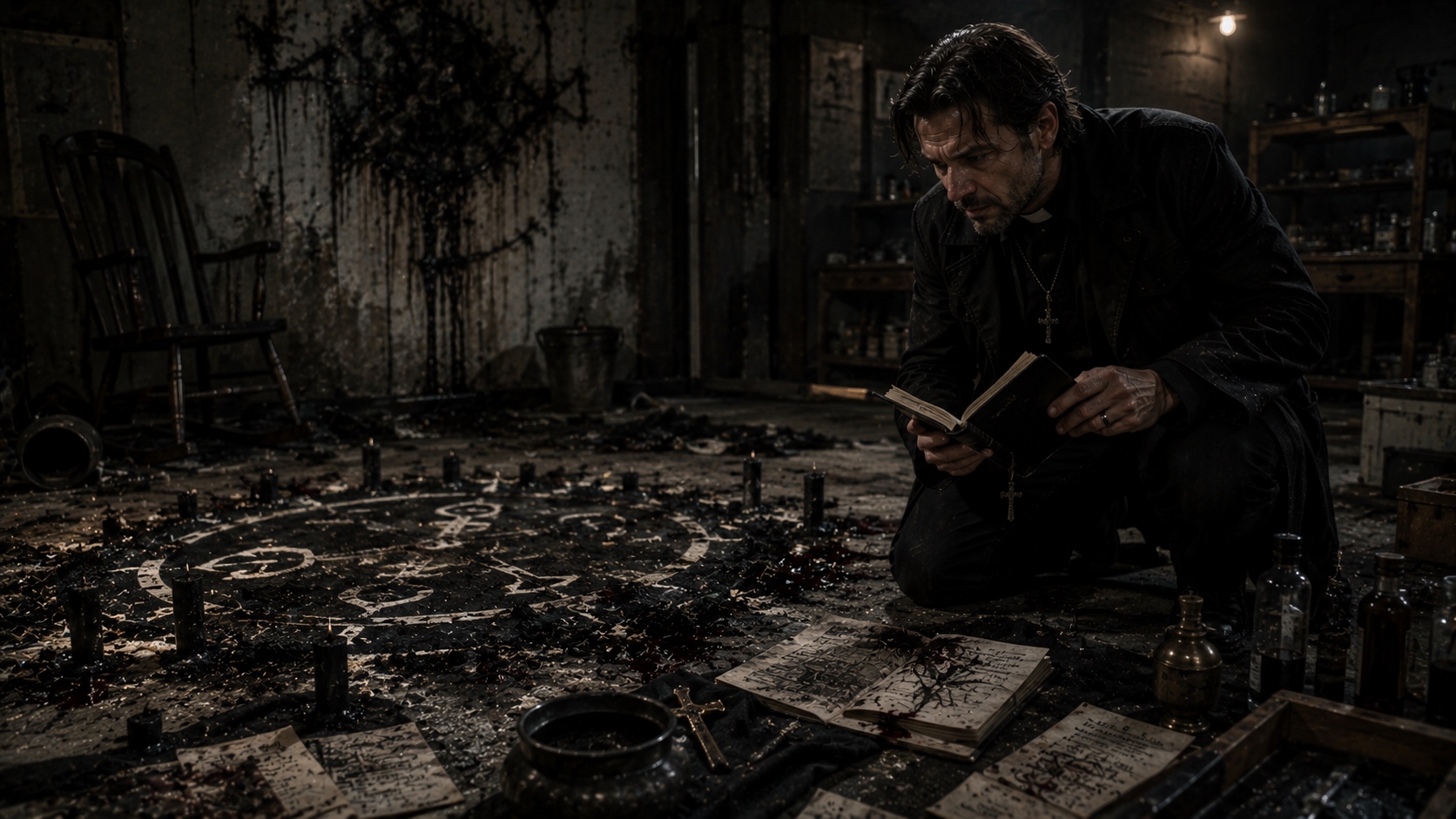
It supports investigation, action, ritual confrontation, faction politics, occult procedure, relic containment, monster hunting, moral pressure, and the occasional dry laugh because people under pressure still make jokes when they are too tired to do anything else.
It is gritty and serious by default, but it is not hopeless. If the characters do the work, they can save people. Not always cleanly or cheaply, and not always everyone. But salvation is not cosmetic in this Universe. Containment, deliverance, release, and reconciliation all count for something, and so does refusing the bargain and taking the ugly solution off the table, even when the ugly solution would have worked.
The characters bleed, doubt, get sued, burn through contacts, and sometimes get it wrong. The cosmology has a specific shape: not every myth is equally true behind a slightly different door. The apocalypse stays private. The world outside the case remains busy, distracted, and aggressively normal while the work becomes impossible. The Church is a flawed institution staffed by human beings who can be brave, brilliant, frightened, compromised, and holy before lunch. Church officials make disastrous choices. So do hunters, archivists, federal agents, and anyone else who got in too deep before they understood the bill.
The dead have reasons.
The living have excuses.
How To Use This Book
Chapter 2 explains the hidden world: the Hollow, Shards, Wounds, Merciful Dissonance, Awakened Blood, and the supernatural categories that matter in play.
Chapter 2.1 is a plain-language primer for readers who did not grow up around the religious vocabulary The Hollow uses. If the difference between a sacrament, an exorcism, a charismatic prayer meeting, a dybbuk, and purgatory feels fuzzy, start there before the rules start throwing those words under pressure.
Chapter 3 builds characters. Chapter 4 gives you factions, Associated Organizations, obligations, starting gear, and the human systems that shape your work. Chapter 5 defines skills. Chapter 6 defines talents and supernatural abilities, including magical access and the cost of taking it. Chapter 7 arms and equips you. Chapter 8 handles faith, rites, magic, Corruption, exorcism, spirit banishment, devil deals, and the rules that make power dangerous. Chapter 9 deals with relics and cursed objects.
Chapter 10 shows how investigations function at the table. Chapter 11 gives the GM monsters and unnatural threats. Chapter 12 gives the GM procedures for running cases, Wound Sites, factions, forbidden workings, consequence, and pressure. Chapters 13 and 14 walk through combat and session play. Chapter 15 provides a first-season case file structure. Chapter 16 contains pregenerated characters. Chapter 17 is the quick reference. Chapter 18 is the glossary, attribution, and licensing material.
You do not need to memorize everything before play. Build a character, understand your faction, know what your skills and talents do, and learn the hidden world through cases. The game works best when characters are competent enough to act and uncertain enough to need one another.
The Table Promise
When you sit down to play The Hollow, the game promises this:
- You will face mysteries where the mundane explanation is not enough.
- You will learn that naming the threat correctly matters.
- You will have tools, but no tool solves everything.
- You will be tempted by faster answers.
- You will find that institutions can protect people, fail people, and hide things at the same time.
- You will meet enemies who know scripture, law, hunger, grief, contracts, shame, and the exact words your character does not want spoken aloud.
- You will meet objects that should not be touched, rooms that should not be opened, roads that remember old blood, and people who survived things the world insists never happened.
- You will be able to save people.
- You will pay for power.
- You will sometimes have to decide whether stopping the monster is the same thing as doing what is right.
Welcome to the Hollow.